

Kabambe tears into DPP’s economic record – as debt threatens to hit staggering K40 trillion
- Accuses government of failing to deliver on promises of lower prices, cheaper fertiliser and more jobs
UTM president Dalitso Kabambe has launched a scathing attack on the DPP government’s handling of the economy, accusing it of failing to deliver the transformation Malawians were promised when they voted the party back into power a year ago.
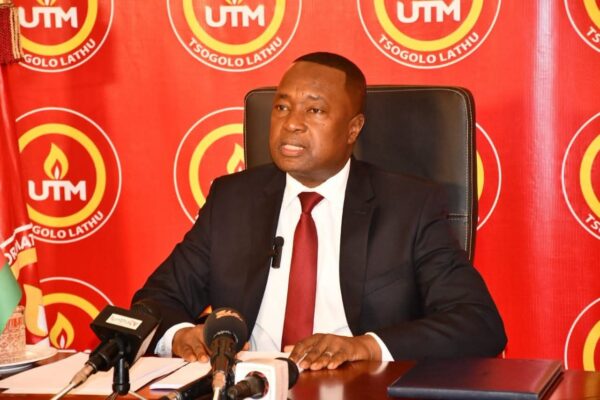
Speaking in a national address, Kabambe said the government’s banking, borrowing, fiscal, monetary and exchange-rate policies were “out of touch with economic realities” – and squarely blamed them for what he described as worsening conditions across the country.
On poverty, Kabambe said the DPP inherited a country already struggling, yet had failed to make any dent in poverty levels during its first year in office.
With economic growth remaining sluggish and the population growing faster than the economy, he warned Malawi would continue to struggle unless there was a dramatic shift in policy direction.
He also took aim at the government’s failure to conclude a new programme with the International Monetary Fund, claiming Malawi’s own economic policies were partly to blame for the prolonged and stalled negotiations.
Ordinary Malawians, Kabambe said, are feeling the pinch through soaring prices for fuel, food, transport, education, water and electricity – with inflation eating into household budgets and squeezing small businesses to breaking point.
He painted a grim picture of the country’s foreign exchange crisis, warning that shortages continue to disrupt supplies of fuel, fertiliser, medicines and raw materials needed by businesses.
The widening gap between official and parallel-market exchange rates, he said, was making it increasingly difficult for businesses to access foreign currency – with those costs ultimately passed straight on to consumers.
Tobacco farmers were singled out as particular victims of the crisis, with Kabambe explaining that their produce is priced using official exchange rates, even though some of their production costs are driven by the far higher parallel-market rate.
In one of his starkest warnings, Kabambe revealed the DPP had inherited public debt of around K24 trillion – and cautioned that the figure could balloon beyond K40 trillion if current trends continue.
He also cited alarming food insecurity figures, claiming government’s own reports showed 2.3 million people lacked enough food in 2025, dropping only slightly to around two million in 2026 – before warning that projections point to as many as five million Malawians facing food insecurity by 2027.
Unemployment was another key target, with Kabambe warning that young Malawians are increasingly unable to find productive work, even as businesses grapple with rising costs and weaker economic activity – a situation he described as a devastating loss to the country’s overall productivity.
“Malawians’ economic expectations remain largely unmet, one year after the Democratic Progressive Party returned to power,” Kabambe said, pointing to voter hopes for lower prices, cheaper fertiliser, more jobs and reliable electricity, fuel and transport – none of which, he argued, had materialised.
Follow and Subscribe Nyasa TV :