

Online Outrage: Malawians React to Cyberbullying Targeting Woman Known as Rita
A heated discussion has erupted on Facebook following Ayuba James’s post highlighting the growing cyberbullying directed at a Malawian woman known publicly as Rita or Ritaa. The woman, who often shares moments of her seemingly successful and joyful life, has become a target of persistent online hostility—especially from fellow women, according to the post.

Ayuba James’s commentary suggests that many critics were waiting for an opportunity to “stone her,” allegedly out of envy for her lifestyle and financial stability. This intensified after unverified allegations surfaced claiming that she had been involved romantically with a former government minister. Despite the absence of any concrete evidence, the rumours spread quickly across social media.
Public Reaction: “Nsanje ikupha a Malawi”
The comments under the post paint a vivid picture of how deep-seated jealousy—nsanje—in Malawi is perceived to be:
- Several commenters lamented that jealousy has become embedded in Malawian society, with some arguing that people are quick to attack others simply because they appear to be doing well.
- Others pointed out that Facebook has become a toxic environment where insults, baseless accusations, and envy dominate discussions.
- Some users joked—though with a serious undertone—that the national anthem should include a plea for deliverance from jealousy, equating nsanje with national woes like hunger and disease.
- Female commenters were divided: while some condemned how women seem to attack each other more harshly, others expressed frustration at what they see as an unhealthy culture of tearing down fellow women instead of supporting them.
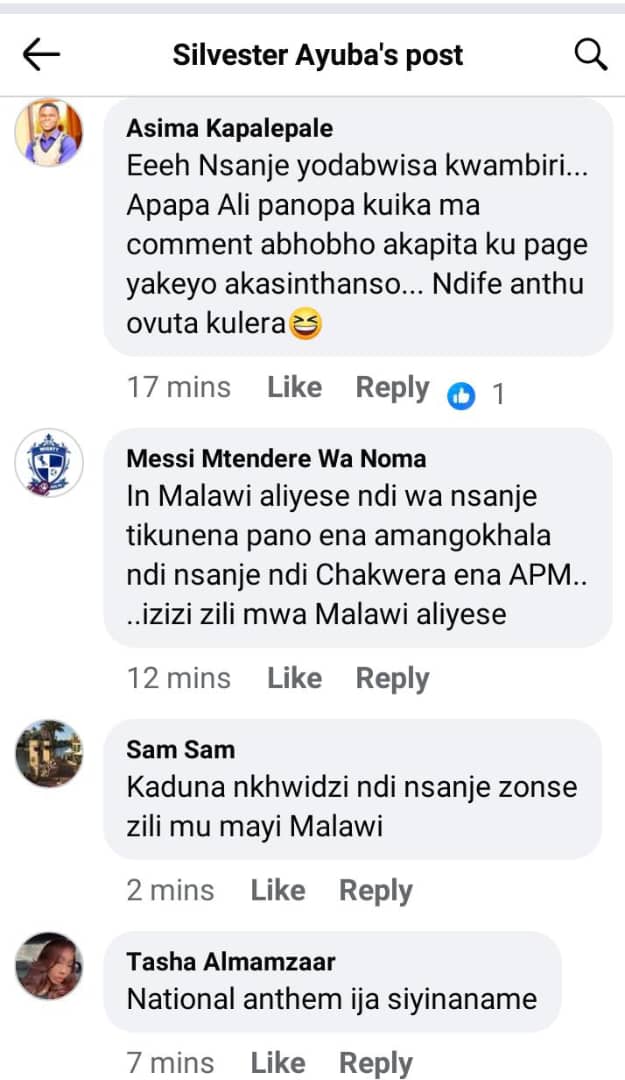
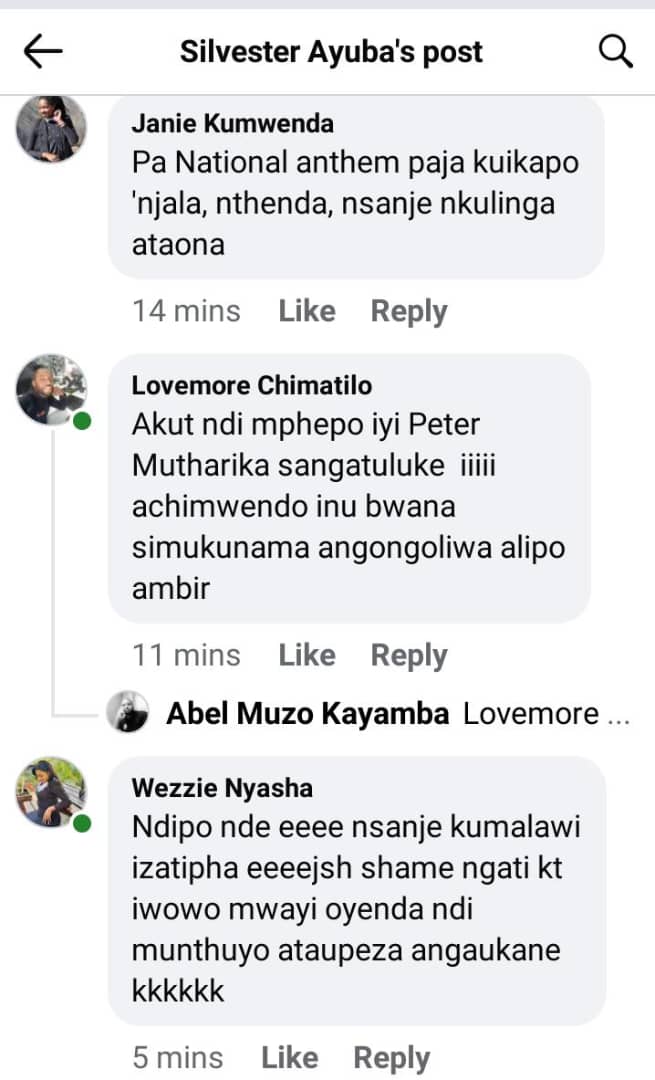


One user wrote that Malawians “don’t reason anymore,” claiming that many simply grab their phones and comment carelessly on issues they barely understand. Another noted that the rumor-spreading culture—driven by “akuti” (“they say”)—continues to ruin reputations without accountability.
A Wider Problem of Social Media Hostility
The discussion highlights a recurring challenge in Malawi’s digital spaces: cyberbullying, character assassination, and gender-targeted hostility. Commenters repeatedly expressed concern that social media has become a place where baseless gossip spreads like “COVID-19,” as Ayuba puts it, harming individuals without evidence or due process.
A Call for Reflection
As the story continues to stir debate, many voices are urging Malawians—especially women—to reflect on the culture of envy and online hostility. Ayuba’s post and the reactions it triggered show a collective frustration with a social environment where success attracts suspicion rather than celebration.
Whether this conversation will prompt meaningful change in online behavior remains to be seen, but one thing is clear: Malawians are increasingly aware of the destructive power of cyberbullying and the national struggle with nsanje.
Follow and Subscribe Nyasa TV :