

World Bank Paints Gloomy Picture of Malawi’s Economy, Raises Red Flag on Soaring Wage Bill — Govt Says It Is Addressing the Crisis
The World Bank has sounded one of its sternest warnings yet on Malawi’s deteriorating public finances, highlighting a ballooning wage bill, crippling debt, and deep structural weaknesses—raising questions about whether the country is sliding into a full-blown fiscal crisis.
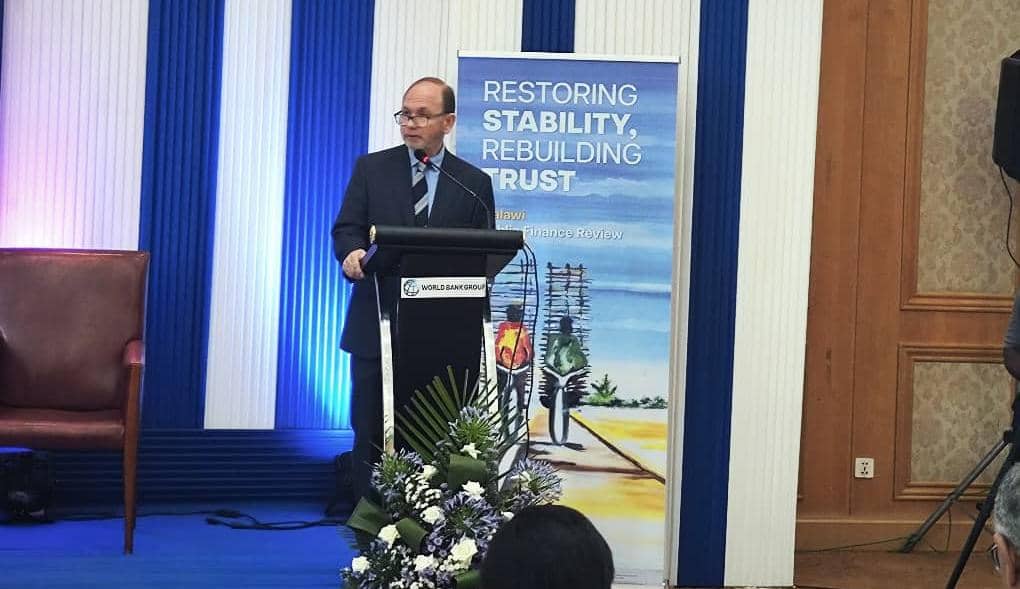
Releasing its Public Finance Review at BICC in Lilongwe, the Bank drew sharp attention to what it calls a “chronic set of fiscal dominance challenges”—where political decisions and unchecked government spending have overpowered monetary policy, eroding macroeconomic stability, fueling inflation, and damaging investor confidence.
A Wage Bill Out of Control
The Bank revealed that Malawi’s public wage bill has doubled as a share of the economy, rising from less than 3 percent of GDP in the early 2000s to over 6 percent in 2024, calling the trend “unsustainable and dangerous.”
This spike, according to the report, is part of a wider explosion in government expenditure. Over the past 15 years, public spending has nearly doubled, jumping from 16 percent of GDP in FY2011/12 to more than 30 percent in FY2024/25. Yet, the structure of this spending, the Bank warns, is holding back development rather than driving it.
Rigid and recurrent expenditures now swallow 80 percent of domestic revenue, with interest payments alone consuming over half—leaving little room for essential development projects.
Debt, Deficits and a Declining Economy
World Bank Country Manager Firas Raad delivered some of the most alarming findings. Malawi’s fiscal deficit remains one of the highest in Sub-Saharan Africa, financed heavily by debt monetization and costly borrowing.
He pointed to persistent forex shortages, an exchange-rate premium exceeding 100 percent, unsustainable debt levels, high inflation, and dwindling external financing—signs that Malawi’s economy is dangerously exposed and lacking buffers.
Raad warned that without decisive reforms, these pressures could drag Malawi deeper into economic fragility.
The Reform Prescription: Cut Waste, Improve Discipline
The Bank has outlined a series of urgent reforms, arguing that Malawi can save between 2.69 and 4.49 percent of GDP if it implements targeted efficiency measures. These include:
Reforming allowances and travel policies; fully transitioning to e-procurement; strengthening public investment management through rigorous project appraisal; enforcing realistic budgeting; and improving public financial management systems.
“These are not across-the-board cuts; they are targeted measures designed to ensure that every kwacha delivers more in services and results,” the report says. It calls for a credible five-year fiscal framework to lock in savings while protecting high-impact spending.
Government: “We Are Taking Action”
Presenting the Budget Statement, Minister of Finance, Economic Planning and Decentralisation Joseph Mwanamvekha acknowledged the concerns but insisted that government has already deployed a series of corrective actions to restore the economy.
He cited measures to reduce public expenditure, including restricting Cabinet ministers to only three international trips per year and tightening overall government travel.
The government is also reviewing tax incentives, as recommended by the World Bank, and moving toward greater digitalisation to plug leakages and increase efficiency.
Rebuilding Trust, Restoring Stability
The World Bank’s report—“Restoring Stability, Rebuilding Trust”—emphasises that Malawi can still reverse the downturn, but only if it accelerates structural reforms, strengthens debt management, completes the rollout of the Integrated Financial Management Information System (IFMIS), and empowers Parliament to provide stronger oversight.
Raad stressed that Malawi’s current crisis could become a “springboard for reform” if the country embraces difficult but necessary policy shifts.
Whether the government’s commitments will be enough—and fast enough—remains the central question. The numbers paint a bleak picture, and the World Bank’s warning is unmistakable: Malawi’s fiscal window is narrowing, and decisive action is no longer optional—it is urgent.
Follow and Subscribe Nyasa TV :