

‘Pro rich’ Budget draws mostly criticism, some praise: Goodall strike upbeat tone for Malawi economy
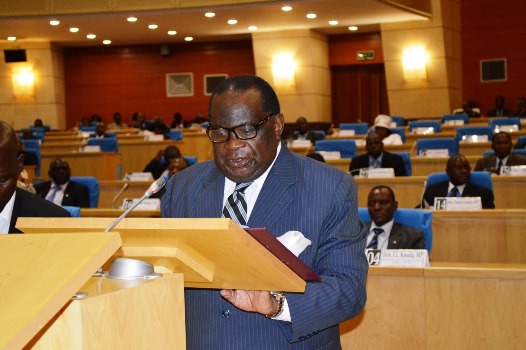
The 2015/16 National Budget which Finance Minister Goodall Gondwe presented in Parliament on Friday, largely with local resources, has widely been viewed as a bitter pill to swallow mostly for the impoverished Malawians other than the well –off citizens.
Malawi leading newspapers said in their editorial comments on Saturday that the financial plan was not inspiring hope.
Opposition parties described the K901.6 billion budget as “painful” and “not for the poor”.
Malawi Congress Party (MCP) shadow minister of finance Joseph Njobvuyalema said the Budget “failed the pro-poor test” by not prioritising help for millions of hard-pressed families, squeezing them with newly-introduced tax measures.
MCP said it was a “rich’s budget which squeezes the poor.”
People’s Party leader in parliament Uladi Mussa said the budget is out of sync with the people and based on ”wrong priorities”
Weekend Nation newspaper editorial titled: “Budget poses challenges for the poor, government” said the real focus should be on what’s not being stressed.
“We are referring to the impact of government’s squeezed expenditure blueprint on the well-being of the same Malawians in rural areas—majority of whom live on much less than a dollar a day—which donors and government have all along used to justify their joint pro-poor programmes,” reads the comment.
The Malawi News editorial was blunt to say Malawians should brace for tough economic times ahead.
The paper noted that Gondwe and his economic team “struggled” to balance the numbers in the absence of budgetary support from donors and the need for increased resources to buy food in the wake of drought that has hit the country.
“Faced with no choice and an ever shrinking kitty, Gondwe and his team at Finance have, therefore, mercilessly wielded their axe, cutting key allocations such as the K40 billion for the fertilizer subsidy down from K57 billion from the previous financial year and also warning the nation in Parliament that there would be sharp cuts in allocations to some ministries and departments to allow the government to buy maize. All this can only mean one thing and it is that as the country spends on food imports, the social delivery system will be left to rot, horrendously affecting the quality of life for many poor Malawians,” reads the editorial.
“All we can see is doom and gloom for the common man,” Malawi News commented.
The paper said the pain should be shared by all.
“As Malawians struggle with this hardship, it would be nefarious to see President Peter Muntharika and his cabinet continue living in luxury, criss-crossing the globe on unwarranted trips for example, claiming obscene allowances as if everything was normal when there are no drugs in hospitals as a result of serious budget cuts announced by Gondwe yesterday [Friday]. That will be unacceptable.”
However, there were some diplomatic praise.
Head of Britain’s Department of International Development (DfID) Jane Marshall said the budget demonstrated commitment to key social services, saying is is “full of good intentions.”
EU head of delegation Marchel Germann and British High Commissioner Michael Nevin welcomed the budget’s steps to move towards independence but called for prudence in implementation.
World Bank country representative Laura Kullenburg called for proper management of the resources.
International Monetary Fund (IMF) country director Geoffrey Ostricher described the budget as a “tightrope” saying “generally, it appears very good but we need to examine it very closely.”
In his budget statement Gondwe gave key allocations of MK133.7 billion to agriculture, MK109.8 billion to education, and MK77.4 billion to health sectors.
Gondwe is upbeat that Malawi economy is projected to grow by 7 percent.
He told parliament that he hoped the drop in inflation – which was triggered by declining oil prices and a narrowing budget deficit – will lift the value of the kwacha.
“The budget is drawn on the assumption that headline inflation will fall to 16.4 percent and that interest rates will also go down in the budget year,” the minister said before parliament.
New notable expenditures in the 2015/16 financial plan include financing the Higher Education Students Loan and establishing a grant fund for university students.
The budget session has meanwhile been adjourned for two weeks to allow parliamentary committees to scrutinise the budget.
Follow and Subscribe Nyasa TV :