

A Living Dorcas Among us: Kawinga’s Relentless War Against Hunger
In the ancient town of Joppa, as recorded in the Acts of the Apostles 9:36–43, lived a woman whose legacy refused to die with her body. Dorcas—full of compassion, tireless in service—stitched dignity into the lives of the poor and clothed the forgotten with love. When she fell, an entire community wept. Widows gathered, not with words, but with evidence—garments she had made, lives she had touched. And when Peter prayed, Dorcas rose again, not merely as a miracle, but as a symbol: that true service echoes beyond death.
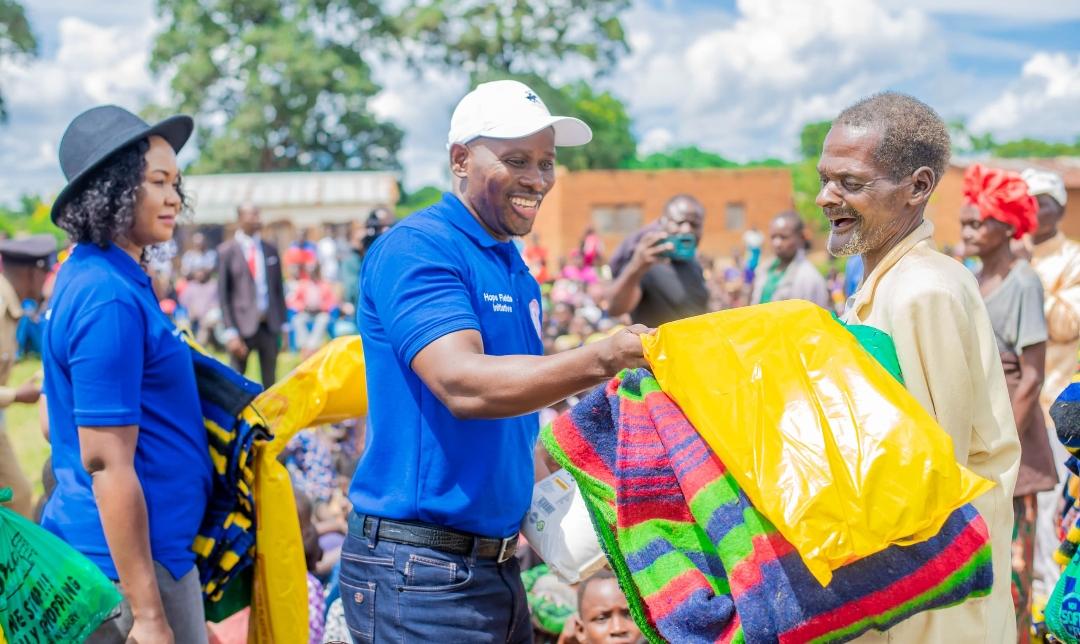
To think Dorcas belongs only to scripture is to misunderstand the persistence of grace in human form. In today’s Malawi, many would argue that her spirit walks again—this time in the life and work of Clifford Kawinga.
Apostle Kawinga is not a man of noise; he is a man of action. Through Salvation for All Ministries International (SFAMI), he has waged a relentless, deeply human fight against hunger—one that does not seek applause but results.
In a country where food insecurity has stalked both rural and urban households, Kawinga has stepped into the breach, not as a distant benefactor, but as a present force of intervention. His Hope Field Initiative has become a lifeline, stretching across districts—Lilongwe, Salima, Nkhotakota, Mzimba, Nsanje, Chikwawa, Mulanje, Machinga—and far beyond, reaching into the fragile margins where survival is never guaranteed.
But what sets Kawinga apart is not just the scale of his giving—it is the philosophy behind it. Where others offer temporary relief, he builds continuity. Where hunger threatens, he plants systems. Bags of maize worth millions of kwacha have been distributed to desperate households, yes—but alongside that, solar-powered irrigation systems hum quietly in the fields, seeds are placed into the hands of farmers, fertilizers restore depleted soils, and tools turn dependence into productivity. He does not merely feed the hungry; he teaches them how to outgrow hunger.
Communities once trapped in cycles of vulnerability are being reorganized into cooperatives—living structures of shared resilience. Training programs are equipping ordinary Malawians with modern, climate-smart agricultural skills, blending indigenous knowledge with innovation. In this, Kawinga is not just responding to crisis; he is redesigning the future at the grassroots.
His reach now spans all 28 districts of Malawi, but the deeper story lies in the texture of his approach. It is culturally grounded, socially aware, and profoundly human. By prioritizing women, children, and the most vulnerable, his work restores balance in communities where inequality often runs deep. By emphasizing participation, he strengthens social bonds. By giving, he creates not dependency, but dignity—reviving the age-old African ethic of reciprocity, where generosity binds people together and sustains communal life.
There is also a quiet discipline to his life that demands clarity in a noisy public space: Apostle Kawinga does not play politics. While many attempt to drag influential figures into partisan battles, his path remains deliberately separate. His energies are invested in faith, enterprise—including his business ventures—and above all, service. To politicize his work is to misunderstand it; to question his intent is to ignore the evidence written in the lives he has saved.
Because make no mistake—this is not abstract charity. Through the Hope Field Initiative, lives have been pulled back from the edge. Families that would have succumbed to hunger are still standing today. Children who would have gone to bed starving now sleep with hope. Entire communities, once silent under the weight of scarcity, are finding their voice again through self-reliance.
Dorcas was mourned because she gave until there was nothing left to give. Kawinga, still living, is doing much the same—only his story is unfolding in real time, across villages and districts, in the beating heart of Malawi.
And perhaps that is the most powerful truth of all: that sometimes, miracles do not arrive in a moment of prayer—they arrive in the steady, unyielding hands of those who choose to serve.
Follow and Subscribe Nyasa TV :