

Malawi launches twice-yearly HIV injection in push to cut new infections below 4,000 by 2030
Malawi has officially introduced a new twice-yearly injectable HIV prevention drug, marking what health officials describe as a significant milestone in the country’s effort to end AIDS as a public health threat.
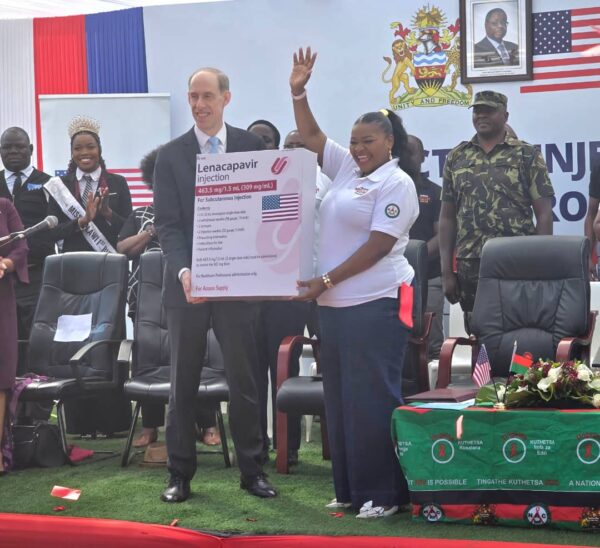

The drug, Lenacapavir, was launched at Area 25 Community Hospital in Lilongwe on Thursday.
It joins oral PrEP and a two-monthly injectable alternative, Cabotegravir, as a biomedical option for people at substantial risk of contracting HIV.
Health Minister Madalitso Baloyi said the rollout was about more than medicine.
“Today is not merely about introducing another medicine. It is about expanding hope, embracing scientific innovation, and reaffirming our commitment to ensuring that every Malawian has access to safe, effective, and people-centred HIV prevention services,” she said.
Malawi has recorded an 80 percent decline in new HIV infections since 2010 and was among the first six countries in the SADC region to meet the global 95-95-95 treatment targets — meaning more than 95 percent of people living with HIV know their status, are on treatment, and have achieved viral suppression.
However, officials warned that new infections remain too high.
National AIDS Commission chief executive Dr Beatrice Matanje said the country recorded close to 12,000 new infections in the past year, well above the government’s target of fewer than 4,000 annually by 2030.
“Every new infection is an infection that should be prevented,” Matanje said. “The addition of Lenacapavir will give people that are at risk options and choices that they can make to go for HIV prevention.”
She cautioned, however, that the drug should not be seen as a standalone solution.
Lenacapavir does not protect against other sexually transmitted infections such as syphilis and gonorrhoea, nor does it prevent unwanted pregnancies.
Officials said it would be rolled out alongside condoms, STI screening and behaviour change programmes as part of a wider combination prevention strategy.
The United States government, through PEPFAR, supported the introduction of Lenacapavir in Malawi. US Chargé d’Affaires Jonathan Fischer reaffirmed Washington’s commitment to supporting Malawi in eliminating HIV and AIDS by 2030.
Minister Baloyi acknowledged the role of international partners while stressing the importance of domestic ownership.
“The long-term success of our HIV response depends on increasing domestic ownership and investment,” she said.
Follow and Subscribe Nyasa TV :