

Mwanamvekha faces reckoning as ‘recovery budget’ forecasts collapse
Barely three months after Finance Minister Joseph Mwanamvekha unveiled what government billed as a recovery budget to revive the economy and ease pressure on ordinary Malawians, the country’s economic trajectory is moving in the opposite direction.
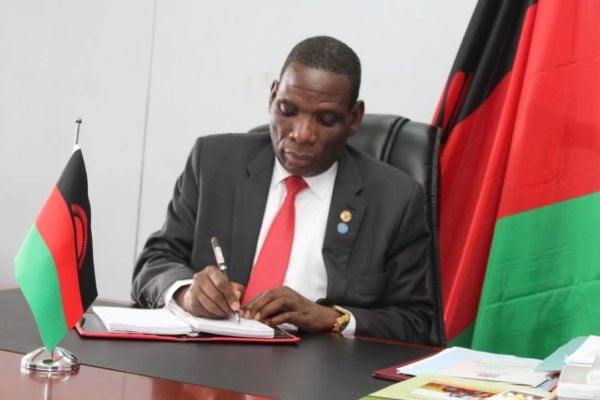
The warning signs are no longer coming only from political opponents. They are emerging from Parliament, independent economists and international financial institutions — all pointing to an economy struggling to meet the assumptions underpinning the K11tn 2026/27 national budget.
When Mwanamvekha presented the budget in February, the government projected economic growth of 4.1%, inflation falling to 15%, and improved fiscal stability.
Those projections underpinned promises that the economy would recover, livelihoods would improve, and government would have sufficient resources to fund development and social services.
Less than three months on, those assumptions have largely unravelled. The World Bank has cut its projection for Malawi’s economic growth to just 2.3%, almost half the government’s target.
Rather than easing to 15%, inflation is now expected to remain above 20%, with the Bank forecasting 21.9%.
The fiscal deficit is projected to widen beyond government estimates, while public debt is expected to reach 92.3% of GDP — placing Malawi among the most heavily indebted countries in sub-Saharan Africa.
The deteriorating outlook raises an uncomfortable question: if the economy is growing far more slowly than expected, how will the budget deliver on its promises?
For many Malawians, there is already little evidence the budget is improving daily life.
Although maize prices have eased following improved food supplies, nearly every other cost-of-living indicator remains under pressure.
Businesses continue to struggle accessing foreign exchange, manufacturers are finding it difficult to import raw materials, and pharmacies continue to report shortages of essential medicines.
Fuel importers remain under strain, while prices of imported goods keep rising. For households, transport costs remain high, medicines remain expensive, and inflation continues to erode the purchasing power of wages.
The anticipated trickle-down of economic recovery to ordinary citizens has yet to materialise.
Economists point to government’s continued reliance on domestic borrowing as one of the biggest obstacles to recovery.
Economics Association of Malawi president Bertha Bangara-Chikadza said commercial banks find it more attractive to lend to government by purchasing Treasury securities than to finance productive businesses — leaving manufacturers, farmers, mining companies and other private sector players struggling to access the affordable credit needed to expand production, create jobs and stimulate economic activity.
Without stronger private investment, economists warn that the benefits of government spending are unlikely to reach households in any meaningful way.
Even Parliament has begun to question the budget’s sustainability. Budget and Finance Committee chairperson Sosten Gwengwe said members recently received a briefing showing that the macroeconomic assumptions underpinning the budget have significantly weakened, describing its foundations as having become “very weak and shaky” amid revised projections of slower growth, persistent inflation, worsening foreign exchange shortages, rising public debt and an increasingly uncertain global economic environment.
The implication is that government may collect substantially less revenue than projected while facing greater expenditure pressures — a mismatch that threatens implementation of the budget’s centrepiece projects and programmes.
Debt servicing has emerged as a further constraint. With roughly half of domestic revenue now going toward servicing public debt, government has considerably less fiscal space to finance infrastructure, agriculture, health, education and other development priorities that directly affect people’s lives.
Public finance expert Jimmy Lipunga said Malawi’s economic difficulties are structural in nature and cannot simply be resolved through optimistic budget assumptions.
Years of slow growth, widening fiscal deficits and expansion of the money supply have left deep-seated weaknesses that require more than ambitious projections to overcome.
Government can point to some bright spots. The Malawi Revenue Authority exceeded its first-quarter revenue target by K20bn, reflecting improved tax collection, while the emerging mining sector offers hope of generating much-needed foreign exchange once major projects reach production.
However, economists caution that stronger tax collection alone cannot offset weaker growth, mounting debt and stubborn inflation.
As revenue expectations weaken, government faces increasingly difficult choices: cut expenditure, raise taxes, or miss key budget targets.
Three months into implementation, the evidence suggests the first budget of the Mutharika administration is under considerable strain. The government promised economic stabilisation that would restore purchasing power, improve access to essential goods and create the conditions for growth.
Instead, the country’s key economic indicators are moving further away from the targets on which those promises were based.
Outside cheaper maize, there is little sign that the benefits of the budget are filtering through to businesses or households.
Until inflation falls, foreign exchange shortages ease, affordable credit returns to the private sector, and living standards begin to improve, the government’s recovery narrative will continue to face a difficult test: convincing Malawians that the budget is working, when many say they are yet to feel its impact.
Follow and Subscribe Nyasa TV :