

First Lady moves to cushion returnees from South Africa
First Lady Gertrude Mutharika’s charity, Beautify Malawi Trust (Beam), has distributed duvets, sugar, soap, soya pieces, orange juice and flour to around 1,000 Malawians returned from South Africa, in a handover staged at Joyce Chitsulo Stadium in Mwanza.
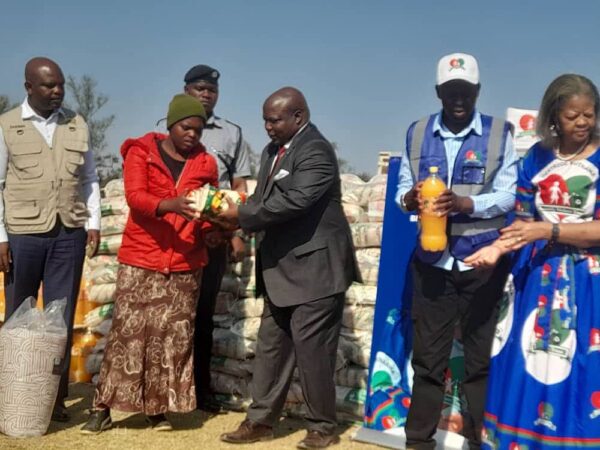
Beam’s chairperson, Dingiswayo Jere, called it a safety net for returnees restarting their lives, while Chief Secretary Justin Saidi urged the returnees to put their skills to work for the country’s development — a call that costs the government nothing and commits it to little.
The gesture is easy to welcome and hard not to question. It reaches roughly one in forty of the 41,976 Malawians the Department of Disaster Management Affairs says have now been repatriated from South Africa — a fraction that says more about the scale of the crisis than the response to it.
Abdul Bright, speaking for the returnees, thanked the First Lady for help that mattered to people who came home with nothing; that gratitude is genuine and does not need qualifying.
But it lands amid a period of real scrutiny for the charity delivering it.
Beam is currently facing calls for a forensic audit after a governance watchdog accused the First Lady of wrongful enrichment and abuse of power, and an investigation reportedly found that K17.79 billion was pledged at the charity’s relaunch — prompting questions about where such generosity was during the years the party was out of power.
South African businessman Zunaid Moti’s alleged MK4 billion donation to Beam, followed weeks later by his acquisition of ten mining licences and a leaked, unannounced appointment as Malawi’s Ambassador at Large, has drawn particular criticism from anti-corruption campaigners.
None of that diminishes what duvets and flour mean to a family that has just crossed the border with nothing.
But it does mean the donation cannot be read only as charity.
When a First Lady’s trust — one already under pressure to explain the sources and purposes of its far larger donations — becomes the visible face of the state’s response to a crisis affecting tens of thousands, the smaller, sympathetic gesture inevitably gets read against the larger, unresolved one.