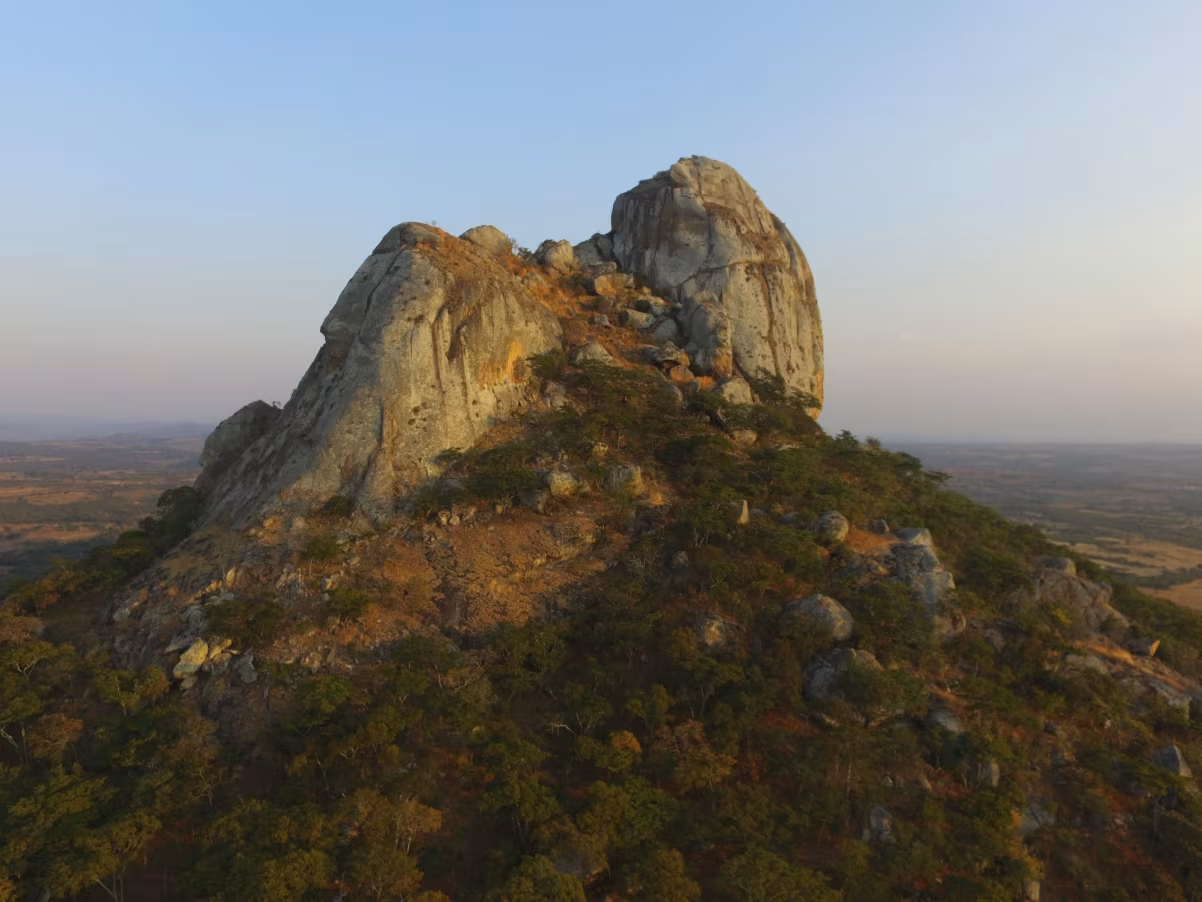
Malawi has stunned the global scientific community after United States researchers discovered evidence that people living around Hora Mountain in Mzimba were practicing cremation nearly 9,500 years ago—thousands of years earlier than previously believed anywhere in Africa.
Hora-mountain-from-afar
The discovery, described by international scientists as extraordinary, places Malawi at the centre of a major breakthrough in understanding ancient African societies and their cultural sophistication. According to CNN, this is now the oldest known evidence of cremation on the continent.
Associate Professor of Anthropology at the University of Oklahoma, Jessica Cerezo-Roman, said researchers uncovered about 100 fragments of arm and leg bones believed to have belonged to a woman aged between 18 and 60.
“Cremation is very rare among ancient and modern hunter-gatherers,” Cerezo-Roman said, underscoring just how unusual—and significant—the finding is.
Her colleague, Assistant Professor of Anthropology at Yale University, Dr Jessica Thompson, said the team was astonished by the results of carbon dating, which placed the cremation at around 9,500 years ago.
“Most known cremations in Africa date to about 3,500 years ago,” Thompson said. “This discovery completely changes that timeline.”
The site around Hora Mountain was first excavated in the 1950s, when scientists identified burial grounds belonging to ancient hunter-gatherers. But much of the area remained a mystery for decades and was largely ignored due to the absence of complete skeletal remains.
That mystery began to unravel in 2016, when renewed research revealed that humans had occupied the Hora Mountain area as far back as 21,000 years ago—already placing Malawi among the earliest known centres of human settlement in southern Africa.
Experts say the cremation discovery does more than add a footnote to archaeology books; it challenges long-held assumptions that complex funerary practices emerged much later and outside Africa.
For Malawi, the implications are profound. The findings elevate the country from a footnote in human history to a key chapter, proving that its ancient inhabitants were culturally advanced, innovative and deeply ritualistic thousands of years before similar practices appeared elsewhere.
As scientists continue to study the site, one thing is already clear: the ashes of a woman cremated in Mzimba nearly 10,000 years ago are now forcing the world to rethink Africa’s past—and Malawi’s place in the story of humanity.