

Malawi sedition laws ‘declared invalid’: Law scholars discuss inconsistencies
The use of sedition laws to punish government critics is inconsistent with the spirit of the new Malawi Constitution which guarantees freedom of opinion, expression and the press; law scholars have said, revealing that the High Court declared the sedition laws invalid.

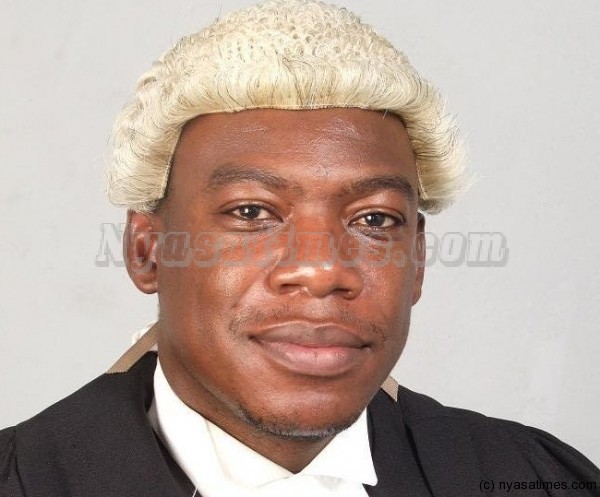
The comments come in the wake of the arrest of opposition members charged with sedition and treason over allegations that they discussed on WhatsApp – the mobile messaging service -how to unseat President Peter Mutharika.
University of Malawi law lecture Sunduzwayo Madise – currently pursing further studies in England – put on record that a High Court ruling made by Justice Lovemore Chikopa (Senior Counsel)- in the case involving politicians Harry Mkandawire and Yeremiah Chihana who were charged with managing unlawful Society.
On sedition, Justice Chikopa ruled: “And yes perhaps it is time we decided whether in their present form our sedition laws remain valid in the current Constitutional dispensation or whether we still need them. We think not in either instance”.
Sedition used to be a serious offence during the rule of former president-for-life, the late Hastings Kamuzu Banda. The law used by dictatorial regimes to gag criticism, was used to imprison pro-democracy hero late Chakufwa Chihana, apparently its last victim.
A constitutional law expert Edge Kanyongolo, who is lecturer at University of Malawi’s Chancellor College, has also discussed about the inconsistencies of the law to democratic society.
Writing on his Facebook page, Kanyongolo stated that before even getting to the question of whether words in private communications like Whatsapp are seditious, the State has to overcome the question of violation of the right to privacy.
“Section 21 of the Constitution provides that ‘Every person shall have the right to personal privacy, which shall include the right not to be subject to – a. searches of his or her person, home or property; b. the seizure of private possessions; or c. interference with private communications, including mail and all forms of telecommunications.”
He added: “Of course, the right may be limited, but only where the search/interference is authorised by law (usually through a warrant). Any evidence collected surreptitiously without such authority- sometimes referred to as ‘the fruits of a poisonous tree’- will generally not be accepted by a court.
“In addition, any person involved in such illegal collection of evidence is himself/herself committing a criminal offence (akin to trespass) and may be sued for compensation.”
However, Kanyongolo pointed out that “it becomes a different ball game if a participant in the message exchanges voluntarily gives the police the ‘evidence’… snitch-like.”
And responding to a Nyasa Times questionnaire, law expert Madise said Malawi should rethink the use of sedition laws, calling it “archaic” and that it serves “no useful purpose and actually infringes on the constitutional right of free speech.”
Madise told Nyasa Times: “ As long as people are not actually planning to use arms insurrection or force, using sedition law to gag people has no place in the 21st century. This law should either be repealed or redefined to be restricted to cases where attempts are made to use force or arms to overthrow a government.


“Otherwise mere talk cannot in my view amount to overthrowing the government. Suppose one person rose up today and announced I am President. Most likely he would be dismissed as a lunatic or someone seeking attention. No One would take him or her seriously.
Madise noted that all the sedition and treason cases in Malawi have actually amounted to nothing but suppression of either the opposition or those deemed to be the next generation of leaders.
“Therefore to use sedition as a means to silence criticism is in my view the wrong application of law. I have always said it that all these calls for resignation or regime change are just empty calls. No one ever takes them seriously. Malawi is a constitutional democracy. The removal of the sitting president is governed by law. He can resign, be impeached or removed if incapacitated. Calls for the president to resign are just that; mere calls. They cannot in the least force at law any president to resign unless the president wishes to resign. Deadlines for resignation have no place in our constitution. Usually I dismiss them as the usual political or civil society talk,” Madise told Nyasa Times.
He also said calls for “regime change” cannot in their own amount to sedition.
“After all people have the right to agitate for regime change should they be dissatisfied with any current regime,” said the lawyer.
Madise pointed out that what would be unlawful is the means employed to affect regime change.
“Civil disobedience cannot in my view be sedition. That is how we (Malawians) forced Kamuzu to concede to a referendum. As long as there are no acts of violence (which can be prosecuted on their own) or use of arms or other state institutions like the army or police, I would opine people should be left to debate their political choices.
“In any event with the opening up of social media such as Facebook, Twitter and others, it begs the question whether you can succeed in gagging up people or whether in the process all you are doing is releasing Pandora from her box. Every time I hear of these sedition cases I always laugh and say we really have better things to be doing.”
He also said politicians in power should stop abusing the Police in victimising opponents and wonderers why MPs who find sedition and treason laws draconian, what are they doing about it, saying they have the power to act.
“Complaining about it will not solve the problem. Maybe it’s time you actually did something in that august House about this draconian law
A South Africa-based law scholar at university of Cape Town Danwood Chirwa stated in the local press that Malawi has a Constitution that protects freedom of expression and political rights, both of which are there to promote robust political engagement and competition.
Using the sedition law to squelch political dissent has also been widely condemned by Malawians on social media, particularly on Facebook.
London-based economist Watipatso Mkandwire wrote on Madise’s Facebook post: “This has become kindergarten stuff. Who is in charge in Malawi? It seems each institution of Government can wake up and perform a function whether illegal or irrelevant as long as it serves someone’s interest. Very chaotic. How would even partners trust us?”
Follow and Subscribe Nyasa TV :