

History has been Scorched! A tale about Malawi Scorchers; The dark horse of 2026 WAFCON
- From Debutants to a Nation’s Pride
The Scorchers have returned home as far more than WAFCON runners up. They have returned as history makers and brought eternal joy to the Warm Heart of Africa. 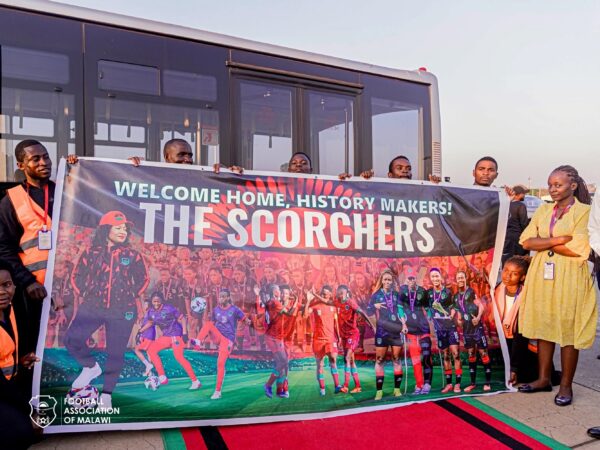
Prior to this tournament, Malawi had never appeared at the Women’s Africa Cup of Nations (WAFCON). Now, after their first appearance, the Scorchers have rewritten what was thought possible: they have reached the final, finished as runners-up, defeated Africa’s most successful women’s football nation, qualified Malawi for its first-ever FIFA Women’s World Cup, and gave an entire country something to believe in. That is far bigger than a tournament. It is a moment capable of changing the direction of women’s football in Malawi.
A Debut That Immediately Announced Malawi’s Arrival
The Scorchers entered WAFCON 2026 as debutants, drawn into a difficult Group C alongside defending champions Nigeria, Zambia and Egypt. Even before the tournament, the ambition was modest: get out of the group and see how far the run could carry them. Malawi arrived carrying a difficult recent history in their last 5 matches before WAFCON, they had suffered four loses and a single draw. This was hardly a promising sign heading into the biggest stage African women’s football has to offer. But the Scorchers quickly showed that they had not travelled to Morocco simply to make up number..
Their opening match against Nigeria was the first warning, beating the ten-time African champions and defending WAFCON champions. The Scorchers produced one of the biggest shocks of the tournament.
The lesson was immediate: Malawi was not afraid of reputations.
Tournament Summary
6 games | 4 wins |2 defeats|12 goals scored |10 conceded |Runners up
Stage Opponent Score
(Mw-Opp) Takeaways
Group Stage Nigeria 3-2 The beginning of something that would become the tournament’s defining theme: belief
Group Stage Egypt 3-1 The debutants were serious contenders.
Group Stage Zambia 1-2 It could have been the end of the dream. Instead, it became another chapter in it.
Quarter-Final Ghana 2-1 For the first time, a senior Malawian national team men’s or women’s had qualified for a FIFA World Cup.
Semi-Final Algeria 3-1 No longer underdogs, they had earned their place among Africa’s best.
Final Cameroon 0-3 The final. A result that didn’t go Malawi’s way.
The Scorchers WAFCON journey was full of emotions and history in the making. They stunned Nigeria, backed it up against Egypt, suffered a narrow defeat to Zambia in the match that would decide their place in the quarter-finals and they made it through.
They Showed character against Ghana and made history against Algeria to reach the final. It was a final Malawi just fell short of winning. A difficult first half but followed by a strong response in the second. The fought for every chance they could find, but it wasn’t enough, and Cameroon lifted the WAFCON 2026 title for the first time.
The Final.
The final exposed the difference between a team that had found a remarkable rhythm during a tournament and a team capable of maintaining that rhythm under the greatest pressure of its campaign.
Cameroon was sharper, more clinical, and more composed in the decisive moments. But there is another side to that final worth remembering.
Malawi did not concede in the second half. At the start of the second half, they came out with greater determination, defended better, and looked far more like a team that had defeated Nigeria, Ghana and Algeria.
What was missing was the final touch. They needed a goal. With Cameroon building a heavy block on the Malawi forwards, Malawi struggled to find a way through and to put the ball in the back of the net. They needed one moment to reopen the contest and close the gap. It never came.
And perhaps that is the fairest way to view the final. Cameroon deserved their victory, but Malawi’s second half response proved that this team had not surrendered after a difficult 45 minutes. The scorchers kept fighting.
That matters.
The emotions after the final whistle said everything. Perhaps one of the most powerful images from that night wasn’t a goal or a trophy, it was the players themselves, players’ emotions, the tears, the exhaustion, the disappointment etched into every face. Those emotions tell us something important about this team.
They did not travel to Morrocco simply to say they had taken part in WAFCON. They were not there to make up the numbers. They were playing to win it. They believed they could win it, and they wanted to make even more history. When that chance slipped away, it hurt. That pain should not be interpreted as failure. It should be interpreted as ambition.
A team that cries after losing a final, is a team that cared about winning it.
What happens Next?
The WAFCON journey may be over, but for the Malawi Scorchers, the real work has only just begun.
They return home with a silver medal, but something more valuable travels with them: experience at a highest level. The World Cup is next.
Reaching the final on debut and securing qualification for the 2027 FIFA Women’s World Cup is a historic achievement. But the real challenge is ensuring this does not become a once-in-a-generation moment. Malawi must treat the Scorchers’ run as a foundation for something much bigger not just a peak.
Brazil 2027 will be an entirely different test. This time, the stakes are higher, and the stage is the biggest in the world. At WAFCON, Malawi learned to compete against some of Africa’s strongest teams. At the World Cup, they’ll encounter teams from every continent, with different tactical approaches, greater squad depth, different footballing cultures, and in many cases, considerably far more resources.
The question is, how well can they prepare for it?
The first priority is continuity. The core of this squad should remain together, and the technical team must continue to work with the group long after the celebrations fade.
The final exposed a weakness: Malawi can struggle when an opponent seizes control early. That has to change. The team needs to get better at playing under sustained pressure, retaining possession, progressing the ball from defence into midfield, creating chances against deep blocks created by opponents, and resetting when opposition dictates the tempo.
Training has to become sharper, more technical, more intense, more specialised more purposeful.
And beyond the pitch, what happens next depends on investment, preparation, squad depth, and the strength of the domestic women’s game. The team needs to strengthen positions where weaknesses were exposed and exploited by opponents.
There must be greater depth.
The Chawinga sisters have been hugely influential with scoring 9 of Malawi’s 12 goals across the tournament. But World Cup football cannot rest on two players alone. Malawi needs more players capable of changing games when key players are marked up or absent, more competition for positions and a stronger pipeline of young talent.
That’s where the domestic women’s game becomes essential.
If WAFCON has taught Malawi anything, it is that the country has talent. Talent is already there. What it needs now is an ecosystem: better facilities, better coaching, more international friendlies, better sports science and physical preparations, greater investment, and more opportunities for young girls to develop.
Malawi shouldn’t rely solely on players gaining experience in stronger leagues abroad, the country needs to build facilities at home capable of offering that same level of competitive training and exposure.
This result should be an eye opener. Look at the teams that have climbed to the top of women’s game, nations that once stood where Malawi stands now, unproven, uncertain, easy to overlook.
What set them apart was never talent alone: talent has never been scarce on this continent. It was the willingness to invest in that talent long before the world was watching in facilities, in coaching, in science, in belief.
Their rise was not an accident, it was a decision, made and remade over years, to take women’s football seriously when it would have been easier not to.
And if this moment teaches Malawi anything, it is that effort invested with purpose does not disappear, it compounds. It becomes results. It becomes a nation watching its daughters compete against the best in the world and seeing, perhaps for the first time, what is possible. It becomes a name spoken with respect in rooms it was never invited into before.
And most of all, it becomes a pathway, a lit corridor for the next generation of girls, who will no longer have to imagine what it looks like to dream this big, because they have seen it done.
That is the real inheritance of this WAFCON campaign. Not the silver medal, though it will shine in memory. Not even the World Cup ticket, though it opens a door few believed existed.
The inheritance is proof that when Malawi chooses to build, to direct resources towards women’s football, it can stand among nations far wealthier and far more developed and hold its ground.
Learning From the World.
Malawi should be studying different styles now
• How do European teams press?
• How do the best South American teams build attacks?
• How do Asian teams manipulate space?
• How do top sides defend against fast counterattacks?
• How do top sides defend against fast counterattacks?
These are the questions that should be guiding Malawi’s preparation for the 2027 FIFA World Cup. They should also seek high-quality international friendlies against varied oppositions.
The objective shouldn’t simply be to win these friendlies; it should be to learn. A 1-0 defeat to a world-class side that exposes weakness may prove more valuable than a comfortable victory over an opponent who doesn’t test them.
But the story is bigger than football.
One of the most beautiful achievements of the Scorchers is what they have done away from the pitch.
They Have United Malawi.
For a country that has experienced and continues to experience its share of challenges across the country, football has once again given people a reason to celebrate together. For once, the country wasn’t divided by teams, tribes, districts or political parties. Malawians had one goal, one team, and one shared support: the Scorchers.
Men have been supporting the women’s team. Women have been supporting the women’s team. Young girls have seen something that perhaps didn’t seem possible before. They have seen Malawi women competing on one of Africa’s biggest stages. Now they can dream bigger too. That is legacy!
Let this also be a lesson to those in power. This moment must never be pulled into politics. The Scorchers’ Victory does not belong to a government; it belongs to the whole of Malawi.
No party should be allowed to wear this achievement as its own, and no politics should be allowed to divide what these women have united. This is not a stage for party positioning or political point-scoring.
Every Malawian, regardless of where they stand, deserves to be treated and considered as one because these women carried no flag but Malawi’s and raised it high across the seas.
To The Scorchers
Be Proud! You have brought pride, belief, inspiration and a new future for Malawian women’s football.
Congratulations Scorchers. You didn’t just represent Malawi you gave Malawi something to believe in, a reason to stand together, and you’ve ignited a nation’s patriotism.
Follow and Subscribe Nyasa TV :