

Absence of framework law impeding attainment of right to food
Malawi has a wide range of well-formulated, well-intended policies and strategies but it has no overarching framework law to articulate rights and obligations to create an environment to facilitate the attainment of the Right to Food.

The absence of the overarching framework law is singled out as challenge towards the implementation of the Right to Food to offer protection to all citizens to have access to safe and nutritious food.
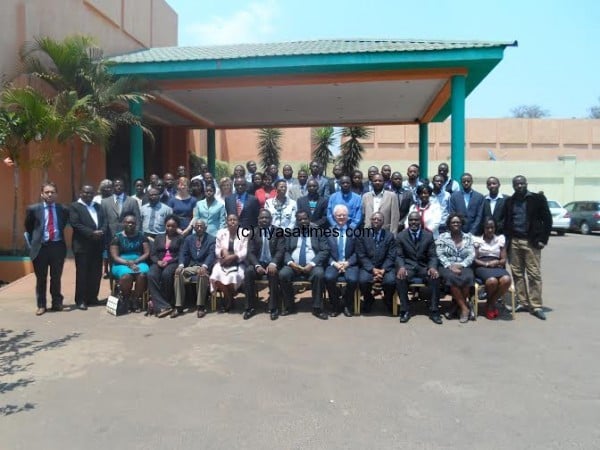
This came to light at a national dialogue conference organised by the Civil Society Agriculture Network (CISANET) in collaboration with Danchurchaid, ActionAid Malawi, CADECOM and Oxfam. The conference was held on Thursday under the theme: Towards Food Security for All at Crossroads Hotel in Lilongwe.
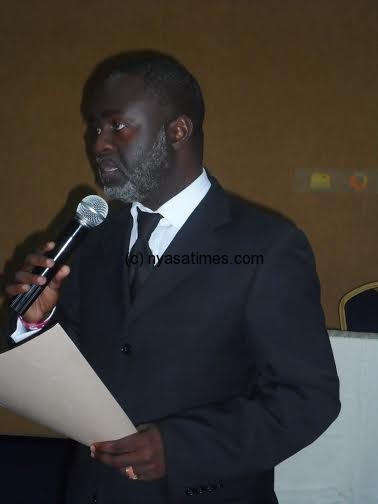
CISANET National Director Tamani Nkhono-Mvula while closing the one-day conference said the objective of the conference to arouse national and stakeholders interest in the Right to Food and develop a road map for institutionalising the Right to Food in Malawi has been achieved.
Regional representative of Danchurchaid Malawi Christian Balslev-Olesen noted that it was pleasing that civil society organisations have come together in solidarity to a common cause, to improve the life of the poor vulnerable households especially in rural areas to ensure that such families are supported to achieve their right to food.
“You are aware of the fact that the challenge of food security and right to food for the majority has been a major issue economically as well as politically. I might also add, socially. We have seen statistics almost yearly that indicate that a significant segment of the population living below US$1.00/ day, and many of these face food deficit in the lean months of the year from October to March with no immediate alternative livelihoods.
“A critical look at the underlying causes of the situation reveals a variety of structural barriers which discourages or impinges on accelerated achievement of food security and right to food for the majority of the population. These include access to adequate land, lack of productive resources, lack of meaningful employment, lack of reliable markets, and skewed policies, just to mention a few,” said Balslev-Olesen.
Balslev-Olesen added the attainment of food security and the right to food is a challenge in the absence of an overarching framework law that can articulate each party’s rights and obligations to create an environment that operates on systems that would be respected by all to facilitate the attainment of everyone’s right to food.
“However as observed in Malawi, there is still a lot that needs to be done, and to be done quickly, in order to make food security and the right to food a sustainable reality in Malawi,” said Balslev-Olesen.
“We believe one of the ways that this can be achieved is for Malawi to have a consistent strategy on implementation of right to food, because so far, Malawi has tried to implement many of the issues contained in voluntary guidelines to realisation of the right to food.
“But these have not been able to achieve the intended goal because they have been done without an overarching legal framework for proper implementation and accountability,” he said.
Controller of Agricultural Extension and Technical Services in the Ministry of Agriculture, Irrigation and Water Development Dr Wilfred Lipita said Government is aware of the visit by UN Rapporteur on Right to Food in July, 2013 and the recommendation for government to establish a framework law on the Right to Food.
“This proposal was made with a view to ensure intersectoral coordination, transparency, accountability and inclusiveness, involving all players concerned with food security. The Government is also aware of the draft bill that CSOs drafted on the Right to Food and I should point out here that the bill has not been officially received by the Ministry for its views on the contents of the document. We hope that in due course the Ministry will be provided with a copy of the bill,” said Lipita.
He added: “It should be pointed out that there is currently little understanding of the concept of right to food as to under what circumstance does the access to and provision of food becomes the sole responsibility of Government as a duty bearer? What should be the role of the citizens in ensuring that this right is achieved? We therefore appreciate for such stakeholder engagements as these. We believe that such meetings will raise the understanding of the Right to Food and therefore properly advise the Government on what needs to be done.”
Lipita stated that Government will be keen to receive a report from the outcomes of the dialogue noting that the conference will provide some direction as to how the institutionalize the Right to Food in Malawi can be achieved.
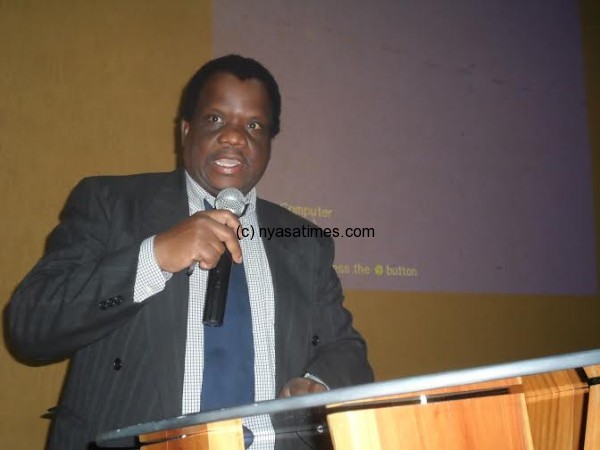
Dr Henry Chingaipe, a CISANET consultant presented on the Right to Food in Malawi, National Context and Policy Gaps. In his presentation, Chingaipe said Government has in the last ten years seriously attempted to implement and deliver on five of the seven guidelines or outcomes on the Right to Food.
But he was quick to point out that Malawi has not yet set monitorable benchmarks in relation to the right to adequate food.
“This is the case because of the absence of a comprehensive law framework for the right. Consequently, the Malawi Vulnerability Committee (MVAC) and Famine Early Warning System Network (FEWS Net) monitor food insecurity and vulnerability,” he said.
Others that made presentations include Neal Gilmore, Senior Human Rights Adviser to the UN. He presented on the Global Context of the Right to Food and UN Rapporteur’s report in Malawi.
Billy Mayaya and Victor Mughogho presented on the Right to Food Bill and Progress, Opportunities & Challenges, while Harry Migochi presented on the Role of Malawi Human Rights Commission (MHRC) on the realisation of the Right to Food.
The Special Rapporteur to Malawi on right to food, among others, recommends that the Government establishes a framework law on the Right to Food, with a view to ensuring inters- sectorial coordination, transparency, accountability, and inclusiveness, involving non-governmental stakeholders in policy-making.
Follow and Subscribe Nyasa TV :