

Court clears way for government to recall former Malawi envoy to Kuwait
- IRC lifts interim protection for Younos Abdul Karim, accepting government’s argument that his recall can proceed while the wider legal challenge continues.
The Industrial Relations Court has removed a temporary legal obstacle that had prevented the government from recalling former Malawi ambassador to Kuwait, Younos Abdul Karim, in a ruling that underscores the uncertain legal terrain surrounding diplomatic appointments and presidential authority.
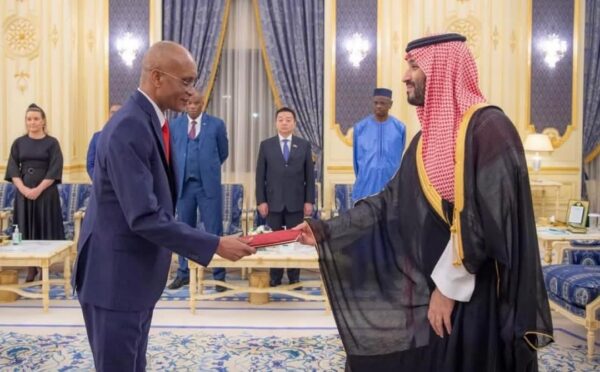
Deputy Chairperson Tamanda Nyimba on Wednesday set aside an interim order that had barred the Ministry of Foreign Affairs and the Chief Secretary to the Office of the President and Cabinet from implementing the recall.
The order had been obtained by Karim in September as he sought to challenge the government’s decision.
The ruling does not determine the merits of Karim’s case. But it does hand the government an important procedural victory, allowing it to proceed with the recall while the substantive dispute remains before the court.
The case turns on a technical but potentially consequential question: what protections, if any, are available to an envoy who was appointed but never confirmed by Parliament?
Karim secured the interim order on 25 September 2026, arguing that the recall should be halted until the court had fully considered his claim. The government, represented by Attorney General Frank Mbeta, responded by seeking to have that protection removed.
Mbeta’s argument rested heavily on Karim’s status. He told the court that Karim had been appointed as an ambassador-designate and was therefore subject to confirmation by Parliament’s Public Appointments Committee under Section 190 of the Constitution.
Because that confirmation never took place, the Attorney General argued, Karim could not claim the same legal standing as a fully accredited ambassador.
The government also advanced a broader constitutional argument. Decisions on the appointment and recall of ambassadors, it submitted, fall within the President’s prerogative powers, an area in which judicial intervention should be limited.
A further consideration was the question of remedy. According to the Attorney General, any loss Karim might ultimately establish could be compensated through damages, reducing the need for interim protection while the matter is litigated.
In lifting the injunction, the court did not endorse or reject Karim’s underlying claims. Rather, it concluded that the temporary order should no longer remain in force.
The practical effect is immediate. The government is now free to proceed with the recall process. The larger legal contest, however, is far from settled.
What remains to be determined is whether Karim’s challenge can succeed on the substantive issues he has raised and whether the courts are prepared to define more clearly the rights of diplomatic appointees whose status falls somewhere between nomination and full confirmation.
For now, the government’s authority to act has been restored. The question of whether it acted lawfully remains for another day.
Follow and Subscribe Nyasa TV :