

Karonga women bartering sex with clean water: CCJP blames Malawi govt for crisis
Catholic Commission for Justice and Peace (CCJP) has blamed government’s laxity in responding to issues of clean and portable water and sanitation in Karonga district as women now are exchanging sex with the life saver liquid.
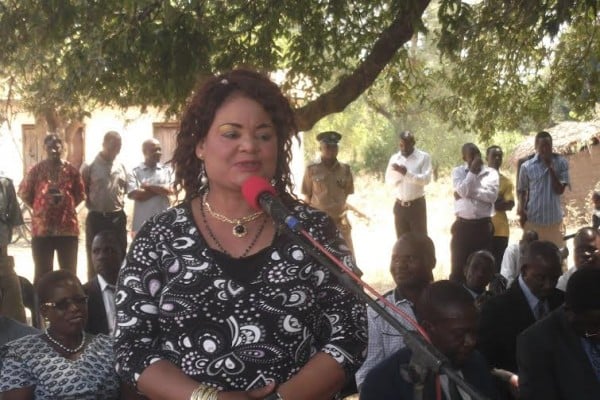
Minister of Gender, Children, Disability and Social Welfare, Patricia Kaliati, recently urged Malawi women to remain vigilant and refuse any demands for sex encounters in exchange of any service.
She urged communities to report any misconduct by officials taking advantage of body currency of Malawi women..
“No one should take advantage of the plight of you the poor to coax anyone, especially women and girls, into a sexual relationship,” Kaliati cautioned.
A survey conducted by Karonga CCJP shows that the district’s water woes are very pathetic as the population density is also on the rise.
“As it stands, the district is in need of extra 600 boreholes to rectify the water challenge but the current allocation of about K150 000 per month at the district council for water and sanitation is not enough to meet the required demand,” said Karonga CCJP Project Officer Lewis Nkhata in an interview with Nyasa Times.
Nkhata said a lot of boreholes in the district are non-functional because they are either of substandard or the taste of water is very salty.
“Some of the boreholes were just drilled anyhow without conducting visibility studies and others mainly in the southern part of the district have salty water that whenever they use them for cooking the food could turn yellow and the teeth of the under five children could also turn to the same colour.
“So because there has never been any scientific study to find out if there are some health hazards, the communities have abandoned them and return to their usual sources of unprotected water sources which is very dangerous,” he said.
Nkhata said as CCJP, they are empowering the communities and local leaders with knowledge to monitor visibility studies and drilling processes of the water points.
Malawi’s report on Malawi Growth and Development Strategy (MGDS) I and II notes that there is an increase in population with access to safe and portable water, whilst the Malawi Economic Justice Network (MEJN) report of 2010 speaks to the contrary indicating that majority of the population are yet to have access to clean and portable water as a
result of dysfunctional water points.