

Dassu’s open letter to Malawi’s President: Honesty first on the IMF and economy
Your Excellency,
Having known you personally for decades, I know you as a patriot and a nationalist who cares passionately for Malawi. I was one of those encouraged by your election to the high office of President, having believed in your promise of “A Return to Proven Leadership”.
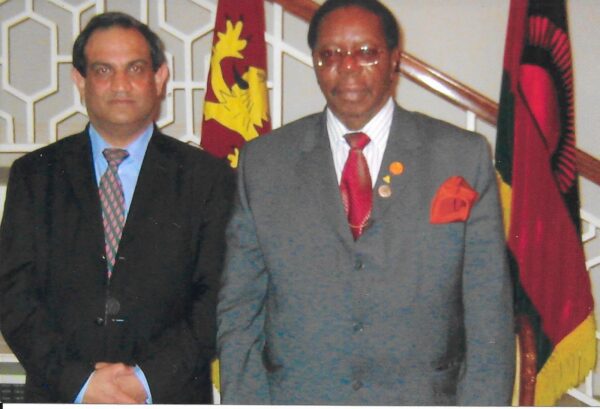
Fairness demands that we acknowledge the difficult baseline you inherited: a Treasury near bankruptcy, severe foreign exchange shortages, and deep structural strain.
In the twelve months you have been in office, your administration deserves credit for key milestones—keeping fuel supplies relatively consistent until recently, initiating crucial road reconstruction projects, and introducing free schooling for Malawian children. These measures offered real relief to a nation desperately searching for stability.
However, as Head of State, it is incumbent upon you to ensure that you are served by Ministers and officials who share your genuine commitment to bettering the lives of every Malawian, rather than pursuing their own personal betterment and enrichment.
It was in that same spirit of constructive engagement that many listened closely to your recent interview on MBC TV, in which you assured the nation that an IMF team was in the country and that an agreement on a new Extended Credit Facility (ECF) was imminent.
That is a serious promise to make. Having made it, you and your economic management team now owe the public a full, transparent, and honest account of where negotiations actually stand—and, critically, how you intend to fund these ambitious national initiatives if IMF support remains stalled.
The latest statement issued on October 6 by the IMF mission chief, Justin Tyson, confirms that discussions on a policy package under the National Economic Recovery Plan (NERP) have made considerable progress, acknowledging fiscal controls and price reforms in fuel and sugar.
Yet the Fund remains clear that the economic environment is fragile: growth is battered by climate shocks, reduced tobacco demand, and global terms-of-trade pressures, with downside risks like El Niño looming. While progress is noted, a finalised staff-level agreement is still pending policy resolution.
The nation deserves absolute clarity on the current status of these negotiations. Malawians cannot manage their lives or run businesses on optimistic assurances alone without knowing the precise standing of these conditional talks.
The reality on the ground
Away from official press statements, there is no ambiguity about the state of the economy. Fuel queues have returned and become a permanent fixture of daily life.
The Reserve Bank of Malawi has admitted openly that when foreign exchange is short, it is forced to ration funds between competing priorities, such as fuel and essential medicines.
In practice, the country is regularly failing to supply either. Patients are turned away from public hospitals and told to buy basic drugs privately, while ambulances sit idle without fuel.
Crucially, this crisis extends far beyond filling stations and hospital wards. The severe scarcity of foreign currency is strangling domestic industry and manufacturing.
Forced to survive, local businesses and manufacturers are driven to buy forex on the burgeoning parallel market, relying on forex bureaus and Hawala operators who enrich themselves by charging exorbitant premiums. This drives up production costs, fuels inflation, and threatens the survival of local industry.
The Reserve Bank’s own benchmark for safe reserves is at least three months of import cover—around 750 million US dollars. By its own admission, Malawi is far below that threshold. Selling off national gold reserves to raise roughly 30 million US dollars to pay a fuel supplier is a short-term stopgap, not an economic strategy.
Unlocking Malawi’s natural wealth
Malawi is blessed with abundant natural resources, including significant deposits of rare earth minerals and uranium. Yet, decades after mining licences were issued, the nation sees virtually no tangible economic benefits from these strategic assets.
The government must immediately commission independent actuaries and economists to quantify the value of these resource reserves, projecting precise long-term foreign exchange earnings, tax receipts, and royalties.
Furthermore, mining companies holding these licences must be held to account. Decades after acquiring rights, these operators have a clear obligation to bring projects into full commercial production.
Unlocking these critical mineral resources is essential not only to alleviate immediate forex shortages, but to serve as the engine for Malawi’s long-term economic regeneration.
The questions the Treasury must answer
With IMF discussions ongoing, the Minister of Finance should publish the following information immediately:
- The scorecard: Exactly which structural benchmarks have been agreed upon under the NERP, which remain outstanding, and why. These commitments are made in the name of the Malawian people, and the public is entitled to see the scorecard.
- Plan B and programme funding: If the finalisation of the ECF arrangement is delayed, how does the government intend to fund flagship commitments like free schooling and infrastructure projects while paying for essential imports like fuel, medicines, and fertiliser?
- Exchange rate policy: Many economists argue that the managed exchange rate is choking off formal forex inflows while feeding the parallel market and illegal trading networks. The government must set out its position clearly, along with the economic evidence behind it.
- The trade-offs: IMF programmes inevitably come with fiscal conditions. Malawians should be told now—before any final deal is signed—what expenditure adjustments will be made and who will carry the burden.
Governance and the forex crisis
None of this can be separated from governance and corruption. Every dollar lost to an inflated contract or a deal for undelivered goods is a dollar taken directly from healthcare, school funding, industry support, or fuel supplies.
The public record is clear. Earlier this year, law enforcement agencies arrested former senior officials over alleged fraud in fertiliser and tobacco procurement, including a K750 million fertiliser contract where funds were paid out for goods that never arrived.
While these cases remain before the courts and those accused are presumed innocent, the pattern shows precisely how scarce foreign currency drains out of the system.
Excellency, there is no doubt that Malawi’s development partners and international lending agencies—including the IMF, which explicitly emphasised that “strengthening governance and structural reforms will be key to macroeconomic stabilisation”—would be significantly reassured by a robust, unambiguous commitment to fighting corruption.
That trust can only be earned when Ministers and public officials who are involved in corrupt procurement, or credibly suspected of misconduct, are promptly replaced.
Furthermore, if the fight against corruption is to command public trust at home and abroad, it must be genuinely credible. That credibility depends on an unwavering, even-handed principle: law enforcement must bring incumbent Ministers and sitting officials to book with the exact same rigour as former Ministers and past officials.
Justice cannot be selective, nor can public integrity be framed as a historical exercise. Foreign exchange leaks just as easily through present procurement as it did through past deals.
Because fertiliser, fuel, and pharmaceuticals account for Malawi’s largest import bills, this is where inflated prices and middlemen do the most damage. Beyond the initial purchase price, haulage and logistics represent a massive, poorly scrutinised loophole for cost escalation.
The heavy reliance on road tankers to transport fuel and long-distance trucking for fertiliser creates significant room for inflated freight rates, excessive demurrage fees, and post-award price hikes that bleed public funds and drain precious forex.
To rebuild trust and plug these leaks, the government should commit to:
- Restructuring fuel procurement: Treating fuel as a critical national security asset and overhauling the procurement framework to invite only well-established fuel suppliers with proven international footprints, strong global supply chains, and major balance sheets to bid for national fuel tenders;
- Capping cost escalation: Ensuring all haulage and procurement contract awards clearly define tight, objective cost-escalation terms and strictly eliminating negotiated price adjustments, ending the practice of giving suppliers an open chequebook at the public’s expense;
- Publishing major contracts: Publishing all major contracts for fuel, fertiliser, and pharmaceuticals, including supplier details, unit prices, volumes, and delivery records;
- Haulage transparency: Full transparency in haulage and transport logistics, disclosing exact freight rates, route charges, and road-tanker contracts for fuel and fertiliser, and brokerage arrangements for fuel tankers, to expose and eliminate inflated transport margins.
- Mining licence enforcement: Enforcing production timelines on mining licence holders and publishing independent actuarial valuations of state mineral reserves to secure fair tax and forex yields;
- Regional price benchmarking: Benchmarking procurement and haulage costs against regional and international rates, explaining any premium paid;
- Institutional independence: Providing the Auditor General and the Anti-Corruption Bureau with the resources, mandate, and independence required to follow public money wherever it leads, regardless of political affiliation or present position.
Honesty comes first
The IMF has been clear about what is needed: sustained fiscal consolidation, credible exchange rate management, debt sustainability, and rebuilt reserves. None of these goals can be achieved without public trust, and trust starts with telling the truth.
Malawians are patient and resilient, but they expect honesty. Proven leadership is measured not by comfortable promises, but by transparency, accountability, and real outcomes. The public should not be told that relief is just around the corner while fuel queues grow, industrial activity stalls, and hospital shelves remain bare.
Mr President, the nation has heard your announcement and noted the IMF’s progress report. It is now time for your economic team to give us full clarity and show us the numbers.
The writer: Ahmed Dassu is a founding member of AFORD, served as Chief Adviser to Chakufwa Chihana, and was held as a political prisoner under Kamuzu Banda’s rule.
Follow and Subscribe Nyasa TV :