

A Speaker’s revolt, and the DPP’s none-too-subtle reminder of who’s boss
There is a particular breed of political theatre that Malawi does rather well: the public servant who, having been elevated to high office by the very people he now chooses to needle, appears genuinely startled when those people needle back.
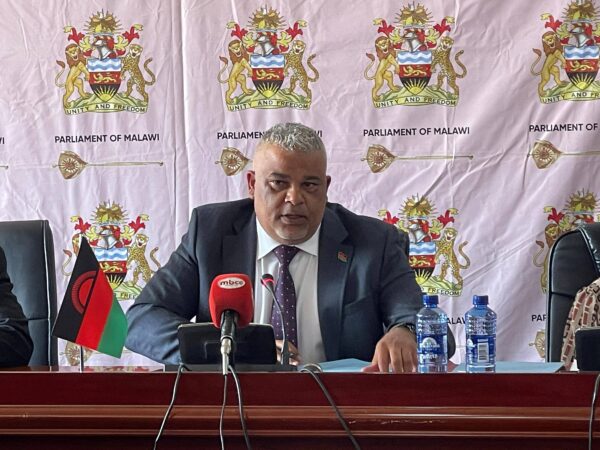
Enter Sameer Suleman, Speaker of the National Assembly, who this week found himself the toast of the political chattering classes after a press briefing that amounted to a fairly comprehensive charge sheet against the government of President Arthur Peter Mutharika. Electricity, NOCMA, passports, delayed court judgments, prison conditions, mining, agriculture, tobacco — the Speaker worked through the grievances of a nation with the thoroughness of a man auditioning for a role rather larger than the one he currently occupies.
The trouble, as any student of Malawian politics might have predicted, is that the Speaker’s chair was not bestowed upon Mr Suleman by popular acclaim but by the good offices of the Democratic Progressive Party, whose grandees are now murmuring — with the particular menace of people who gave you the job and can just as easily take it away — that the Speaker may find his wings somewhat shorter than he imagines.
The DPP’s response, delivered via Secretary General Peter Mukhitho, is a masterclass in the genre of statement that says “yes, but” while sounding as though it is saying “how dare you.” The party is at pains to note that it does not oppose oversight in principle.
Parliament, we are told, must indeed exercise its oversight role. The Judiciary must remain independent. Party leaders — and here one senses the sentence was written with a particular Speaker in mind — must respect party discipline.
It is the sort of formulation beloved of governing parties everywhere: accountability is a wonderful thing, provided it is exercised quietly, through the correct channels, by people who have first cleared their remarks with head office.
“Accountability should strengthen government, not paralyze it,” the statement intones, in that peculiar register where a warning is dressed up as a civics lesson.
What the DPP really objects to, of course, is not the substance of Mr Suleman’s complaints but the venue. Grievances aired at a lectern, before cameras, carry a whiff of “competing centres of authority” — the sort of phrase that tends to appear in statements from parties who suspect an ambitious man is measuring the curtains for a bigger office.
Whether Mr Suleman is chastened or emboldened by the rebuke remains to be seen. But he might reflect that in Malawian politics, as in most others, those who owe their position to the machine rarely find the machine amused when they start speaking as though they owe it nothing at all.
Follow and Subscribe Nyasa TV :