

‘Abandoned in Pretoria’: Aid Groups Accuse Malawi Mission of Leaving Xenophobia Victims in Basement
Humanitarian organisations in South Africa have accused Malawi’s High Commission in Pretoria of abandoning Malawians fleeing anti-immigrant attacks by forcing them to shelter in a cold basement without adequate food, bedding or sanitation.
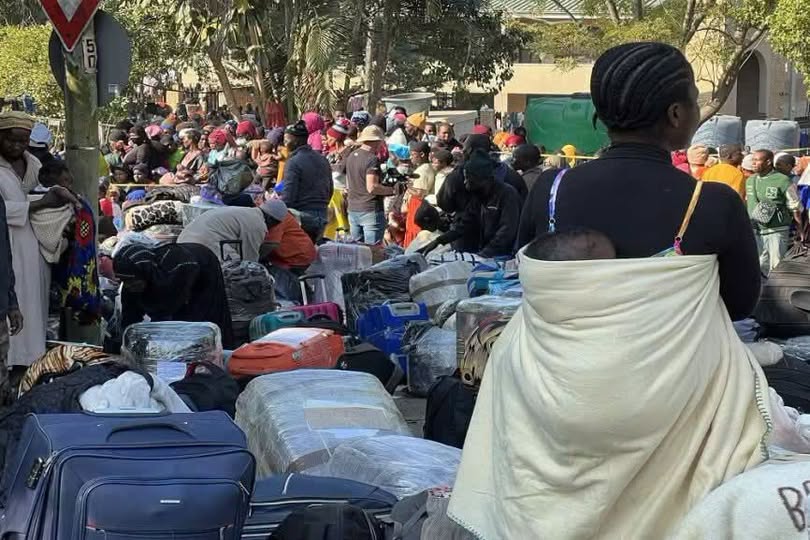
In a petition dated July 4, 2026, addressed to Malawi’s High Commissioner to South Africa, Stella Ndau, the organisations allege that the diplomatic mission has failed to provide basic humanitarian support, leaving aid workers to shoulder the burden of caring for displaced Malawians.
The petition, copied to the Ministries of Foreign Affairs and Homeland Security as well as the Office of the President and Cabinet, says scores of Malawians escaping xenophobic violence are sleeping on bare concrete in the High Commission’s basement, without blankets, mattresses or sufficient clothing.
“For weeks now, Malawians fleeing xenophobic violence in South Africa have arrived at your gates in Pretoria seeking nothing more than safety. Over 100 people a day have presented themselves at the High Commission—men, women, the elderly and babies barely old enough to hold up their own heads,” reads part of the petition.
The petition says that while the High Commission has allowed the displaced citizens onto its premises, it has failed to provide dignified shelter.
“They have not been turned away. But being allowed onto the grounds is not the same as being given shelter. What they found instead was tolerance without care: permission to stay, and a locked door between them and any warm, dry space.”
Signed by Concerned Citizens, Civil Society Organisations and Humanitarian Workers Standing in Solidarity with Displaced Malawians in South Africa, the petition warns that the conditions are exposing vulnerable people—including infants and the elderly—to serious health risks such as pneumonia and hypothermia.
According to the petition, more than 100 people are sharing a single toilet, hygiene standards have deteriorated and cases of upper respiratory infections are increasing.
“That your government has since allowed people to move into an open-ended basement is not a solution—it is an admission,” the petition states.
The humanitarian groups are demanding immediate access to heated indoor accommodation within the High Commission, particularly for children, the elderly and the sick. They are also calling for additional toilets, proper sanitation facilities, mattresses, blankets, heating, medical support and an urgent, government-funded repatriation plan.
“Every night this goes unaddressed, more people get sick, more families lose faith that their government sees them as citizens worth protecting,” the petition says.
Following the submission of the petition, humanitarian workers met High Commissioner Stella Ndau on Wednesday.
One of the attendees, Mariam Jooma Carikci, said the High Commissioner told them the mission lacked the resources to accommodate displaced Malawians anywhere other than the basement.
“Unfortunately, she told us they don’t have resources to accommodate Malawians inside the High Commission, except for the basement,” Carikci said in an interview on Thursday.
“I don’t know what resources she was referring to, but she said there are no means to do that.”
Carikci said Ndau indicated that the mission’s main intervention would be to facilitate transport for those returning to Malawi.
Ndau did not respond to requests for comment.
Ministry of Foreign Affairs spokesperson Charles Nkhalamba also declined to comment, saying the government would respond through the appropriate channels once the petition had been formally received.
According to the Department of Disaster Management Affairs, 38,094 Malawians had been repatriated from South Africa by Wednesday. Five people died during the journey home, while another died at Mwanza District Hospital after returning to Malawi.
The humanitarian crisis follows a surge in anti-immigrant demonstrations in South Africa targeting undocumented foreign nationals. Protest groups accuse migrants of taking jobs and contributing to crime and other social challenges.
One of the leading organisations behind the protests, the March and March Movement, has vowed to continue nationwide demonstrations every Thursday.
“We have seen a lot of drugs. There are a lot of people who are working when they are not supposed to because they are undocumented,” movement leader Jacinta Ngobese-Zuma told SABC News.
Follow and Subscribe Nyasa TV :