

ActionAid Malawi launches project to open up mining sector for excluded youth
Malawi is sitting on vast mineral wealth, yet its largest population — the youth — remains on the margins of the mining sector, trapped between lack of capital, lack of information and exploitation.
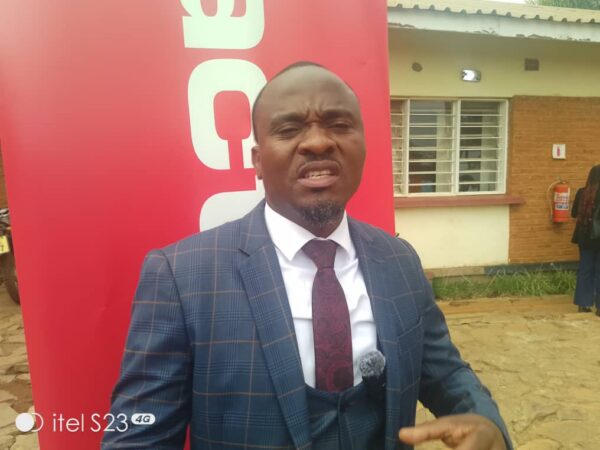
That was the picture that emerged from a stakeholders’ meeting organised by ActionAid Malawi (AAM) to unveil a new project, Uplifting the Voices of Mining Communities (UVMC), which will be implemented in Balaka and Nkhotakota.
The project, funded by Comic Relief under a three-country basket that also covers ActionAid Ghana and ActionAid Senegal, is putting £450,000 into amplifying community voices in the extractives sector.
Of that, Malawi will receive £120,000, with 76 percent channelled directly to programme activities, according to Project Officer Charles Finisi Phiri.
The project targets 800 people directly — 200 in each of four Traditional Authorities: T/As Chanthunya and Nkaya in Balaka, and T/As Mphonde and Malengachanzi in Nkhotakota.
Of these, 60 percent are women, 30 percent youth and 10 percent marginalised groups living in and around mining sites.
“Our young people are being exploited. This project therefore aims to build capacity and amplify the voices of mining affected communities, particularly the women, youth, and marginalized groups,” said Phiri.
He listed a litany of abuses at mining sites, including environmental degradation, pollution, human rights violations and child labour.
“There are a lot of environmental issues that are happening in the mining sites. There are issues of environmental degradation. We have pollution, and there are human rights issues, and the issues of child labour. So we thought that this project should be there to address those things,” he said.
On governance, Phiri pointed to a lack of coordination, lack of transparency and slow decentralisation of the mining sector as some of the barriers holding the industry back.
“So we want to address these challenges so that young people, women and the local communities we are serving are benefitting from mining activities,” he said.
For the Ministry of Youth, Sports and Culture, the project comes at a critical time.
Speaking in an interview afterwards, Deputy Director of Youth Kettie Mwalweni-Mwandira admitted that young people are not meaningfully participating in the mining sector, and are instead being pulled into artisanal and small-scale mining under harsh conditions.
“From observation, our young people are being exploited in the mining industry because most of them, they come in with no knowledge. They don’t get enough wages.
“They are abused, and especially the young women, the adolescents and young women, they tend to be abused in the mining sector,” she said.
She added that even young people who manage to acquire a mining licence often hit a wall when it comes to capital.
“Most of our young people who have got the capability to have a license, what happens is that they might have a license, but they don’t have capital,” she said, describing the exclusion as costly for a country battling a severe youth unemployment crisis.
Government figures show 44.1 percent of young people are classified as NEET — Not in Education, Employment or Training — representing about 10 million young people with nothing to do.
“We have got high unemployment rate amongst our young people. This is a very big challenge that we are facing as a country. What we want to do is to make sure that we tap into this resource.
“This is a big resource to us as a country to make sure that we are able to develop and attain the Malawi 2063 that we want,” she said.
Mwalweni-Mwandira said the UVMC project aligns directly with the National Youth Policy, particularly two of its ten broad pillars: youth skills development and enterprise, and meaningful youth participation in nation building.
“What we are expecting is that this project will improve meaningful participation of young people in the mining sector — participation in terms of them being able to voice out areas that they want government to include that concerns them, and for them to be able to get a livelihood out of the mining sector,” she said.
For the Ministry of Finance, Economic Planning and Development, the turn to mining is not accidental but economic necessity.
An official responsible for Poverty Reduction and Social Protection, Andrea Gondwe Mjuma, described ActionAid Malawi as “a major and lifetime partner of government in terms of socio-economic development.”
He said Malawi has three priority sectors in its development agenda — agriculture, mining and tourism — with mining now being pushed to help diversify an economy battered by climate change.
“Before now, our economy has already been relying on agriculture, which since independence was contributing around 50 something percent to GDP.
“Currently it is contributing around 22 percent because of declining productivity. Interestingly, mining has been contributing less than one percent and yet Malawi is endowed with precious mineral resources,” he said.
“Government says can we diversify our economy so that we develop the mining sector. The aim is: we want to see our people being employed in the mining sector, and we want to see mining contribution to economic growth to rise and even surpass agricultural contribution.”
Mjuma, who holds a PhD in Agriculture and Resource Economics, said years of climate shocks had forced government to rethink its reliance on agriculture.
“Strategically we were so much focused on agriculture, which we have been overwhelmed by climate change. With cyclones Malawi has been experiencing since 2016, we’ve seen declining productivity.
“This is why government now is trying to cushion or indeed build resilience of our economy by focusing on other equally important sectors like mining,” he said.
Beyond reaching the 800 targeted beneficiaries, the project will also build youth capacity in advocacy, value chain analysis and leadership, enabling them to claim space in policy processes and benefit economically from the mining sector.
Follow and Subscribe Nyasa TV :