

Air Force Chief Testifies in Plane Inquiry: Safety System Obsolete Since 2004, but Aircraft Declared Airworthy and Fully Inspected
Malawi Air Force Commander Major General Robray Israel has told a parliamentary ad-hoc committee investigating the Chikangawa plane crash that the aircraft involved was airworthy and had passed its last inspection in March 2024, with the next inspection scheduled for July the same year.
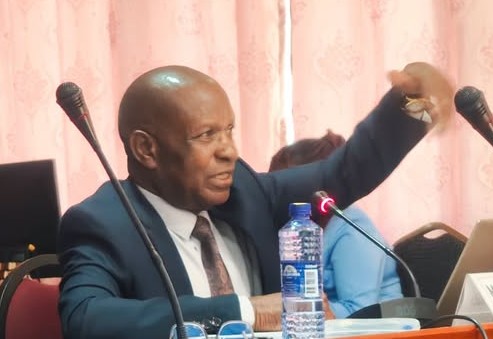
He said the aircraft had no recorded mechanical faults and was cleared for operations. However, he disclosed that a key safety system, the Emergency Locator Transmitter (ELT), had become obsolete as far back as 2004, leaving the aircraft operating without a fully functional modern tracking system.
Major General Israel explained that efforts were made to replace the outdated system, including the procurement of a new transmitter estimated at about US$200,000. He said the Air Force had communicated the need for replacement to government, but the funding was never provided despite repeated requests.
He further told the committee that on 1 September 2006, the Air Force formally submitted a quotation to higher authorities requesting funds to purchase replacement batteries for the locator system. However, he said the request was never approved and no response was received to date, leaving the system unsupported for years.
In his testimony, Major General Israel also gave a timeline of events linked to the aircraft’s movements in June. He said that on 9 June, he received a call from then Malawi Defence Force Commander Valentino Phiri informing him that the then Second Vice President Saulos Chilima required an aircraft to travel to the funeral of Ralph Kasambara.
He said the aircraft was at the time stationed in Mzuzu after completing funeral-related duties. He added that on 10 June, the aircraft returned to Lilongwe and later transported Vice President Chilima.
However, he told the committee that at around 10 a.m. the same day, he received information that the aircraft carrying Chilima was unable to land at Mzuzu Airport due to poor weather conditions, after which he ordered it to return to Lilongwe.
The testimony continues to form part of parliamentary investigations into the crash, with focus now on aircraft safety systems, maintenance history, and long-standing funding and equipment challenges within the Air Force.
Follow and Subscribe Nyasa TV :