

ANALYSIS | President Mutharika, not Saidi, must answer for VP Ansah’s humiliation
Vice-President Jane Ansah has finally broken her silence on what appears to be a serious breakdown in the relationship between the country’s second-highest office and the administration she serves, revealing that she was excluded from two Cabinet meetings and stripped of her disaster-management responsibilities. But the most curious part of her explanation is that, while she insists her relationship with President Peter Mutharika remains cordial, she places the blame for her sidelining on Secretary to the President and Cabinet Justin Saidi.
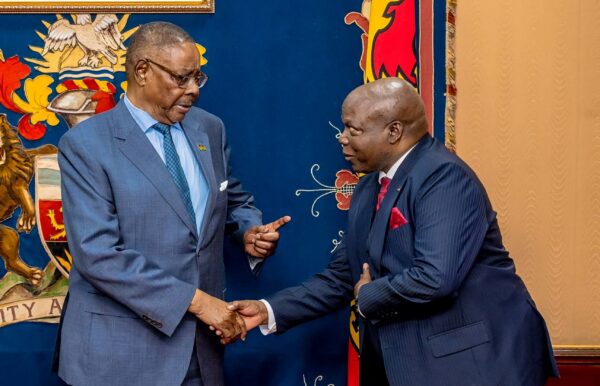
That explanation does not survive the most basic test of presidential accountability. Mutharika—not Saidi—is the person who must answer for what is happening to Jane Ansah.
Saidi is a civil servant. Mutharika is the President of Malawi. Saidi does not preside over Cabinet; Mutharika does. Saidi did not appoint Ansah as his running mate; Mutharika did. Saidi did not stand before Malawians and ask them to elect the Mutharika-Ansah ticket; Mutharika did.
And Saidi did not take an oath to preserve, protect and defend the Constitution; Mutharika did. So, with all due respect to Ansah, blaming Saidi for her political and institutional sidelining is not good enough. At best, it is an incomplete explanation. At worst, it is a convenient diversion from the person who ultimately controls Government.
Let us entertain Ansah’s allegation for a moment. Suppose Saidi decided, on his own, that the Vice-President should not attend Cabinet. How does that happen? Who convened the meeting? Who chaired it? Who sat around the table? Who noticed the Vice-President’s absence—and who had the authority to ask where she was? The answer ultimately leads to State House.
Cabinet is not an informal gathering where an administrator can simply forget to invite somebody; it is the central decision-making machinery of Government, presided over by the President.
If the Vice-President is being excluded from that machinery, the public deserves to know whether Mutharika knew, whether he approved it, and, if he did not, what action he took against the person responsible.
Indeed, the Saidi defence creates an even bigger problem for Mutharika. If Saidi acted without presidential authority, then Mutharika has failed to control his own administration.
If Saidi acted on Mutharika’s instructions, then Mutharika is directly responsible. There is no comfortable middle ground. A President cannot take credit for Government when things go well and then hand responsibility to a civil servant when politically embarrassing questions arise.
Leadership means owning both success and failure. If a civil servant is exceeding his authority, the President must stop him. If a minister is failing, the President must intervene. If a Vice-President is being sidelined, the President must explain why. The buck stops with Mutharika.
Ansah’s insistence that her relationship with Mutharika remains cordial also deserves scrutiny. Perhaps it is cordial in a personal sense, but cordiality is not the same as political confidence, institutional inclusion or constitutional respect.
Two politicians can smile at each other, shake hands and remain personally cordial while one is being systematically excluded from Government.
What matters is not whether Mutharika and Ansah can still have a pleasant conversation, but whether Mutharika still treats Ansah as his constitutional Vice-President and political partner. A Vice-President excluded from Cabinet, stripped of a major responsibility and ultimately forced to speak publicly about her treatment is not a picture of a healthy presidential partnership, whatever private assurances may exist between the two.
There is also a political history that cannot simply be wished away. Mutharika chose Jane Ansah as his running mate. He put her name next to his on the presidential ticket and asked Malawians to elect them as a team. After winning, he took the presidential oath and assumed responsibility for ensuring that Government operates within the Constitution.
He cannot now behave as though the treatment of his Vice-President is merely an administrative disagreement between Ansah and Saidi. It is his problem.
If Ansah is being deliberately excluded from Cabinet, Mutharika must explain why. If her disaster-management responsibilities have been removed, he must explain who made that decision and under what authority. If Saidi engineered either decision, the President must explain what action he has taken.
This matters because the issue should not be reduced to Ansah’s personal feelings. This is not a soap opera involving Mutharika, Ansah and Saidi. It is a question about how Malawi’s Executive operates and whether constitutional offices are being respected.
Personal cordiality cannot override constitutional responsibility, political convenience cannot replace institutional accountability, and a civil servant cannot become the convenient shield behind which an elected President hides.
President Mutharika needs to stop hiding behind Saidi and answer the questions himself. Was he aware that Ansah was excluded from the two Cabinet meetings? Did he approve it? If not, what action did he take? Why were her disaster-management responsibilities removed? Does he still have confidence in her? And does he consider her treatment consistent with the Constitution? These are not unreasonable questions. They are precisely the questions a President should expect when the country’s Vice-President publicly says she is being sidelined.
Something is profoundly wrong with a political system in which a Vice-President can publicly complain of exclusion from the business of Government while the President remains silent.
Mutharika cannot outsource presidential accountability to Justin Saidi. If Saidi is responsible, discipline him. If Mutharika authorised the decisions, own them. If neither is true, explain what happened. But Malawians should not be distracted by a blame game in which everyone points everywhere except towards State House.
Mutharika is the President. He is the man who chose Jane Ansah. He is the man who leads Cabinet. He is the man who heads the Executive. He is the man who swore to defend the Constitution. He is therefore the man who must explain why his Vice-President says she is being sidelined under his watch.
Until he does, blaming Saidi looks less like accountability and more like a smokescreen.
Malawians did not elect Justin Saidi to run the country. They elected Peter Mutharika.
So, Mr President—explain yourself.
Follow and Subscribe Nyasa TV :