

ANALYSIS | Treason as a political weapon? Namiwa case revives Malawi’s troubling history
- From Sulaimana to Chilumpha and Mutharika, treason has repeatedly shadowed political battles
Sylvester Namiwa is now facing one of the most serious criminal charges in Malawi, putting his case in the High Court and reviving uncomfortable questions about the country’s long and politically charged history with treason.
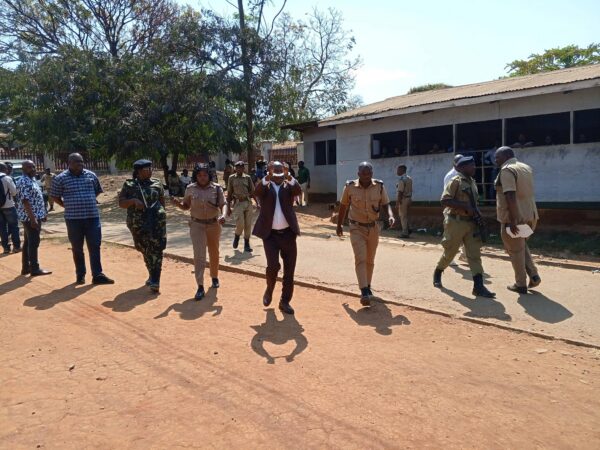
The Centre for Democracy and Economic Development Initiatives (CDEDI) executive director appeared before the Chief Resident Magistrate’s Court in Lilongwe today to be informed of the charges against him. The State charged him with treason and publication of false news likely to cause fear and alarm.
Deputy Director of Criminal Litigation Brenda Kapenda told the court that the matter had to be committed to the High Court because treason can only be tried by the High Court. Chief Resident Magistrate Austin Banda agreed and committed the case. Namiwa is expected to seek bail in the High Court.
But it is the treason charge that has transformed the case.
Treason is the State’s heaviest criminal allegation
Treason is not simply another criminal charge.
Under Section 38 of the Penal Code, it covers attempts, conspiracies or preparations to overthrow the lawfully constituted Government by force or other unlawful means, attempts to alter government through force, efforts to usurp executive power by force and other conduct threatening the State. The Penal Code provides death as the statutory punishment upon conviction.
However, Malawi’s constitutional jurisprudence has rejected mandatory death sentences, meaning a court retains sentencing discretion. Even so, the charge carries enormous legal and political weight. It also means Namiwa’s case must now be heard in the High Court.
And that raises the most important question of all: what exactly does the State allege Namiwa did that amounts to treason?
Malawi has been here before
Namiwa is not the first political activist or opponent to face the charge. In 2001, Sudi Adaki Sulaimana and others were arrested over an alleged plot to overthrow President Bakili Muluzi. The prosecution was eventually discontinued. The fallout was extraordinary.
In 2004, the High Court found the State liable for malicious prosecution, false imprisonment and defamation after Sulaimana sued the Government. Justice Chimasula Phiri found that the prosecution lacked reasonable and probable cause.
The case remains one of the starkest judicial warnings about the danger of deploying the criminal law against political opponents without sufficient evidence.
Chilumpha spent 17 years under the shadow of treason
In 2006, then Vice-President Cassim Chilumpha was arrested and charged with treason and conspiracy to murder President Bingu wa Mutharika. The State alleged that he was involved in a plot to assassinate the President. Chilumpha denied the allegations.
The case dragged on for years. In 2023, the High Court discharged him after the treason proceedings had remained unresolved for about 17 years.
No treason conviction followed. The case demonstrated another danger of the charge: even without conviction, treason can keep a person politically and legally trapped for years.
Mutharika himself once faced treason
In 2013, Peter Mutharika and several senior Democratic Progressive Party figures were charged over allegations that they had attempted to block Joyce Banda from assuming the presidency following the death of Bingu wa Mutharika.
The case involved allegations of an attempted unconstitutional transfer of power. Mutharika and his co-accused were granted bail. He was never convicted of treason.
One year later, he became President of Malawi. The irony is difficult to miss. A man once accused of attempting to subvert Malawi’s constitutional order went on to occupy the highest office in that same constitutional order.
Opposition MPs were also charged
In 2016, Malawi Congress Party MPs Jessie Kabwila, Ulemu Msungama and Peter Chankwantha were arrested and charged with treason in connection with social-media messages. They were released on bail.
The arrests triggered criticism from civil society and international rights organisations, which viewed the prosecution as part of a broader crackdown on dissent. The cases reinforced a recurring concern: why does treason so often surface during periods of intense political confrontation?
The pattern demands scrutiny
The history does not prove that every treason prosecution in Malawi has been politically motivated. Nor does it establish that Namiwa is innocent. But the record is too significant to ignore. Treason charges have repeatedly appeared in politically explosive disputes involving opposition politicians, government critics and activists. Some cases collapsed.
Some were abandoned. Some dragged on for years. And in the Sulaimana case, the High Court found the State’s prosecution malicious.
That history gives the Namiwa case a significance beyond the accused himself.
Treason must not become a weapon against dissent
The purpose of treason law is clear: protect the constitutional State from those genuinely seeking to overthrow it. That is an important function. But there is an equally important democratic principle. Criticising Government is not the same as trying to overthrow Government.
A President is not the State. A ruling party is not the State. And political dissent is not automatically treason. The State must therefore do more than point to Namiwa’s activism, statements or criticism. It must demonstrate conduct that meets the legal definition of treason.
That distinction will be central to the High Court proceedings.
The burden is now on the State
Namiwa has not been convicted. He remains presumed innocent. The State now has the opportunity to present its evidence and explain precisely how his alleged conduct crosses the line from political activism or speech into treason. That is a serious burden.
And given Malawi’s history, it should be met with evidence, not political rhetoric. Because treason is the State’s biggest criminal hammer. It should never become a hammer for silencing critics.
Follow and Subscribe Nyasa TV :