Malawi’s local government system is once again under intense scrutiny after a damning audit report revealed what appears to be entrenched financial disorder, weak controls and widespread abuse of public funds across councils — raising fresh questions about whether billions in public resources are being systematically drained through negligence, poor oversight and outright violations of financial law.
Ben Phiri
The latest report by the Office of the Auditor General covering the 2023/24 financial year has uncovered irregularities and financial losses amounting to K5.98 billion across 30 local authorities, exposing what auditors describe as persistent breakdowns in accountability systems at the lowest tiers of government.
At the centre of the findings is a troubling pattern: councils struggling — or failing — to comply with basic public finance laws, maintain proper records, and safeguard public resources entrusted to them.
The audit assessed whether councils managed public funds lawfully, efficiently and transparently. Instead, it found widespread violations of the Public Finance Management Act, the Public Audit Act and the Local Government Act, suggesting that financial indiscipline is not isolated but systemic.
According to the report, controlling officers repeatedly failed to provide supporting documentation for expenditures, while record-keeping systems were described as weak, inconsistent and in some cases virtually unusable for proper accountability.
Procurement processes were also heavily compromised.
Councils were found awarding contracts irregularly, relying on single sourcing for Constituency Development Fund (CDF) projects, engaging unqualified contractors, and making payments without approval from Internal Procurement and Disposal Committees — a direct breach of established public procurement procedures.
Beyond procurement failures, auditors uncovered missing construction materials, unaccounted-for fuel, misused borehole funds and wasteful spending on incomplete or questionable projects, including the controversial Jali bus depot development.
In some cases, funds meant for community-driven development projects were implemented with minimal or no community involvement, particularly under CDF allocations managed by Members of Parliament.
The report further highlights financial reporting distortions, including unexplained cashbook variances, long-outstanding debts and misstatements in cash and cash-equivalent balances — all of which point to fragile internal control systems and weak financial supervision.
Taken together, the findings paint a picture of local authorities operating in a near-permanent state of financial disarray, where rules exist on paper but are routinely ignored in practice.
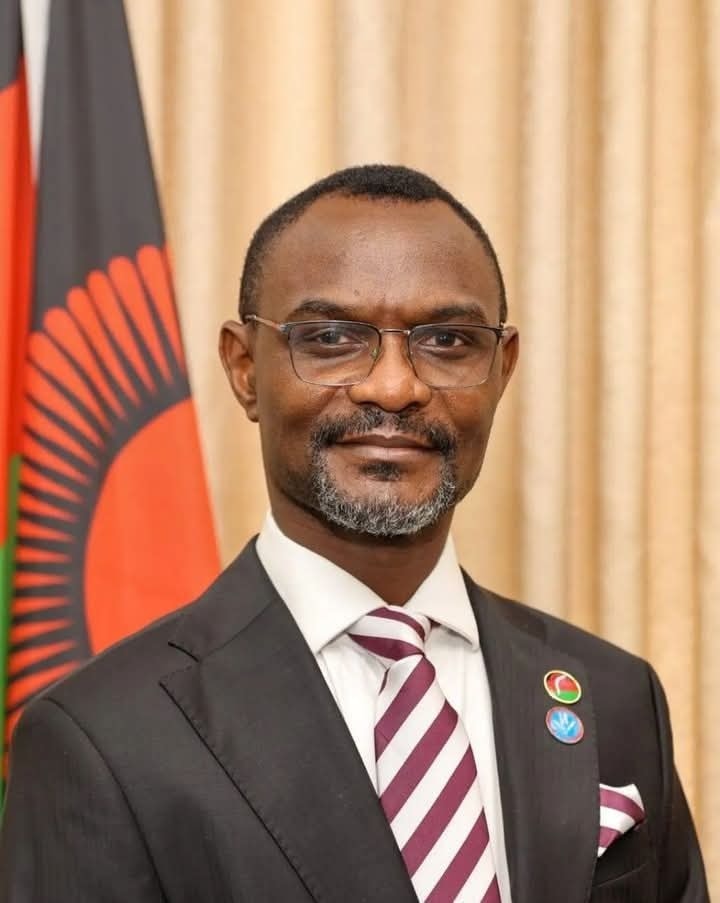
In response to the report, Minister of Local Government Ben Phiri insisted government has tightened security measures to prevent further losses, boldly stating that no funds would be lost in the current financial cycle.
However, governance analysts say such assurances ring hollow in the face of repeated audit revelations showing similar patterns of misuse year after year.
Benedicto Kondowe described the findings as alarming, warning that they reflect deep governance failure at council level rather than isolated administrative errors.
“This report shows repeated violations of the Public Finance Management Act, the Public Audit Act and the Local Government Act,” said Kondowe, underscoring the institutional nature of the problem.
The Office of the Auditor General itself cautioned that while audits are designed to assess compliance and financial integrity, they cannot guarantee detection of every fraud or irregularity — a disclaimer that further underscores the scale of systemic vulnerability within councils.
The report has recommended disciplinary action against responsible officers, full investigations by law enforcement agencies, and stricter enforcement of public finance regulations.
It further calls for urgent reforms in record-keeping systems, procurement governance and financial reporting mechanisms across councils, warning that without structural correction, losses are likely to persist.
Meanwhile, Ministry of Finance spokesperson Williams Banda confirmed receipt of the report, stating that it has already been submitted to Parliament for further scrutiny.
But as the document lands before lawmakers, the central question remains unresolved — how long can Malawi continue to absorb repeated multi-billion-kwacha losses at council level while governance institutions promise reforms that rarely seem to change the reality on the ground?
Follow and Subscribe Nyasa TV :
Follow us in Twitter
One reply on “Audit Exposes Deepening Financial Chaos in Councils as K5.98 Billion Vanishes in Irregular Spending”