

Calls for radical budget reforms to revive Malawi ‘bicycle economy’
President of Economics Association of Malawi (Ecama) Henry Kachaje has called for “radical reforms” in the 2016/17 National Budget while Institute of Chartered Accountants in Malawi (Icam) has urged government to review some tax policies to cushion Malawians from the economic turmoil.
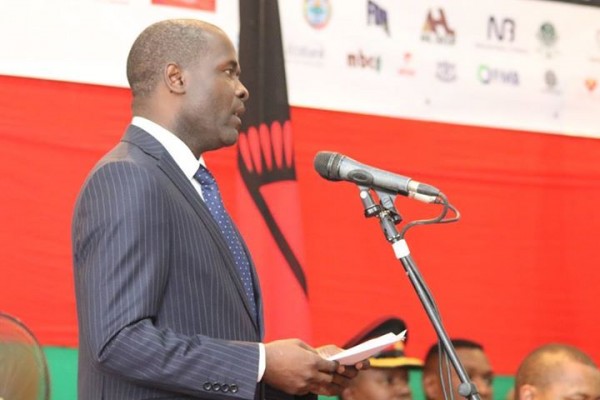
In his presentation titled Financing, Transformation and Productivity during the Blantyre leg of the Ministry of Finance’s Pre-Budget Consultations, Kachaje, who is president of Economics Association of Malawi (Ecama), said there is need for evidence-based policy making, planning and budgeting.
“The budget must introduce radical reforms that can enhance prudent public financial management that will culminate into sealing off leakages and discouraging public waste,” said the Ecama president.
Kachaje proposed a critical review and redesigning of the capital expenditure budget, including entitlements for the kind and size of vehicles public servants can purchase.
He said: “Our economy is a bicycle economy. It cannot accommodate all people’s needs. Let us try to spend within our means… Let us move from starting too many projects and failing to complete them as we spread ourselves too thin.”
In his contribution, Icam taxation and audit committee member Audrey Mwala called for the increase of the tax free bracket for employees from K20 000 to K50 000.
Mwala said since 2012, the cost of living in Malawi has continued to increase due to high inflation rates [currently at 23.4 percent] resulting in decreasing household income and purchasing power.
“Icam has, therefore, been suggesting substantial increases in the threshold at which individuals become liable to income tax. As a comparison to our neighbouring countries, we found that the threshold in Malawi is much lower,” said Mwala.
For instance, she said while the monthly income zero percent band remains at K20 000 (about $340 per capita gross domestic product (GDP), the monthly zero percent in the nearby countries, in approximate kwacha values are; Zimbabwe K130 000 ($953 per capita GDP); Zambia K200 000 ($1 844 per capita GDP); Botswana K240 000 ($7 315 per capita GDP) and South Africa K500 000 ($6 617 per capita GDP).
Mwala said Icam suggest that government should invest and increase the K10 000 tax free portion to the K100 000 “which should operate in such a way that only the portion that is above the K100 000 will be taxable at the standard rate and not the whole interest income earned.”
Kachaje also underscored the need for government to move away from donor-based budget and formulate a budget that will support productivity and offer incentives for transformation.
“ We also need a policy-based budget, and at all cost, we must avoid waste,” he said.
Gondwe has concluded the budget consultations which took him to Mzuzu, Lilongwe and Blantyre.
The art of being a successful Finance Minister lies in tending to the myriad immediate pressures for a bit of bunce while sticking to the strategic course.
Follow and Subscribe Nyasa TV :