

Chilima crash investigation highlights systemic lapses in Malawi’s chain of responsibility
The parliamentary inquiry into the June 10, 2024 military aircraft crash that killed Vice President Saulos Chilima and eight others continues to expose the distance between official account
s of the disaster and the lived experience of the families still waiting for answers.
Tuesday’s session, centred on testimony from two spouses of men who died on board, offered few new facts — but sharpened the inquiry’s most persistent problem: the absence of basic information about how the passengers died.
The committee first heard from Efines Kanyemba, widow of medical officer Dan Kanyemba, before turning to Martha Kapheni, whose husband Lucas Kapheni served as Chilima’s guard commander.
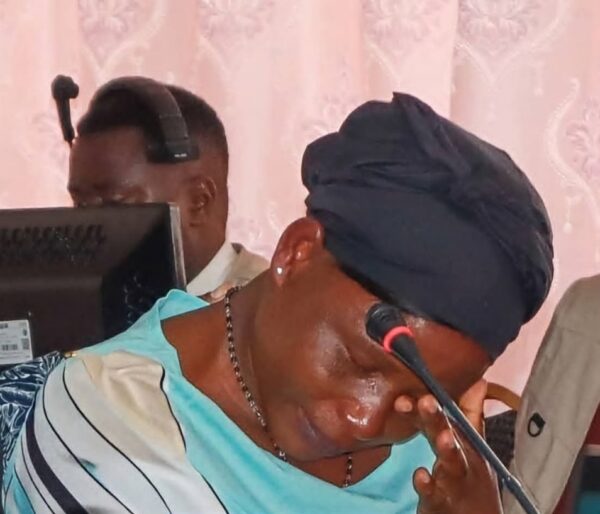
Her testimony, delivered quietly but with visible strain, underscored how little the families have been told.
Kapheni said her husband left for duty that morning despite suffering from fever, describing the day as “hectic” and one he felt unable to step back from.
The detail is not, on its own, decisive — but it raises questions about crew readiness and whether any medical concerns were noted before departure from Nkhata Bay.
More striking was her account of the hours after the aircraft disappeared.
Like many spouses of security personnel, she rarely communicated with her husband while he was on duty.
When reports emerged that the plane had gone missing, she attempted to call him; the call did not connect.
Confirmation of his death came later from a police chaplain.What she has not received, nearly two years later, is an autopsy report.
For a crash involving senior state officials, the absence of such documentation is not a minor administrative lapse — it is a structural failure.
Without autopsy findings, families cannot know whether death resulted from impact, fire, structural failure, or other causes.
For investigators, the missing reports leave a gap in the chain of evidence that should have been closed within days, not years.
Her statement that “there are still more questions than answers” is not simply an expression of grief.
It is an indictment of a process that has yet to establish even the most basic facts about the final moments of those on board.
The inquiry has so far focused on flight path anomalies, equipment failures and communication gaps.
But testimony like Kapheni’s points to a deeper issue: whether the state has met its obligations to the families of the deceased, and whether the investigation has been structured to produce a full, transparent account of what happened.
As the committee continues its work, it faces a narrowing path. The technical questions remain unresolved.
The human questions are becoming sharper. And the absence of key documentation — including autopsy reports — risks undermining the inquiry’s credibility unless addressed directly.
Follow and Subscribe Nyasa TV :