

Chithyola’s Commanding Response: A Statesman Rises Above the Noise
In a political season marked by cheap shots and empty applause lines, Leader of Opposition Simplex Chithyola Banda delivered something rare — a speech that was not only articulate and incisive, but deeply patriotic and grounded in substance.
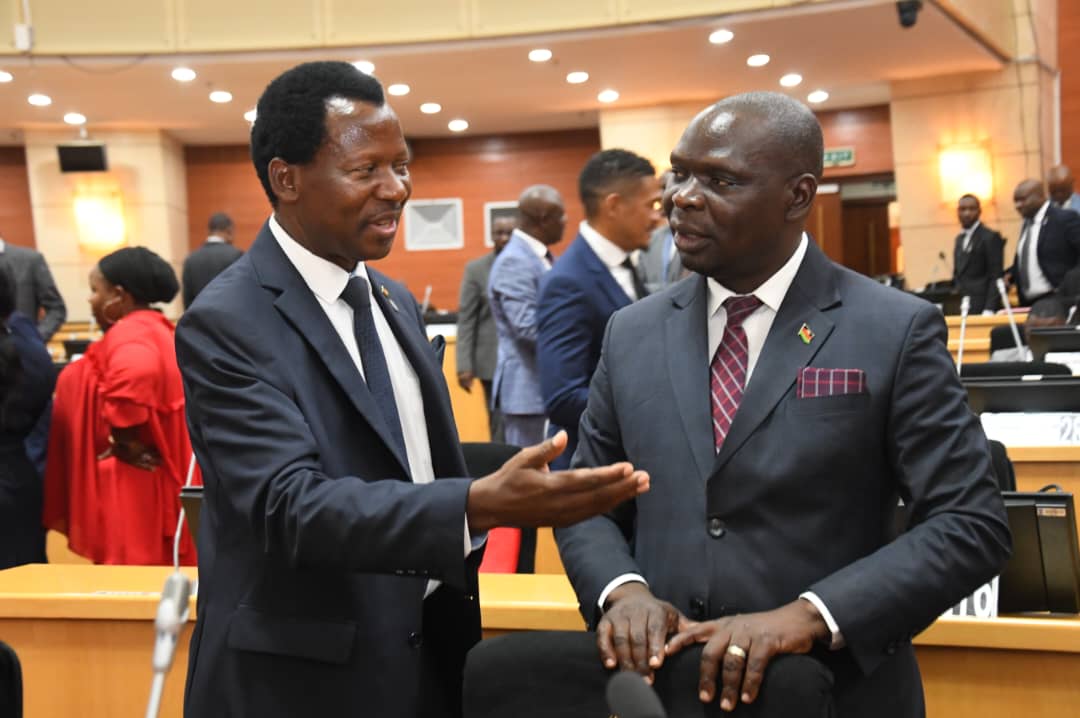
His response to President Peter Mutharika’s State of the Nation Address (SONA) in Parliament was not an opposition rant. It was a national diagnosis — firm, factual, and fearless. Chithyola emerged not merely as a partisan figure but as a statesman-in-waiting; a man whose words echoed the frustration of millions yet carried the calm assurance of hope.
Chithyola’s tone was measured but cutting. He began by commending President Chakwera’s peaceful transfer of power — a rare gesture in Malawi’s often bitter political arena. “Malawi is bigger than MCP and indeed Malawi is bigger than DPP,” he reminded the House, drawing a clear line between political loyalty and national interest.
That statement alone set the tone: this is a Leader of Opposition who understands that patriotism must come before partisanship. Unlike many who wear opposition as a weapon, Chithyola wore it as a constitutional duty — a check on excess, not an obstacle to progress.
Where others saw ceremony, Chithyola saw opportunity. His critique of the Mutharika government’s economic management was razor-sharp. He dismantled the administration’s lofty rhetoric about unity and discipline, asking the real questions that matter to ordinary Malawians: Where is the Economic Recovery Plan? What are the IMF’s actual conditions? How can a government promise billions in constituency funds while freezing wages and youth recruitment? These were not partisan jabs — they were policy interrogations. Chithyola’s argument cut through the fog of political slogans and exposed the contradictions between populist promises and harsh fiscal realities.

His compassion for the poor and marginalized was unmistakable. On education, he tore down the illusion of “free secondary education,” explaining that what the DPP calls free is, in truth, a partial subsidy covering less than 20% of total costs. He demanded comprehensive coverage so that no child between 13 and 17 is left out.
On electricity, Chithyola reminded the House that blackouts have become the DPP’s trademark, with “Magetsi, Madzi, and Mafuta palibe” again defining daily life. His insistence that government prioritize the $1.5 billion Mpatamanga Hydropower Project — already initiated under the previous administration — was not nostalgia; it was continuity with purpose.
And on fertilizer and food security, his outrage was justified. “Why,” he asked, “is government buying expensive maize from Zambia while local farmers sit on unsold grain?” His accusation that the procurement may breed another Maizegate scandal was not reckless — it was a sober warning from a man who has seen corruption disguised as policy before.
Chithyola did not mince words on the misuse of state power. He condemned arbitrary arrests, political purges, and the growing culture of police brutality under the DPP regime. “Are we transforming this country into a police state?” he asked, his voice cutting through the House with rare moral clarity. He challenged not only government but also the silent corners of society — human rights groups, churches, and development partners — asking why they have fallen quiet in the face of injustice. It was a moment of truth-telling that reawakened a conversation about collective responsibility.
What set Chithyola apart was not just his critique but his constructive posture. He promised not to “oppose for the sake of opposing” but to build consensus on policies that serve the national interest. His closing vision was poetic yet practical — a Malawi with no fuel queues, no blackouts, no fear of arbitrary arrests, and a youth population walking into classrooms unburdened by fees. It was a speech that refused to surrender to cynicism. He invoked the spirit of “One Malawi, One People, One Nation” — a message that transcended political lines and spoke directly to the conscience of the nation.
In a Parliament often defined by shouting matches and self-congratulation, Chithyola’s address stood out for its coherence, moral force, and sense of duty. He showed that opposition can be patriotic, that accountability can coexist with respect, and that leadership is not about position — it’s about purpose.
If the measure of a leader is the ability to speak truth to power with both courage and grace, then Simplex Chithyola Banda has earned his place among the few who truly understand what it means to lead from the other side. He did not just respond to the State of the Nation. He redefined it.
Follow and Subscribe Nyasa TV :