

Civil society group says Malawi more stable but not yet transformed
One year after President Peter Mutharika returned to State House on 4 October 2025, Malawi is more stable than it was but not yet transformed, according to the National Advocacy Platform (NAP).
Releasing its assessment on Thursday under the title “Foundations for Recovery Are E
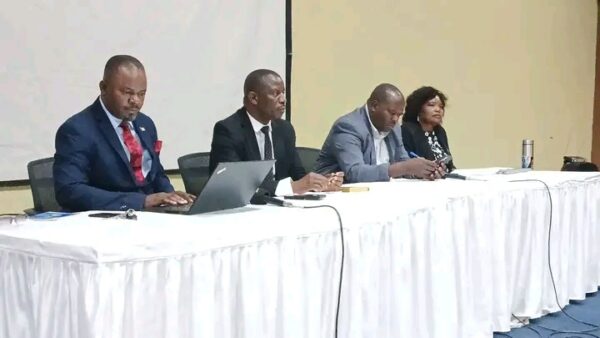
merging, but Delivery Must Now Accelerate”, NAP chairperson Benedicto Kondowe told a press briefing in Lilongwe that the administration was judged against a reasonable first-year test: whether it set a credible direction, began tackling structural weaknesses and laid foundations for recovery.
The answer, he said, was “yes, and no”.
“On balance, NAP observes progress and greater stability in several areas, alongside significant challenges that remain unresolved,” he said.
Year Two, he added, must shift to “consistent implementation, stronger accountability and independently verifiable results that citizens can see and feel.”
Inflation falls, but households still hurting
NAP calls inflation the most measurable gain. Headline inflation fell to 20.0% in August 2026 from 28.2% a year earlier, while food inflation dropped to 13.4%.
But non-food inflation, covering transport, housing, health and education, stood at 31.8%.
NAP says stabilisation has not yet translated sufficiently into better household welfare, with forex shortages and unreliable energy still choking business and investment.
Schools: access up, quality under strain
NAP describes free secondary education as an important social policy achievement.
Tuition, examination and ID fees and the School Development Fund have been scrapped, and K42 billion has been allocated for higher education loans.
But it warns of chronic shortages of teachers, classrooms and materials, and an underdeveloped technical and vocational training system. The challenge, it says, is ensuring young people leave school with skills for employment.
Farming: drought risk
NAP welcomes improved maize availability and the K931.1 billion agriculture allocation for 2026/27, including about K111 billion for the Farm Input Subsidy Programme (FISP), which targets 1.22 million beneficiaries.
It raised concern that the largest share of FISP beneficiaries is reportedly allocated to the south, even though the seasonal outlook forecasts below-normal and erratic rainfall in parts of the south and centre.
It urged input distribution to be aligned with district rainfall forecasts, early procurement, strategic reserves, irrigation and a fully financed El Niño response plan.
Health, fuel and power
Health funding rose to K1.02 trillion, medicine availability improved, and government granted a waiver to recruit essential medical staff despite a recruitment freeze.
But shortages persist at facility level, and Kamuzu Central Hospital’s reported 5,000-patient surgical backlog shows the scale of the problem.
Fuel queues largely disappeared for much of the year, which NAP credits to better coordination among the Ministry of Energy, NOCMA and MERA, and to road rehabilitation. But queues have returned in recent weeks, and NAP says the reported K700 million NOCMA transaction needs a transparent conclusion. Load-shedding continues to hit households and businesses.
Devolution slow to deliver
Raising the Constituency Development Fund to K5 billion per constituency is described as a significant step. K85.5 billion has been released to 30 of 36 councils, but disbursement remains slow against the roughly K1.3 trillion earmarked, and six councils had not accessed funds by 24 September because of unmet conditions.
Governance and corruption
NAP sees encouraging signals in the President’s refusal to assent to the CDF constitutional amendment after the court decision, the reconstitution of the Judicial Service Commission, and the appointment of a new cohort of Human Rights Commission commissioners.
Civil service payroll verification had covered 199,000 of an estimated 292,000 employees by February, with irregularities identified.
But it flagged questions over the independence and funding of oversight bodies, meritocracy in senior appointments, and the prosecution of CDEDI executive director Sylvester Namiwa on treason and false-news charges, which has fuelled debate over civic space.
On corruption, NAP welcomed the President’s “not a time to eat” pledge, the e-procurement system and lifestyle audit framework.
But it said the prolonged absence of a substantive Anti-Corruption Bureau director general, a post re-advertised in August, is a serious institutional gap.
It also urged a national dialogue on the role of the Vice President, citing recurring tensions between presidents and their deputies.
Debt, IMF and jobs
Treasury bill borrowing fell from K880.4 billion in June to K144.6 billion in July. But domestic debt remains about K14 trillion, around 65% of total public debt of about K24 trillion.
After its mission from 22 September to 6 October, the IMF said Malawi’s reforms provide a good foundation for a programme and that considerable progress has been made toward an Extended Credit Facility, though no deal has been concluded.
NAP said labour-export schemes and youth funding must be transparent, protect workers and be scaled up. It cautioned against piling too heavy a tax burden on compliant taxpayers, and noted inconsistency on austerity, with principal secretaries first cut from over 80 to 38 and later raised to about 60.
The verdict
NAP says its assessment is “neither whitewash nor condemnation”.
“One year cannot repair an economy and public systems weakened over many years,” it said, adding that the task now is to build decisively on emerging foundations and turn stability into tangible improvements in people’s lives.
Follow and Subscribe Nyasa TV :