

Court blows ‘SOS’ whistle on inhumane treatment in Malawi’s prisons
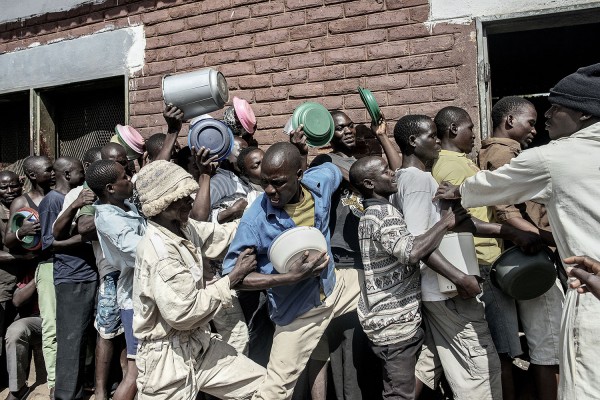
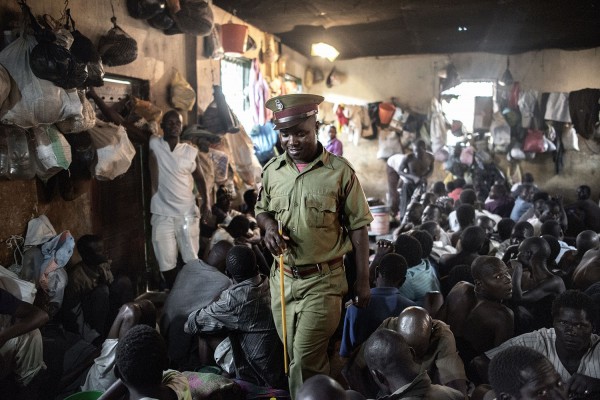
The Dowa First Grade Magistrate Court has sounded an “SOS” (Save Our Soul) asking Malawi government to take precautionary measures in addressing the appalling conditions in prisons, such as unnecessary congestion and inadequate food provision currently faced by inmates.

Government spokesperson, who is also Information Minister Jappie Mhango, declined to comment on the issue. Mhango pushed the matter to Minister of Justice and Constitutional Affairs Samuel Tembenu. Surprisingly, Tembenu also tossed the matter to Ministry of Home Affairs, claiming such a subject does not fall under his ministry.
However, Home Affairs Minister Jean Kalilani could not be reached. She was reportedly outside the country and officials in her ministry were muted on the matter.
In a letter, we have seen addressed to Prison Inspectorate Committee, the Court has faulted authorities for what it described porously handling such a “ sensitive” issue.
Views from Malawi Prison Service could not be available, as its spokesperson Smart Maliro, never responded to a questionnaire sent to him despite days of assurance on the same.
The letter, dated 28 August, 2015, and authored by District Magistrate H/W C.S. A murani Phiri, cited among others, failure by government to seriously implement Community Service to inmates who committed minor offences, delay in deportation of aliens who have finished serving their sentences, as recipes for the indescribable congestion and shortage of food in all the Malawi’s prisons.
According to Phiri, who recently visited Maula prison in Lilongwe, disclosed that the prison in question is the hardest hit, as alone, currently it is keeping 2,532 inmates. Including 569 illegal immigrants.
The letter reads in part: “you may wish to be informed that as a visiting justice to prisons, police cells and other detention places, I visited Maula prison on 27/08/2015. On this day morning, they had a total of 2,532 inmates. On food they use 32 bags per day of mgaiwa flour and about 8-9 bags of beans”.
The letter, also copied to the Chief Commissioner of Prisons, Chief Immigration Officer, Chief Resident magistrate, Officer In-Charge-Maula prison, Officer In-Charge-Dowa police station, The Camp Administrator Dzaleka Refuge Camp and the Executive Secretary MHRC, Phiri also noted with concern saying that detention warrants are issued without expiry date by immigration Department. A development he said aggravates the situation.
“I was told there were about 569 remandees, 230 out of these are Ethiopians. I learnt that all of them are there on the issue of illegal entry into Malawi. Amongst these were those who had finished their term of imprisonment but were still at Maula prison on detention warrant waiting for the government to fund their deportation recommended by the court,” reads the letter.
Contacted for comment Immigration national public relation officer, Joseph Chauwa, confirmed to have had a contingent of foreigners in the prisons last year. He said the department with financial assistance from International Organization for Migration (IOM) managed to clear such a human backlog.
“If it is August last year, I think I can agree with you we had a problem of Ethiopian nationals almost 400 of them. But the problem was cleared; we managed to repatriate all of them. We worked with OIM, which assisted with air tickets. So by November, all of them were repatriated,” he said.
On the issuance of the open-ended detention warrants, Chauwa defended his department saying; the immigrants could not have released wily- nilly as they had no travel documents and were still staying illegally.
“They were foreigners, they had no travel document, and they were illegal. So we could not just release them just like that. It was going to be very difficult to re-arrest them you know. We deliberately kept them there, pending for their deportation. That was the whole reason in doing that,” he said.
Law expert Mathews Kalimanjira, a resident of Area 36 Township in Lilongwe, concurred with the Magistrate Phiri, saying the implementation of the community service lacks both government’s commitment and compassion.
Said Kalimanjira: “For example, if Community Service was applied to most of offenders who committed lighter offences, and that government is also committed in providing enough funding, I am sure this could have atleast solved these problems of unnecessary congestion and acute shortage of food in our prisons”.
In 2000, government in-vain contemplated of commencing the Community Service, as punishment to offenders whose sentences are not exceeding 12 months, aimed at mitigating congestion problems rocking all the country’s prisons.
Follow and Subscribe Nyasa TV :