

DPP’s Nankhumwa engages persons with albinism on solutions to end attacks: They seek protection, economic empowerment
The Democratic Progressive Party (DPP) vice president for Southern Region Kondwani Nankhumwa has assured people living with albinism that President Arthur Peter Mutharika is doing everything he can to ensure that the continuing spate of attacks on these people are stopped permanently.
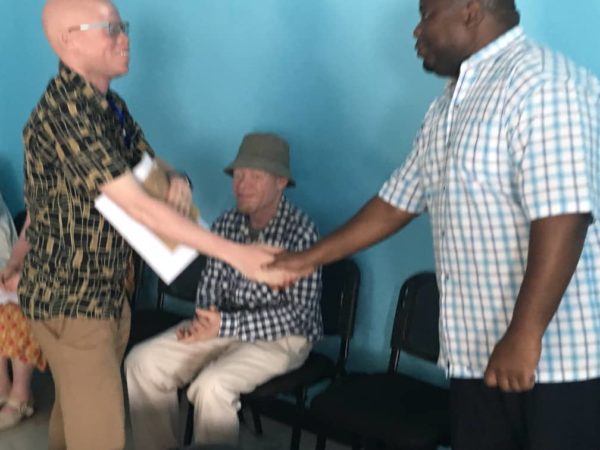
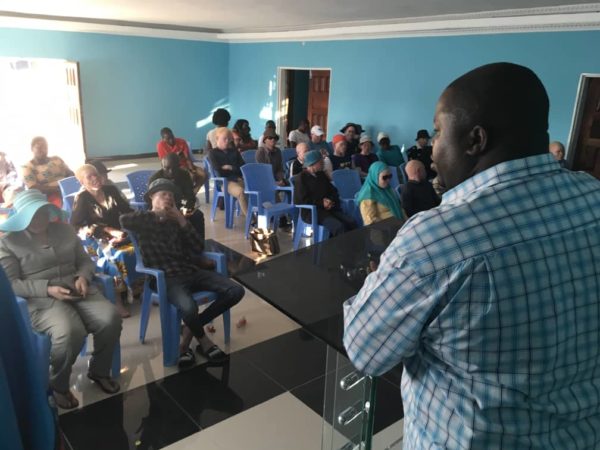
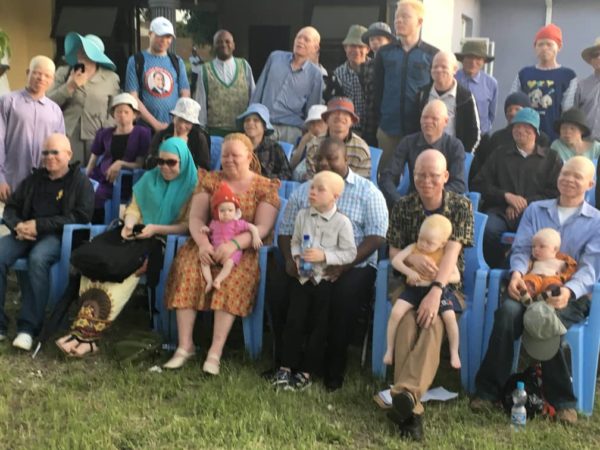
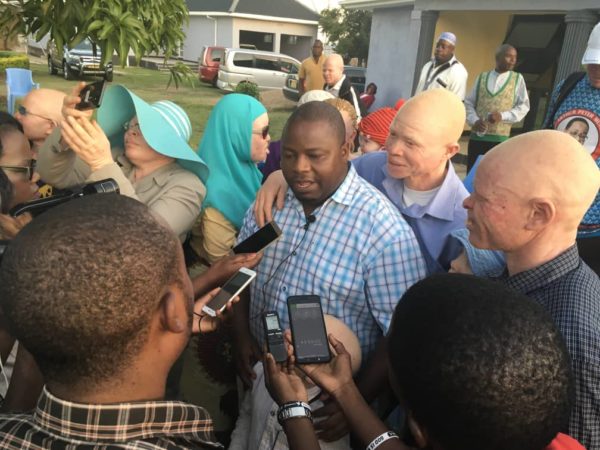
He was speaking in Luchenza on Friday, February 22 2019 when he met a group of 40 adults and children with albinism from Thyolo, Chiradzulu and around Blantyre. They were led by Francis Masambuka, Chair for Association of Persons Living with Albinism (APAM) Blantyre Chapter.
“As a political leader who is concerned by the attacks on people with albinism, I felt it was imperative to invite you so that together we attempt to find a lasting solution to this unfortunate scenario.
“We cannot solve this vice by merely talking about it in the media, especially on social media and playing a blame game but rather we must engage you, the victims, in some form of organized dialogue.
“While government, through its law enforcement agents and the judiciary, is seriously implementing measures to stop these barbaric acts, we can only achieve a lasting solution by talking to you directly and hear your views on this matter,” he told the gathering.
In his presentation on behalf of the group, Masambuka emphasized that poverty is the main reason for their tragic situation. He said many families that have a child or children with albinism are poor and some ill-minded people coerce them to sacrifice their own children in exchange for money.
“In most cases, they don’t even get the promised money. So, the main reason that we are facing this ‘persecution’ is that we are poor and desperately looking for survival. We come kneeling down before the President (Professor Mutharika), through you Honourable Minister, that he considers devising special policies that would help empower people living with albinism and their families.“We are not asking for handouts but special economic empowerment programmes that could help us become self-reliant,” he said.
Masambuka noted that most people with albinism have special skills but they are wasted because they suffer from serious exclusion and stigmatization.
He said most people with albinism do not benefit from government programmes such as the fertilizer subsidy programme and that while many of them lack proper shelter, there are very few of them that have benefitted from the Cement and Malata subsidy where government builds decent houses for the underprivileged across the country.
“We are also denied of basic rights such as the right to education and health due to our skin. We are excluded from certain community activities such as work-for-cash. We are suffering,” said Masambuka.
There is special ‘sunscreen’ lotion that people with albinism have to apply on their skin to prevent skin cancer. Masambuka said this lotion is only found at Queen Elizabeth Central Hospital in Blantyre.
“As I said earlier, most of us are poor and it becomes extremely difficult for those who stay miles away from Blantyre to access this lotion. Our plea is that this lotion must also be made available in rural health facilities for easy access,” he said.
One female member in the group requested President Mutharika to consider enrolling people with albinism in community technical colleges where they would acquire special technical skills and later set up their own businesses.
In response, Nankhumwa said most of the challenges that they highlighted would seriously be looked into.
“I am glad I have heard it from the horse’s mouth; I will be reporting to the President all your fears, concerns, aspirations and challenges. He is a listening President and I can assure that within a matter of few weeks, you will experience positive changes in your life,” he said.
He urged them to be organized and speak with one coordinated voice so no one is left behind.
Nankhumwa, who is also Local Government and Rural Development Minister, told Nyasa Times after the meeting that people living with albinism in Malawi are “not too many” and that with right policies and approach in place, government and other stakeholders would be able to meet their needs thereby ending “the tragedy of albino abductions and killings”.
Fueled by a belief that albino body parts brought wealth, attacks on albinos have increased in recent times.
People with albinism are hunted so their body parts, particularly their hands and genitals, can be used in traditional medicine.
Albinism is a word derived from the Latin albus, meaning white. It’s a genetically inherited condition where a shortage of melanin pigment affects the eyes, hair and skin.
Follow and Subscribe Nyasa TV :