

ESCOM’s new poles won’t fix Malawi’s power crisis
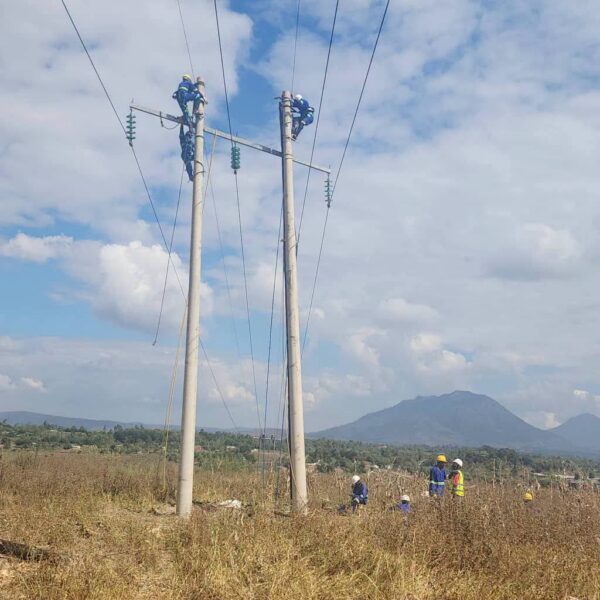
Malawi’s state electricity utility has announced that it is replacing ageing wooden poles with prestressed concrete alternatives along two key transmission lines, citing improved durability and lower maintenance costs.
The initiative is welcome. It is also, by itself, wholly insufficient.
The Electricity Supply Corporation of Malawi (ESCOM) says its Prestressed Concrete Poles Project will cover the 66kV Mapanga–Fundis Cross line and the 132kV Nkula B–Phombeya No. 1 line — both commissioned between 1979 and 1987 and long overdue for rehabilitation.
The new poles, ESCOM claims, have a lifespan of up to 80 years, require less maintenance and are resistant to rot, insects and vandalism.
Chief communications officer Pilirani Phiri said the project would mean “fewer outages, lower maintenance costs and a more reliable electricity supply.”
On its own terms, the project appears to be progressing. Construction engineer James Munyui confirmed that 36 of the planned 304 poles have been erected along the 44-kilometre route, with operations director Isaac Kunkeyani expressing confidence the contractor will finish ahead of schedule.
But a more searching examination of ESCOM’s predicament suggests that replacing poles — however necessary — addresses only the most visible symptoms of a far deeper structural malaise.
Malawi’s electricity infrastructure has been chronically underfunded for decades. Generation capacity remains severely constrained, with the country’s dependence on hydroelectric power leaving supply vulnerable to the droughts that climate change is making increasingly frequent.
Load-shedding remains a daily reality for most consumers, strangling businesses and undermining economic activity across the country.
The two lines being upgraded supply some of Malawi’s most economically significant districts — Thyolo, Chiradzulu, Mulanje and Phalombe — and carry power from the Nkula Hydroelectric Power Station to the national grid.
Keeping them operational matters. But concrete poles cannot compensate for insufficient generation, an overstretched grid or the institutional and financial weaknesses that have long hampered ESCOM’s ability to invest at the scale the country requires.
ESCOM’s communications around this project also deserve scrutiny. The announcement reads more like a public relations exercise than a transparent account of progress against a credible infrastructure strategy.
No figures are provided for the project’s total cost, its funding source or the broader capital investment plan of which it forms part.
In a country where electricity access remains among the lowest in the world, consumers and investors deserve considerably more than reassuring quotes about concrete poles.
The project may deliver what it promises. But until ESCOM addresses the fundamental questions of generation capacity, financial sustainability and institutional governance, press releases about pole replacements will remain precisely what they are — evidence of activity rather than proof of progress.
Follow and Subscribe Nyasa TV :