

Global South challenged to make harm reduction products more accessible to improve public health
The Philip Morris International (PMI) Technovation in Dubai ended with industry players emphasising the need to address challenges around access to Tobacco Harm Reduction products, which would lead to higher consumption of safer smoking alternatives and lower consumption of cigarettes, especially in the global south.
Technovation is an initiative that discusses the development of smoke-free products as an alternative to continued cigarette smoking by showcasing how science, technology and regulation can accelerate the transition to a smoke-free future where cigarettes are replaced with less harmful products, especially for adults who cannot quit combustion tobacco.
The Technovation event explored issues around regulation, policy and collaboration in creating a smoke-free future in the interest of public health, with smoking rates still being especially high in poorer countries where access to Harm Reduction products is a challenge.
Harm Reduction efforts have been undertaken for years to safeguard public health because some people are unable to quit smoking, despite tobacco exposing them to health complications, and some regions are yet to have access to Tobacco Harm Reduction products, resulting in many sticking to cigarettes.
During the event attended by experts, media and industry players (among others), PMI President of South and South East Asia, Fred de Wilde, said “Despite 80 percent of smokers coming from developing economies, switching to safer alternatives is still met with skepticism. This situation needs concerted effort to change.”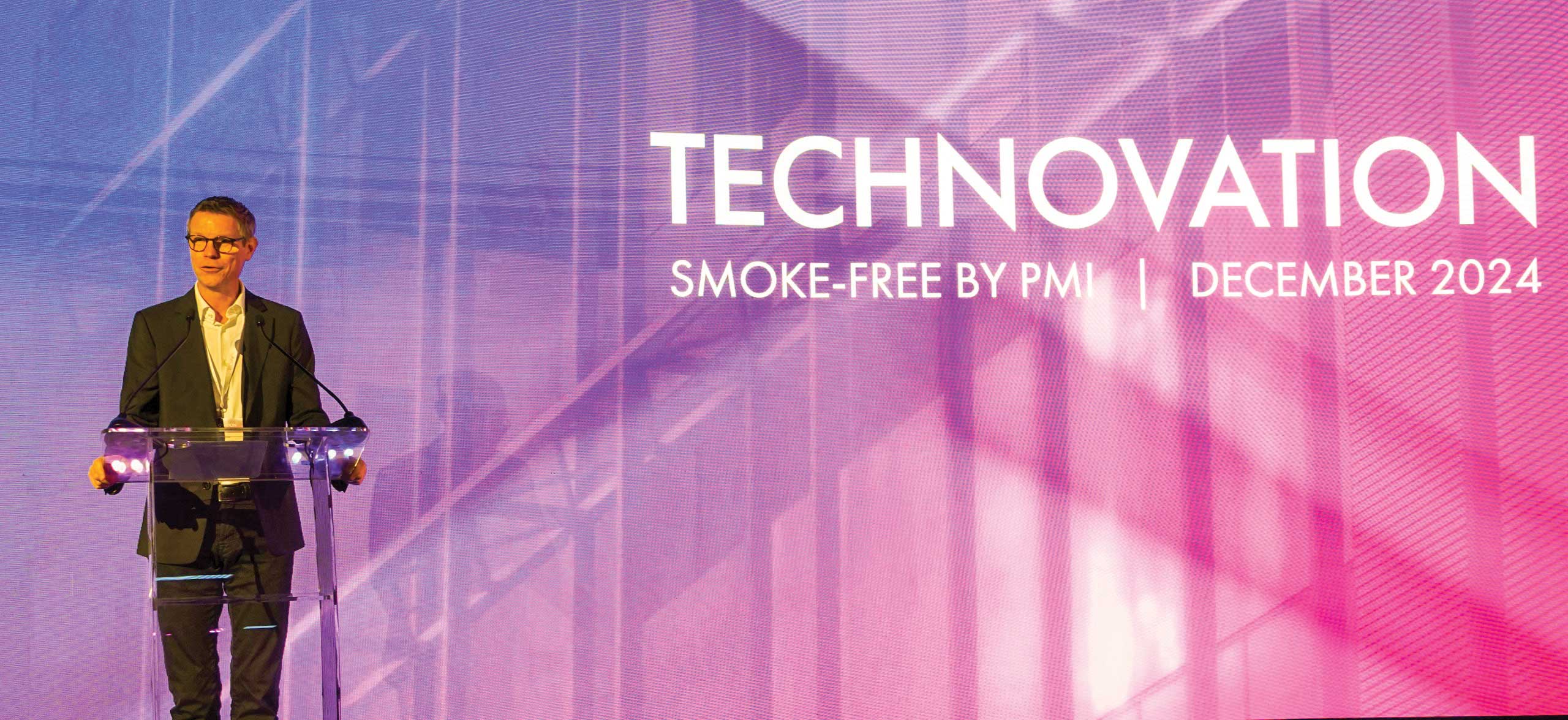
Mr de Wilde highlighted the need to ensure that successful innovations in the western world are brought into the global south region, to reduce harm in these regions so that their people continue being productive for the sake of the world’s development.
“When you travel to countries in the global south, what you realise is that you are meeting a growing, vibrant, hopeful and energetic population that are actually the future of the world and that these emerging economies are the future of the global economy. And this is why we must bring successful innovations to these regions,” he said.
Mr de Wilde noted that while access to safer smoking alternatives is present in the majority of western countries, they are banned in some countries in the global south and other regions. He also noted that combustible cigarette consumption is increasing in the same countries.
He emphasised, “This is the case in Turkey. We see this in India and in Vietnam, so we cannot deal with this in isolation. We need the help of regulators, civil society and media so that everyone participates in efforts to create a smoke-free world.”
“You will be surprised when you speak to people who have converted to safer alternatives. They speak of the benefits and how their lives have changed.” Said Mr de Wilde.
And speaking during a discussion at the same event, PMI Chief Executive Officer Jacek Olczak reiterated the need to provide people who cannot stop smoking with access to safer alternatives to save them from the risks that are caused by cigarettes.
For Mr Olczak, “The reality is that people do smoke and will continue smoking. If we don’t give them safer alternatives, they will continue accumulating the negative health effects. The smoke-free products are not for non-smokers to begin smoking, but for smokers who cannot quit so that they can avoid the adverse health implications that come with burning tobacco.”
Mr Olczak said smokers need to know that there are safer options to smoking and regulators need to put favourable policies in place to ensure that there is access to smoke-free products because they are less harmful.
Mr Olczak spoke about the fact that there is misinformation stating that alternatives to smoking are dangerous in the same way cigarettes are, but he explained that on the contrary, tobacco heating devices are 95 percent safer than burning cigarettes which release harmful chemicals, including carcinogens.
He said proper communication with the smoking community regarding what science has proved in terms of Harm Reduction, and having appropriate regulations in place is key if smoking levels are to reduce, and people are to be saved from cancer and other health conditions resulting from cigarettes.
Olczak gave an example of Japan which after using heated instead of burned tobacco products, witnessed a reduced smoking rate which went down by 7 percent in a single year.
Meanwhile, PMI Vice President Communications and Engagement, Tommaso Di Giovanni, said that with the world already having the science and the technology to prove that Harm Reduction works, there is now need for collective action to accelerate and achieve the much needed change. He also said a smoke-free future is no longer a vision but a scientific and technological reality, emphasising that while skepticism is healthy, innovation always wins.
Mr Di Giovanni emphasised the need for collective action, collaboration, and commitment across science, policy, and society to achieve a smoke-free future.
“If you don’t smoke, don’t start, if you smoke, quit and if you can’t quit, change” is one of the very prominent messages that came out from several speakers during the event.
Collaboration and concerted effort were equally emphasised as being key towards creating the much needed smoke-free world for the greater good of public health.
During the event, smoke-free products were displayed for people to appreciate the science behind them and how they reduce harm.
Follow and Subscribe Nyasa TV :