

Govt silence fuels property scams as house hunters continue to lose thousands
The government’s continued silence and failure to operationalise Malawi’s real estate regulator—18 months after Parliament passed the Real Estate Management Act—has left desperate house hunters exposed to rogue property agents who are exploiting the country’s acute housing shortage through fake listings, cloned advertisements, non-refundable viewing fees and fraudulent deposits.
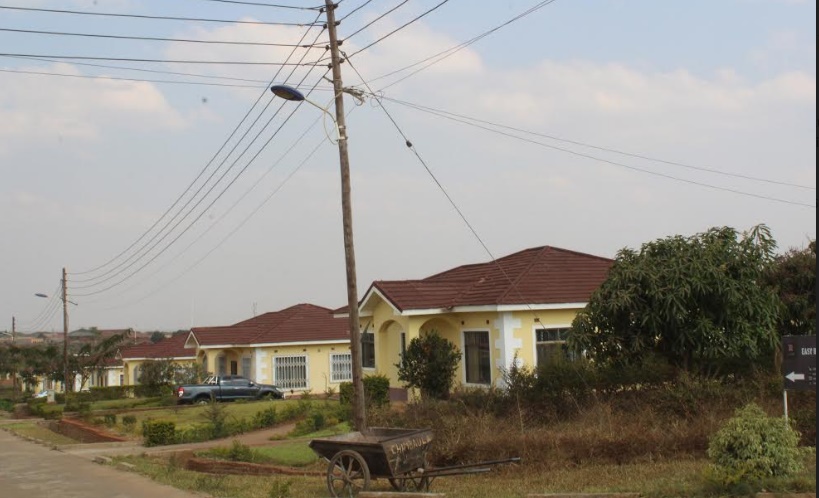
Although the Real Estate Management Act came into force on January 13, 2025, the Real Estate Management Council (Remac)—created to license practitioners, regulate the industry and discipline errant agents—remains largely dormant. The Ministry of Lands is yet to put in place the regulations required for the council to begin full operations and did not respond to questions on the delay by press time.
The regulatory vacuum has effectively handed control of the rental market to informal brokers, popularly known as dobadobas, who have established their own rules, charging prospective tenants between K20 000 and K25 000 in non-refundable viewing fees, regardless of whether a house is eventually secured.
For Sylvia Mbwana, the delay has been both financially and emotionally draining. After spending five months searching for a house in Lilongwe’s Biwi, Kawale, Mchesi and Area 36, she lost K50 000 in viewing fees after repeatedly being shown substandard and insecure houses.
“At first I was desperate and thought I would find something quickly. But I kept paying to view houses that were far below standard. In the end, I gave up and moved in with a friend while waiting for a miracle,” she said.
McPherson Banda, who relocated from Balaka to Lilongwe, has spent K120 000 on viewing fees since April. In one incident, he paid K350 000 as a house deposit only to discover the property had already been occupied. While the deposit was eventually refunded, the viewing fees were not.
“Finding a house in Lilongwe has become a nightmare. These agents prey on desperate people,” he said.
For Nafy Chipala, a minibus conductor from Likuni, every failed house viewing comes at the expense of his family’s welfare.
“Every time I pay K20 000 or K25 000, that is not small money. That is food, transport and savings for my family disappearing in a single day,” he said, adding that many of the advertised houses either do not exist or bear little resemblance to the online advertisements.
The pattern extends beyond Lilongwe. In Blantyre, prospective tenant Steven Nkhoma previously recounted spending months paying viewing fees and hefty commissions for properties that failed to match their descriptions. In Mzuzu, Henry Malata said he paid up to 50 percent commission and K20 000 in viewing charges before finally securing accommodation.
Property experts say the absence of effective regulation has allowed the fraudulent practices to flourish.
Knight Frank Malawi Managing Director Desmond Namangale said unlicensed agents are cloning genuine property advertisements, fabricating listings and collecting deposits before disappearing.
“The clearest evidence is the intense competition for available houses. Several people are often interested in the same property, creating opportunities for unscrupulous operators to exploit the market,” he said.
Namangale warned that the scams are not only harming tenants but also eroding confidence in legitimate real estate businesses.
“Widespread scams make buyers and tenants increasingly suspicious of the market, affecting legitimate firms,” he said, adding that Remac should urgently begin licensing practitioners, standardise agency commissions and eliminate illegal operators.
Real estate consultant Prince Matchika said while rogue agents have taken advantage of the situation, the crisis is rooted in Malawi’s chronic shortage of urban housing.
He said high construction costs, limited serviced land and rising urbanisation have pushed demand far beyond supply, leaving desperate tenants vulnerable to exploitation.
“The long-term solution is increasing affordable housing while fully implementing the Sectional Titles Act to maximise the use of urban land,” Matchika said.
Even the industry’s regulator admits it is yet to assume its mandate.
Remac Chief Executive Officer Sarah Kauta Chauma said the council has not commenced full operations because it has no office space, staff or operational regulations.
“It was established in May last year, but has not started operations because the secretariat has not secured office space and staff recruitment is yet to be done. Additionally, we are waiting for the Ministry of Lands to formulate regulations that will guide our operations,” she said.
Until then, desperate Malawians searching for accommodation remain largely unprotected, paying thousands of kwacha to view homes that often do not exist, while rogue agents continue to thrive in a market that experts say is crying out for regulation.
Follow and Subscribe Nyasa TV :