

Gwengwe says Mwanamvekha’s budget numbers were never going to add up
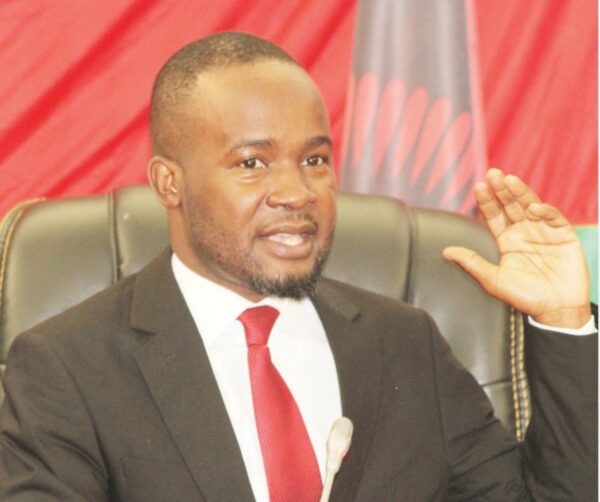
There is a particular kind of vindication that comes from watching your successor discover the arithmetic you once had to live with. Sosten Gwengwe, who held Malawi’s finance portfolio under the Chakwera government, now chairs Parliament’s Budget and Finance Committee — and from that vantage point, he has delivered a verdict on the current administration’s flagship fiscal plan that is as blunt as it is politically inconvenient: “The legs on which the 2026/27 budget is standing have become very weak and shaky.”
It is worth pausing on the timing. Barely three months have passed since Parliament approved the nearly K11 trillion National Budget, and already the assumptions underpinning it look like relics of a more optimistic season.
When Minister of Finance, Economic Planning and Decentralisation Joseph Mwanamvekha presented the plan on 27 February, it rested on a familiar architecture of hope: 4.1% GDP growth, inflation tamed to 15% by year’s end, a policy rate of 18%, nominal GDP of K31.5 trillion. The strategy, as ever, was to collect more, borrow less, and protect the poorest from the sharpest edges of adjustment.
Reality, as it tends to, has proven less obliging. The World Bank has since cut its 2026 growth forecast for Malawi to 2.3%, nearly half the government’s projection, and now expects inflation to remain above 20% — currently estimated at 21.9%, a full seven points above target.
The fiscal deficit, the Bank warns, will likely widen to 11.8% of GDP against a targeted 9%. Public debt is forecast to reach 92.3% of GDP, a figure that has earned Malawi the unwelcome distinction, in the Bank’s assessment, of being the most difficult sovereign debt restructuring case anywhere in sub-Saharan Africa.
Foreign exchange reserves, meanwhile, remain perilously thin.
None of this will surprise anyone who has watched Malawi’s public finances over the past decade, caught in a familiar loop of ambitious budgeting followed by downward revision.
What is notable this time is the source of the warning: not an opposition backbencher scoring points, but the very committee tasked with parliamentary oversight of the budget, briefed — in Gwengwe’s telling — on an outlook considerably grimmer than the one ministers presented in February.
His prescription is structural rather than merely rhetorical. Gwengwe is calling for a Fiscal Responsibility Act and a Debt Management Act — legislative guardrails intended to bind future governments to the discipline that political incentives so often erode.
In the nearer term, he wants government to align spending with revenue actually collected, rather than revenue merely projected, and to tighten cash management while directing what capacity remains towards forex-generating sectors.
It is, in essence, an argument that Malawi’s fiscal problem is not simply one of bad luck or global headwinds, but of institutional design — that without legal constraints, optimism will keep outrunning arithmetic.
The maths bears him out. Growth running at 2.3% rather than the budgeted 4.1% implies a much smaller economy to tax than planners assumed, which means the Malawi Revenue Authority would need to overperform quarter after quarter simply to keep the deficit from widening further.
And with public debt already north of 92% of GDP, the traditional escape valve — borrowing to bridge the gap — has effectively been sealed shut.
This is not a diagnosis unique to government critics. Bertha Bangara-Chikadza, president of the Economics Association of Malawi, points out that nearly two-thirds of the country’s public debt is domestic, and expensive to service — a dynamic that crowds out private investment as banks find it more attractive to hold government securities than to lend into manufacturing, agriculture or mining.
Public finance expert Jimmy Lipunga frames the problem in similarly structural terms: years of subdued growth, widening deficits and monetary expansion have produced weaknesses that no single budget cycle can wish away.
Yet there are, even in this account, threads of possible resilience. The Malawi Revenue Authority beat its first-quarter collection target by K20 billion — K1.398 trillion against a target of K1.378 trillion — a result officials attribute to base-broadening and stricter compliance.
Bangara-Chikadza suggests that if inflation eases, if tensions in the Middle East cool sufficiently to relieve pressure on fuel prices, and if newly introduced tax measures hold, some of the budget’s original ambitions might yet survive contact with reality.
But hope is not a fiscal strategy, and Gwengwe’s committee knows it. What his warning ultimately reveals is less about this particular budget than about a pattern: successive Malawian governments continue to build fiscal plans on growth and inflation assumptions that outside institutions treat with polite scepticism from the outset.
The question this budget cycle poses, then, is not simply whether the 2026/27 targets will be met — most signs suggest they won’t — but whether Malawi’s political class is finally willing to legislate the discipline it has so far only ever promised.
Follow and Subscribe Nyasa TV :