

Illovo Sugar partners CRS in prototype designing of affordable and durable houses in Chikwawa
Illovo Sugar Malawi Plc’s Thriving Community Foundation, in partnership with international NGO, Catholic Relief Services (CRS) and Ministry of Lands collaborated to design affordable and durable houses, which have been successfully tested and built as prototype demonstrations in Chikwawa.
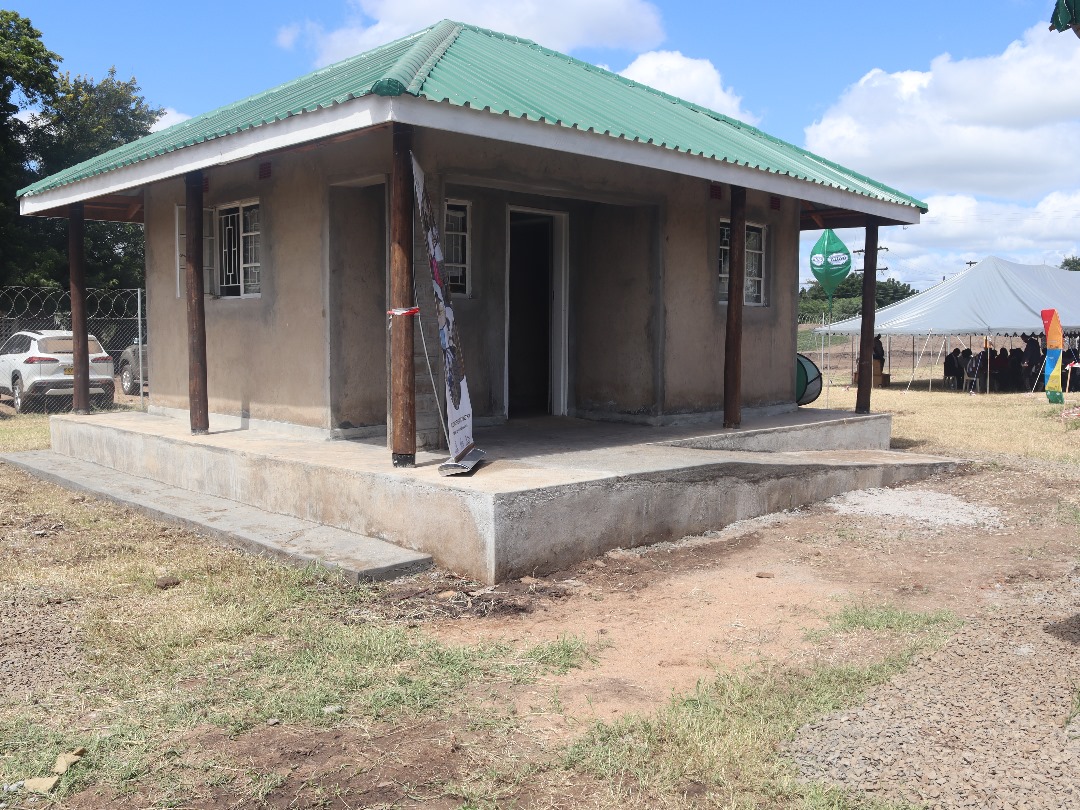
The three self-build prototypes were officially launched on Thursday inside Illovo’s staff housing community, Nkombedzi Compound, at its Nchalo Estate in Chikwawa, graced by Minister of Lands, Deus Gumba; District Commissioner (DC), Nardin Kamba among other dignitaries — who were taken through the design process, design features, construction materials needed and each of their cost.
The three prototypes are Illovo Sugar Malawi ideal minimum standard, Government of Malawi minimum standard and rural low-cost design inspired by CRS’ transitional shelter, of which the NGO already constructed 771 climate resilient houses for vulnerable people who were left homeless due to recent past Ana, Gombe and Freddy cyclones.
Thriving Community Foundation’s Chapter Manager-Nchalo, Jackie Strong explained that the thriving homes and communities project was aimed to pilot innovative designs, materials and construction techniques with the intent to demonstrate durable and resilient housing that meets Malawi national housing standards based on Safer House Construction Guidelines.
She indicated that together with Illovo Sugar Malawi and CRS, the design process started in 2022 which also involved various stakeholders which were finally signed off by the Department of Housing in the Ministry of Lands; Housing & Urban Development; Malawi University of Business & Applied Sciences (MUBAS); Chikwawa District Council and traditional leaders.
Construction started in 2024 putting the designs to test and the demonstration site is for the public to learn the construction process, material, design features and the cost of each.
As of March 2025, the Illovo Sugar Malawi ideal minimum standard was at slightly over K33.2 million (US$19,004.17); Government of Malawi minimum standard at K14.1 (US$8,098.67) and the rural low-cost design inspired by CRS’ transitional shelter at K9.1 million (US$5,200.67).
Affordability considerations included use of stronger and more durable locking bricks as opposed to burnt bricks, which can be made right at construction site and uses minimum cement. The durability considers protection from elements using steel frames to prevent termite damage, raised foundation against rising and running flood water, strong iron sheets secured from heavy winds.
“Moving forward, we hope to work with stakeholders to design a pathway that would enable those living in the communities around Nchalo Estate to be able to afford to build their own homes based on the principles of the project — using durable, affordable construction designs, techniques and low cost materials,” said Strong.
On his part, Nchalo Estate General Manager, Ricky Pillay said Illovo Nchalo Estate, “is acutely aware of the challenges its employees and contractors face in finding suitable housing outside the estate — and the lack of available and affordable options impacts their well being and consequently, their productivity”.
“This reality underscores the critical need for projects like the one we are inaugurating, the ‘Thriving Housing Communities’ in our collaboration with CRS. I’ve been to the site many times in the last year to design and implement these demonstration houses that you are seeing today.
“The efforts are a testament to the power of community-driven solutions. Our hope is that this project will inspire more people to build stronger and more durable homes and, thereby, significantly improving the lives and quality of the people that we love and treasure so dearly here at Nchalo.
“We are confident that these homes will serve as models for sustainable and resilient housing in this region. The reason I stress the word resilient is because we know that we are we live in a flood-prone area and, therefore, whatever solutions we come up with must be resilient,” Pillay said, whose sentiments were shared by Illovo Sugar Malawi interim Managing Director, Kondwani Msimuko.
Minister Gumba also called for collaborative efforts from other stakeholders to emulate what Illovo and CRS are doing “in narrowing the gap in housing demand in the rural communities” which is President Lazarus Chakwera is advancing through the National Housing Policy.
“My Ministry advocates for decent and affordable housing for all Malawians,” he said. “We develop and assist our partners in the development of grant houses for the underprivileged and/or the vulnerable such as persons living with albinism, disaster victims and others.
“I am, therefore, particularly pleased that CRS has so far completed 771 transitional shelter houses for those that had suffered the effects of the recently experienced cyclones and I am also pleased to that our corporate and private sector is joining hands with the civil society in ensuring that you complement the work of the government that housing and welfare issues for our people are safeguarded and guaranteed.
“A home is the first step to prosperity and progress — everyone needs security of shelter in order to ably carry out the demands of this life.”
Follow and Subscribe Nyasa TV :