

Inquiry hears of gaps in tracking Chilima fatal plane’s final movements
A discrepancy has emerged between the final position reported by the pilot of the military aircraft that crashed near Chikangawa in June last year, killing former vice-president Saulos Chilima and eight others, and the flight-tracking data contained in the German Bureau of Aircraft Accident Investigation’s interim report, a parliamentary inquiry has heard.
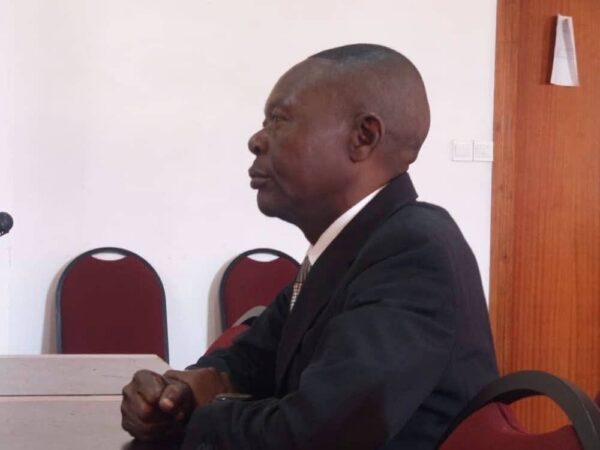
Joseph Moyo, senior air traffic information officer and officer-in-charge at Mzuzu Airport, told the Ad-Hoc Committee that during brief contact with the aircraft at 10.12am, the pilot reported being “20 nautical miles north of Mzuzu” — approximately 38 kilometres out, near the Ekwendeni/Bwemba area — and inbound to the airfield.
However, the BFU’s interim report indicates that the aircraft’s actual flight path shows it never reached that reported position before the crash, a discrepancy lawmakers pressed Moyo to explain.
Asked whether the crew might have transmitted inaccurate location data, Moyo told the committee that controllers in unradar-controlled airspace rely entirely on visual and voice communication from pilots, with no independent means of verification.
“I cannot, on their behalf, say they were telling me the truth or lies,” Moyo said.
“According to our rules, we rely on conventional communication and believe the information given by the pilot. If they were within radar coverage around Kamuzu International Airport, we could easily verify, but at this point in time, I cannot tell.”
Moyo also gave the committee a detailed account of the deteriorating weather conditions and communication breakdown that preceded the crash.
He said official meteorological reports at 10am had recorded manageable, if difficult, conditions — heavy cloud cover, light winds, drizzle and fog in the vicinity, with visual range of eight kilometres.
Conditions around the airfield changed abruptly shortly afterwards, he said, with visual clearance dropping to around five kilometres by the time the aircraft was due to arrive.
The flight had been scheduled to land at 10.02am. Air traffic personnel began attempting to reach the crew from 9.50am without success, before the brief contact at 10.12am. Subsequent attempts to re-establish communication failed.
Following the breakdown in contact, Mzuzu Airport activated emergency communication protocols across regional control towers.
Moyo said that after roughly half an hour had passed without further transmission from the crew, he contacted the control tower at Kamuzu International Airport in Lilongwe, which reported no contact with the flight.
He said he then checked with officers at Karonga Airport, who confirmed the aircraft had not been redirected to their airstrip and remained unreachable. Controllers subsequently asked Lilongwe to continue efforts to trace the aircraft’s signal.
The testimony adds further detail to the committee’s inquiry into the circumstances surrounding the crash, which killed Chilima and eight others near Chikangawa on 10 June 2024.
Follow and Subscribe Nyasa TV :