A chilling account presented before the parliamentary inquiry into the devastating Chikangawa plane crash has reopened difficult questions about what officials knew, when they knew it, and how they responded after the military aircraft carrying Vice President Saulos Chilima disappeared from radar.
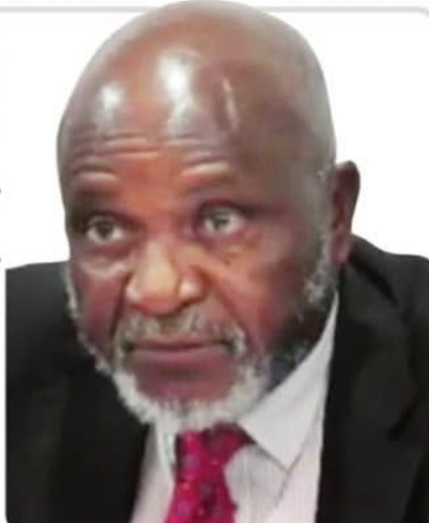
Chakwera signed off Chilima’s fatal flight, Mkandawire testifies
In emotional testimony before the inquiry, former Minister of Defence Harry Mkandawire laid out a timeline that paints a picture of confusion, conflicting information and decisions that are likely to face intense public scrutiny.
The tragedy unfolded after President Lazarus Chakwera assigned Vice President Chilima to represent him at the funeral of lawyer Ralph Kasambara in Nkhata Bay on 10 June 2024. According to Mkandawire, the President approved the use of a Malawi Defence Force Dornier 228 aircraft for the journey, while State House also arranged K5 million for Chilima to deliver to Kasambara’s family as a message of condolence from the Head of State.
But what was meant to be a routine official trip would end in one of Malawi’s darkest national tragedies.
Mkandawire testified that at approximately 10:02 a.m. on 10 June—just minutes before the aircraft was expected to land in Mzuzu at 10:16 a.m.—he received a phone call from then Malawi Defence Force Commander General Paul Valentino Phiri.
According to the former minister, the commander informed him that the aircraft had turned back to Lilongwe because of poor weather conditions and would not be landing in Mzuzu.
That statement has become a focal point of the inquiry.
When questioned about the source of that information, Mkandawire insisted it came directly from the Army Commander and argued that the responsibility now rests with General Phiri to explain who informed him that the aircraft had supposedly returned to Lilongwe and who later communicated that it had crashed deep inside a dense and inaccessible section of Chikangawa Forest.
Perhaps most striking was Mkandawire’s admission that despite learning early that the aircraft had gone missing, he continued with his official programme.
He attended Ralph Kasambara’s funeral until the burial concluded, returned to his residence, took a bath and went to sleep. He did not travel to the crash site until the following morning, on 11 June.
The revelation has prompted renewed debate about the urgency of the government’s response during the critical hours after communication with the aircraft was lost.
The former minister also challenged widespread claims that search operations had been suspended overnight. He maintained that although police officers halted their activities at one stage, Malawi Defence Force soldiers continued searching through the night and that the rescue mission was never officially called off.
He told the inquiry that General Phiri had assured him operations would continue after dark and added that, in his assessment, the search effort ultimately proceeded effectively.
Mkandawire further said he was among the first officials to reach the crash site alongside security personnel when the wreckage was eventually located.
However, another aspect of his testimony drew close examination from members of the inquiry: his communication with neighbouring Zambia regarding search-and-rescue assistance.
In a written statement submitted to the committee, Mkandawire indicated that he contacted his Zambian counterpart only on 11 June after personally visiting the crash site and that aircraft from Zambia arrived in Malawi roughly two hours later.
Yet under questioning, he revised that account.
He told the inquiry that he had in fact made the call on 10 June and claimed the Zambian aircraft were already in Lilongwe by the time he reached the crash site. He explained that although the planes had been mobilised, poor weather prevented them from flying to the search area.
The apparent inconsistency between his written report and his oral testimony has added another layer of complexity to the inquiry, raising questions about the precise sequence of decisions made during the frantic search effort.
Another startling disclosure came when Mkandawire revealed that the Malawi Defence Force Dornier 228 used for the Vice President’s journey was not equipped with a flight data recorder, commonly known as a black box. According to his testimony, only one aircraft in the military fleet currently has such equipment.
The absence of a black box could complicate efforts to reconstruct the aircraft’s final moments and determine with certainty the chain of events leading to the fatal crash.
As the parliamentary inquiry continues, the testimony has underscored the many unanswered questions that still surround the disaster that claimed the lives of Vice President Saulos Chilima and eight others. The evolving accounts, disputed timelines and operational decisions revealed before lawmakers are likely to remain at the centre of public debate as Malawians continue to seek clarity and accountability over one of the nation’s most painful tragedies.