An investigation has connected Samuel Sakhuta, the former director general of the Mining and Minerals Regulatory Authority (MMRA), to a campaign of negative coverage aimed at Lindian Resources, the company developing Malawi’s Kangankunde rare earths project.
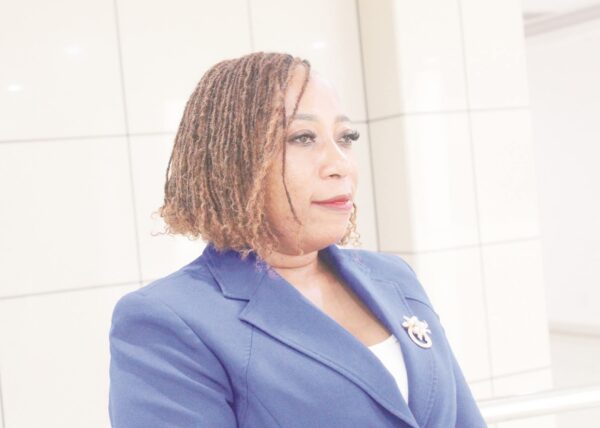
Hendri: No concrete or objective evidence behind the allegations
According to private investigators who spoke to Nyasa Times, Sakhuta — who was removed from his MMRA post — has been driven by personal grievance and enlisted the outlet Mining Review Malawi to publish critical stories about the company.
The investigators found that Mining Review Malawi editor Marcel Chimwala submitted two letters to a parliamentary committee, both of which were traced back to Sakhuta.
One investigator questioned how the editor had obtained sensitive internal MMRA correspondence in the first place, suggesting someone inside the regulator may have been supplying him with information.
The investigator described the situation as a personal vendetta, noting that Sakhuta apparently blames Lindian for his removal and has since worked to gather material against the company.
It was also alleged that Sakhuta turned to Mining Review Malawi specifically because the outlet had previously failed to secure bribes or business dealings from Lindian.
Investigators also pushed back directly on the substance of Mining Review Malawi’s claims.
“The truth though is that Lindian bought Rift Valley shares. At the time, Rift Valley already had a medium scale mining license which they still have up to now,” one investigator said.
“Lindian did not influence anybody on the scale of Rift Valley’s mining license as they had not bought into Rift Valley when the latter were acquiring their license. Marcel is using the license type as his fighting point and Lindian did not influence this.”
The investigator also questioned Chimwala’s focus on end-product beneficiation, arguing he had not shown whether Malawi currently has the energy supply, environmental safeguards or natural gas needed to support it.
Nor, they said, had he examined whether Lindian would have the financial resources to undertake high-end beneficiation before production begins, or how long it would realistically take to raise the necessary capital and build infrastructure with adequate power and environmental protections in place.
“So, his is pure sour grapes. We are even surprised at his conduct,” the investigator said.
“The golden question is: why does he want upscaling of a mining license and high-end beneficiation even before production and exportation of mineral concentrates commences and before the mine hits large scale mining thresholds? Why would he want high-end beneficiation before he presents data on cost or capital and energy requirements as well as environmental safeguards? Can Malawi afford to wait for that level of capitalisation and environmental safeguards to be attained before it starts benefitting from the mining industry?”
They added: “A chicken wants to lay the first egg, and someone is making too much noise around it, and wanting it to lay the biggest egg. Why not give room to progressive upscaling and advancement?”
Despite the allegations circulating, officials maintain there is no proof of any improper dealings between Lindian and the MMRA. They told Nyasa Times the company has not broken any laws and denied suggestions of a hidden arrangement with the regulator.
Mining Review Malawi had taken its claims to Tione Hendrie, who chairs the Parliamentary Committee on Natural Resources and Climate Change, apparently hoping to lend weight to its allegations.
Hendrie rejected the claims, saying there was no concrete or objective evidence behind them.
The outlet later cited her comments emphasizing that Malawians deserve regular updates on the project, given that Kangankunde ranks among the world’s largest rare earth deposits and that such minerals are considered critical by major economies including the United States and the European Union.
Hendrie said the committee intends to visit the site, inspect the mine, and meet with both the Ministry of Mining and the MMRA, in order to confirm the project is complying with its licence terms and with the Executive Order that bans the export of unprocessed minerals.
Kangankunde, wholly owned by Australian-listed Lindian Resources, is aiming for its first production in the final quarter of 2026.
The deposit is a significant source of neodymium, praseodymium, dysprosium and terbium — elements essential to EV motors and wind turbines — and is seen as part of broader Western efforts to reduce reliance on China for rare earth supplies.