

Judge Mtambo was right not to recuse: Another legal opinion
Judge Michael Mtambo’s decision not to recuse himself in Kumwembe’s trial is a good decision and well supported by principles of administrative law.
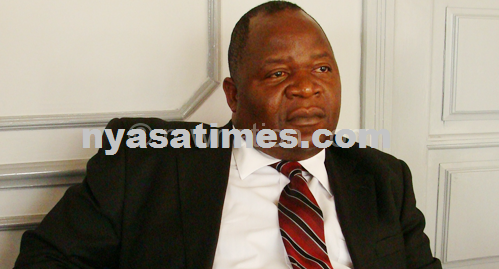
To begin with, the rule against bias states that an Administrative decision maker must not make decisions in circumstances in which it would appear to the reasonable person that there was a likelihood of bias. It is to the reasonable person that the decision maker must be careful not to the accused.
Certainly, in this case of Kumwembe let the reasonable man see if the judge will be bias and not what Kumwembe thinks the judge will do. Kumwembe’s arguments are like that of a man who has already pronounced himself guilty. When the judge finds that you have a case to answer; it does not mean you have been found guilty. Kumwembe is behaving like a man who wants a judge who will give him a lesser sentence.
There are several factors that can make a judge to recuse from a case. In the case of Dimes v Grand Junction canal Ltd, pecuniary interest was given as one of the factors. Judge Mtambo has no pecuniary interest in this case. He can therefore not excuse himself. In R v Gough, three factors were highlighted as pecuniary interest, proprietary and relationship, In the famous case of Pinochet, it was stated that where a judge is not a party to the suit and does not have a financial interest in the outcome of the case but in some other way his conduct or behaviour may give rise to a suspicion that he is impartial in that case a judge may recuse.
However, it is up to the party making the allegation to prove beyond reasonable doubt that the facts are true. As per Savage in Agyekum v Asakum Engineering that an allegation of bias on the part of trial judge other than on the part of pecuniary interest must be supported by clear, direct positive unequivocal and solid evidence from which the real likelihood of bias could reasonably beinferred and not mere suspicion.
Has Kumwembe provided that evidence? A judge is not to be disqualified simply because by reason of holding views (even strong views) which, if given free rein, could prejudice a litigant. (171 Peter Crane 1996).
In the case of Sumuka Enterprise v Registered Trustees of ABA; an allegation was made that because the Judge, the Defendant and the Consel were coming from the same district, there was a likelihood of bias, therefore the judge should recuse. Such a request was rebuked by the judge. It is up to the reasonable man to see what justice would be like not what the accused wants justice to be. In this case let a reasonable man see how the justice system will treat Kumwembe and not what he wants justice to be.
The truth is that courts have the expertise to detect delaying tactics in a case and this is the case here. What will be the results of the justice system if the accused are given the powers to choose judges? The issue here is not what Kumwembe thinks about the judge, it is how justice will deal with him. Any reasonable Malawian would like to see this case come to the end.
In the case of the State v Rugby Union of South African, when the State lost the case it appealed to the Supreme Court over the decision of the judge. In one of the grounds for appeal they raised the issue of bias.
This case of Kumwembe is at the High court, do they not have the opportunity to appeal and possibly raise that issue before the three panel judges at the top court. The judge was right not to recuse from the case.
Mtambo was right not to recuse himself, if he had done that, it would have sent a wrong message to people that accused have the powers to choose judges. There are concrete factors that qualify judges to recuse themselves from a case. This issue does not even come closer.
- Mathews Chione of Chancellor College Law School.