

Judge snatches forfeited fuel back from police and judiciary
- Justice Kalemba says the lower court had no power to hand out seized petrol and diesel, and that MERA must decide what happens to the fuel
The High Court has torn up an order that handed forfeited fuel to the Malawi Police Service and the Malawi Judiciary, ruling that the lower court had no power to decide what happened to it.
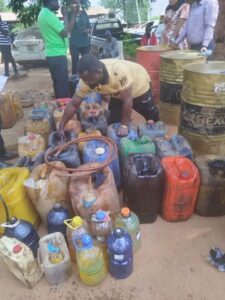
In an order on review delivered on November 12, 2026, Justice Bruno MacDonald Kalemba found that the Senior Resident Magistrate’s Court in Lilongwe had got it wrong in deciding how the fuel should be disposed of.
The case centred on Andrew Mwandira, who pleaded guilty to two offences under the Liquid Fuels and Gas (Production and Supply) Amendment Act of 2025.
He was convicted of failing to comply with a requirement made by the Authority and of storing fuel and gas without a licence.
Officers had found him in possession of 600 litres of petrol and 375 litres of diesel without authorisation or a licence from the Malawi Energy Regulatory Authority (MERA).
The lower court fined him K2 million on each count, with 15 months’ hard labour in default, and ordered the fuel forfeited and handed to the police and the judiciary.
Justice Kalemba said the magistrate had no power to decide the method of disposal.
He cited Section 55 of the General Interpretations Act, which says forfeited property passes to Government, and where it is sold, the proceeds go into the Consolidated Fund.
He also pointed to Section 41(3) of the Energy Regulations Act, which gives MERA the power to decide how forfeited fuel and equipment are disposed of.
“In the present case, the Court below erred in determining the method of disposal of the fuels that were forfeited,” Kalemba said.
He set aside the order. The 600 litres of petrol and 375 litres of diesel now belong to Government, and MERA will decide what happens to them.
The ruling makes clear that a court cannot share forfeited fuel and other goods among state institutions, and that they must be dealt with under the law.
Follow and Subscribe Nyasa TV :