

Ken Lipenga: Why Leston Mulli’s story matters beyond the courtroom
When Ken Lipenga speaks, people in Malawi tend to listen. The former Cabinet minister and one of the country’s most respected literary voices does not often wade into public controversies. So when he chose to break his silence on the conclusion of Leston Mulli’s court battle, the words carried weight.
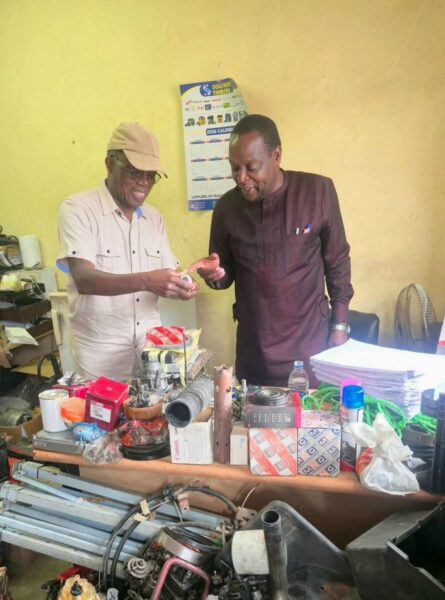
His Facebook post was personal. But buried within the tribute to an old friend was something larger — a quiet but urgent argument about what kind of economy Malawi needs to build, and who it needs to build it.
The man behind the headlines
Lipenga has known Leston “Mapwiya” Mulli long before the businessman became a fixture in court reports and public debate.
He remembers him as a Phalombe trader carrying forward a family enterprise built by his late father — a man seen working at Nyezerera, Chiringa and Limbuli long before anyone was paying attention.
“Long before the headlines and the court proceedings, I knew him as a hardworking Phalombe businessman,” Lipenga wrote.
The photographs he shared with the post told their own story. They were not taken in a boardroom. They were taken in a workshop — cluttered, functional, unglamorous — where Mulli works hands-on alongside his mechanics.
It is an image that sits uncomfortably with the caricature that public controversy tends to create.
What the courts cannot restore
Legal vindication, when it comes, rarely arrives cleanly. The proceedings may conclude. The judgment may bring clarity. But the years of uncertainty, the reputational damage, the toll on family — those do not simply disappear when a case is closed.
Lipenga acknowledged this directly. He welcomed the conclusion of what he described as “a difficult and frustrating period” for his friend and his family, while carefully noting that his tribute was not an intervention in the legal merits of the matter.
What he offered instead was context. A reminder, as he put it, that “behind public controversies are human beings, families, employees, and years of hard work.”
He also offered something more personal. Mulli, he revealed, had stood by his family during a period of grief in recent months — rushing forward when it mattered, without fanfare.
The argument hiding in plain sight
It would be easy to read Lipenga’s post as simply the loyalty of an old friend. It is that. But it is also something more pointed.
Malawi is living through a moment of economic reckoning. Foreign aid is contracting. Malawian migrant workers in South Africa have faced violence, expulsions and hardship that have shattered the quiet assumption that opportunities abroad would supplement livelihoods at home.
Against that backdrop, Lipenga’s message to his country is direct: prosperity built on the goodwill of others is not prosperity at all.
“Our long-term prosperity cannot depend primarily on the goodwill of others or on opportunities beyond our borders,” he wrote. “It must also be built by those who invest, innovate, and create jobs here at home.”
In that framing, Mulli is not simply a businessman who survived a court battle. He is an example — imperfect, complicated, human — of the kind of domestic investment and job creation that Malawi cannot afford to dismiss.
A new chapter
Leston Mulli begins what Lipenga calls “a new chapter” under unusual circumstances — cleared by the courts, publicly championed by a former minister, and operating in an economy that needs him and people like him more than it may always have been willing to admit.
Whether that chapter redeems the controversies of the last one is a question only time will answer.
What Ken Lipenga has done is insist that the question is worth asking — and that the man asking it deserves to be seen whole.