

Lindian Resources on track for Q4 rare earth production start in Malawi
Lindian Resources Limited, the Australian-listed miner developing the Kangankunde Rare Earth Project in Malawi’s Balaka district, remains on track with its production timeline following the successful completion of its first blasting operations, according to a senior mining sector official.
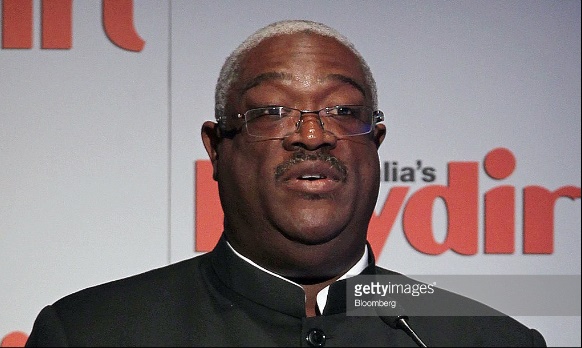
Grain Malunga, national coordinator at the Chamber of Mines and Energy, said the project’s progress was consistent with company projections, and predicted the miner would soon begin generating much-needed foreign exchange for Malawi, whose economy has faced persistent hard currency shortages.
Lindian said the completed blasts had strengthened the pathway to first production in the fourth quarter of this year.
The company reported that the blast fragmented approximately 13,100 tonnes of material, including an estimated 5,500 tonnes of ore, with what it described as strong fragmentation results.
Zac Komur, Lindian’s executive director, characterised the milestone as “a major de-risking step for the project.”
The development follows last year’s approval of a A$91.5 million (approximately K102.7 billion) final investment decision, which cleared the way for construction of the Kangankunde mine to proceed.
According to a feasibility study published by the company earlier this year, the mine is projected to generate $114 million (roughly K200 billion) annually over a 40-year operating life once fully operational, with output scaling from an initial 15,000 metric tonnes to 50,000 metric tonnes per year.
Geoscience expert Ignatius Kamwanje has previously described the Kangankunde deposit as among the highest-grade rare earth resources globally, a distinction that could position Lindian as a strategically significant supplier in a market increasingly shaped by efforts to diversify rare earth supply chains away from dominant producers.
For the Malawian government, the project is expected to yield $5.56 million (about K9.7 billion) in royalties, in addition to income tax and other levies.
The revenue would mark a meaningful contribution for a mining sector that, despite Malawi’s mineral potential, accounted for just 1 per cent of GDP, according to the government’s 2026 Annual Economic Report — underscoring the extent to which the sector remains underdeveloped relative to its promise.