

Malawi girls trafficked and sold as sex workers in Kuwait: Women Judges demand stiffer penalty on offenders
There is a sex trafficking ring for Malawian girls to go to Kuwait and work as hookers with Flora Gondwe of Ministry of Information being suspected to be among the gangsters in the shocking and systematic abuse of trafficked girls.
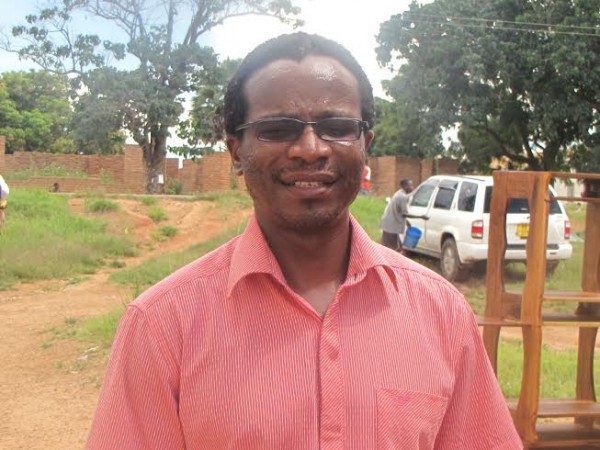
Gondwe, an office assistant at Lilongwe District Information Office, is said to be working with Burundian national Dr Eugine Kausire working in Malawi at Kamuzu Central Hospital into grooming the girls before being sent to Middle East.
The ring leader is a Democratic Republic of Congo national called Fatiki.
Kausire conducts HIV and other medical tests for the girls paying K15,000 each and those who have clean bill of health are given air tickets which they use to fly from Kamuzu International Airport.
Gondwe, confirmed that she was working with agents to send Malawi girls to Kuwait, and said soon boys will be sent with pay package of K300,000 per month.
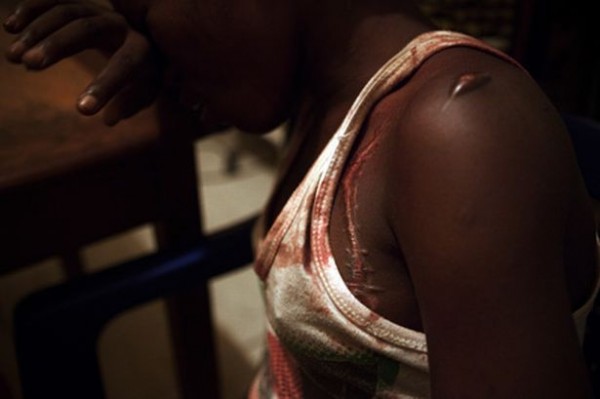
However, it has been established that girls suffer all sorts of abuses when they reach Kuwait and are being forced into prostitution.
Minister of Home Affairs, Jappie Mhango said Malawi government is not aware that Malawians are being trafficked out of the country and thrown into damning working conditions.
Meanwhile, Women Judges Association of Malawi ( Wojam) has bemoaned lenient sentences handed down to convicts of human trafficking which he said are not enough to serve as punishment, let a lone to scare away those hatching plans to engage in the illegal business.
Wojam lead researcher, Austin Msowoya said this during a meeting held to familiarize officers from police, judiciary, traditional leaders, women groups and civil society organization (CSOs) on the newly enacted Trafficking in Persons Act, held at NICE office at Chitipa Boma.
“No amount of effort will help in arresting the problem of human trafficking in the country, in absence of harsh sentences to be meted out by courts on perpetrators of the crime,” said Msowoya.
Msowoya, who is also Deputy Chairperson for Industrial Relations Court in the North, pointed out that the challenge with Laws of Malawiis that human trafficking is regarded as a misdemeanor and not a felony to attract stern punishment on the accused.
“Laws of Malawi calculated at protecting people from human traffickers, especially vulnerable children, are not harsh enough to deter perpetrators,” observed Msowoya.
The Penal Code, Child Care, Protection and Justice Act, Immigration Act and Employment Act are some of pieces of legislation that interpret crimes like human trafficking as pure misdemeanor and peg a lenient jail term of not more that threes years (3 years) as maximum penalty for the offence.
Said Msowoya: “ In addition to exploiting and violating the rights of human trafficking victims, the crime robs the nation of energetic young ones who could significantly contribute towards socioeconomic development of the country.”
He said the crime also over- burdens government to commit its meager resources for rehabilitation of girls trafficked to work in brothels ,especially when they become bed ridden and in dire need of support in terms of medication and nutrition such as ARVs, thematic foods among other medical care.
The researcher was hopeful that once the Trafficking in Persons Act is implemented, the crime will be contained.
Msowoya then thanked Norwegian Church Aid for financial assistance that made the dreams to publish the Act come true.
In the Trafficking in Persons Act, there are provisions that call for stiffer penalties on human traffickers.
For instance, Part 3, Section 14 of the Act says any person convicted of trafficking another person shall be sentenced to 14 years imprisonment with hard labour(IHL) without an option of fine.
While Part 3, Section 15 of the Act says any person convicted of trafficking a child will be slapped with a custodial jail term of 21 years, without an option of fine.
The Act also wields an order to confiscate all the assets of the accused which have to be auctioned and proceeds be paid to the Anti-Trafficking Fund.
According to Msowoya, human trafficking is too complicated to the extent that at times, the rescued victims may sneak back to their traffickers if no proper rehabilitation mechanisms have been worked out for them to start new lease of life.
In Malawi, young boys and girls are trafficked for labour in estates and for prostitution in bars, and bottles stores, where they work abnormal hours, with little pay and poor food, at far away places they cannot return. –Additional reporting by Ed-Grant Ndoza
Follow and Subscribe Nyasa TV :