

Malawi has a mining project the Commonwealth’s $52bn pipeline is missing
- Antigua launched a new era of Commonwealth investment diplomacy. Malawi, with mines entering production, reforms gaining traction and Commonwealth partners on every route to the sea, can show it how to deliver.
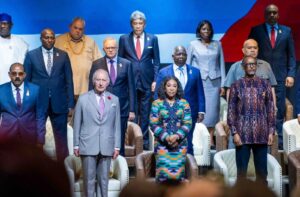
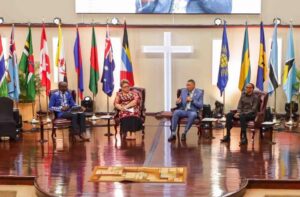
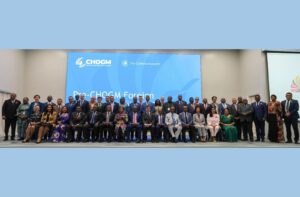
This week in St John’s, Commonwealth leaders did something no Commonwealth summit had done before. They sat down with investors, bankers and the heads of international financial institutions over a single pipeline of projects.
The Commonwealth Investment Platform lists 115 projects from 28 developing countries, worth US$52.9bn.
The communiqué asks the Secretary-General to report measurable results on investment mobilisation, and leaders came to Antigua to consider a plan for carrying the agenda into 2027.
Read the list closely and something is absent. It holds dozens of power and transport projects, from Mozambique’s Mphanda Nkuwa dam to Botswana’s North-South rail corridor, but not a single mine, and nothing that binds a mine to the power and rail it needs.
That package is what turns mineral wealth into exports. Malawi has one in the making, and it is better placed than almost any member to show the Commonwealth how to finance it.
The reason such packages are scarce is structural. Platforms of this kind are built from national submissions, and a ministry naturally nominates what it owns and can describe on a single project sheet: a resort, a road, a power station.
Malawi’s own entries, flagship resorts at Cape Maclear, Salima and Mount Mulanje, reflect tourism’s rightful place in the government’s growth strategy.
But a mineral corridor belongs to no single ministry. The mines are privately financed, the power is built with development-finance partners and the railway crosses a border. No national list can capture it. That is a design question for the Commonwealth, and Malawi is in a position to answer it.
Start with the mines, which are moving from promise to production. The Kayelekera uranium mine produced its first yellowcake in 2025. The Kangankunde rare earths project is on track for first production in the final quarter of 2026.
One of the trading houses buying for Washington’s US$12bn Project Vault stockpile has signed a memorandum for graphite from Kasiya, the world’s largest natural rutile deposit, and the European Union has named the Songwe Hill rare earths project a strategic project under its Critical Raw Materials Act.
The World Bank’s roadmap, From Potential to Prosperity, estimates that the sector could export more than US$30bn between 2026 and 2040. In October, Malawi became one of the first eight countries to launch a Metals and Minerals Country Compact with the Bank.
The Bank is careful with its numbers, and so should we be. The US$30bn is gross export value, not state income. The Bank projects revenue to government of roughly US$400m to US$600m a year by 2040, depending on reform.
Even the lower figure approaches the US$542m that tobacco, Malawi’s leading export, earned in 2025.
The roadmap is equally clear about what unlocks it: US$2.3bn of power and transport infrastructure, of which US$530m is secured, and a dedicated strategy for promoting mining investment abroad.
The government has moved to set the terms before the boom rather than after it.
In February the President ordered an audit of the licensing registry and a review of raw mineral exports, so that more processing happens at home.
The 2026/27 budget allocates K17bn to launch a state mining company. Malawi’s national energy compact commits to exempting mining companies from the foreign-exchange surrender rule and to allowing dollar-denominated contracts case by case.
These are precisely the signals of predictability that long-term investors look for.
The macroeconomic foundations are strengthening too. Inflation fell to 19.4 per cent in September, the first reading below 20 per cent since May 2022.
The World Bank reports that the fiscal deficit narrowed to 8.8 per cent of GDP in 2025/26, helped by stronger revenue collection and spending restraint.
An IMF staff visit in October reported progress towards a new Extended Credit Facility. The same budget limits every embassy to five officials, a government applying discipline to itself first.
With public debt near 90 per cent of GDP, the right strategy is investment and partnership rather than new borrowing.
Power is following. On 8 August a 400kV line from Mozambique was energised, linking Malawi to the regional grid.
The 358MW Mpatamanga hydropower scheme, backed by a US$350m World Bank grant and co-developed with the IFC, will dedicate a third of its output to mining. The energy compact aims to lift electricity access from 25.9 per cent of the population to 70 per cent by 2030.
Malawi’s diplomacy has framed all of this as a case for partnership. Foreign Minister George Chaponda told the UN General Assembly in September that the multilateral system must become an “engine of delivery” and that Malawi remains open for business.
In Antigua he urged Commonwealth foreign ministers to make development finance fairer and to deepen trade and investment among members. The summit has now moved towards Malawi’s position.
The communiqué calls for processing critical minerals at source, which is Malawi’s own policy, and pledges help to countries completing stabilisation in turning their gains into bankable projects.
Why should the Commonwealth be the vehicle? It has no common trade policy and little money of its own. Its advantage is the plumbing. Trade between members costs about 21 per cent less than trade with outsiders, a dividend of shared language and legal tradition.
The developers of Kasiya and Songwe Hill raise capital in Sydney, London and Toronto. Every country on Malawi’s routes to the sea, from Mozambique and Tanzania to Zambia, South Africa and Namibia, is a member.
And the buyers are in the family: three of the ten largest importers of critical minerals are Commonwealth members, while India’s new partnership with the World Bank aims to mobilise US$5bn for mineral processing by 2031.
Malawi should therefore champion, as the Commonwealth carries its investment agenda into 2027, a Commonwealth Anchor Corridors Facility: a small preparation and negotiation unit that packages cross-border projects around anchor mining customers, rather than waiting for national lists.
The problem it solves is specific. Mines will not commit without power and rail. Utilities and railways will not build without committed mines. Small states negotiate with very well-resourced investors.
The facility would combine mine offtake, a power purchase agreement and a corridor freight commitment into one bankable package, and give the host government independent financial modelling to price it. Zambia, Sierra Leone and the Caribbean’s small states face the same problem and would gain from the same model.
It should not be a new bank. The Secretariat would convene and hold standard documents, building on its model mining feasibility guidelines and its Critical Minerals Alliance of 17 mineral-rich members.
The AfDB-hosted African Legal Support Facility, which already funds legal advice on extractive contracts, would serve as its legal arm. Preparation money would come from development-finance institutions in Britain, Canada, Australia and India, recovered through success fees at financial close. The World Bank compact would provide the scorecard.
The pilot should be a Malawi and Mozambique corridor, linking Mpatamanga’s power, the rail line to the port of Nacala and at least two anchor mines, taken to financial close within three to five years.
Alongside it, three member states could adopt a standard Commonwealth term sheet for mining agreements, with preparation times measured and published. The obstacles are real but manageable. Development-finance institutions prefer their own pipelines, and neighbouring governments must agree a sequence and share the credit.
In September 2022, during the period of national mourning for Queen Elizabeth II, I helped arrange, and took part in, a private meeting with Prime Minister Gaston Browne of Antigua and Barbuda, this week’s summit host, at a hotel in West London.
It came together within hours, at a moment when every Commonwealth leader’s diary was full. That is the network’s quiet genius: for a small country, a head of government can be in the room by the afternoon. What turns that access into investment is a bankable proposition ready to put on the table once the door opens. Building that proposition is the work that matters now.
Malawi can bring one. Antigua asked the Commonwealth to be judged by what it delivers. A country whose mines raise capital in Commonwealth markets and whose exports travel through Commonwealth neighbours is ready to offer the first test.
- James Woods is a former senior Malawian diplomat who served at the Embassy of Malawi to Belgium and the European Union, with accreditation to several European states. He was Country Director at Invest Africa, worked for the Mo Ibrahim Foundation and is an Archbishop Desmond Tutu Leadership Fellow. He is founder and managing partner of GQI, a geopolitical intelligence and strategic advisory firm, and co-founder of Solivera Holdings, which owns a gemstone lapidary in Malawi. He holds an Executive MBA from the University of Oxford’s Saïd Business School and a master’s degree from the London School of Economics and Political Science.