

Malawi heroes’ acre debate reignited
The debate on the need for Malawi to have a heroes’ acre has been reignited with calls for rules to be set on declaring who should deserve a State funeral and about recognising the country’s luminaries.
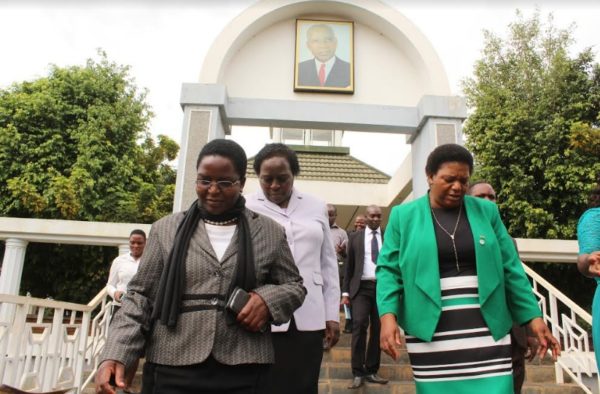
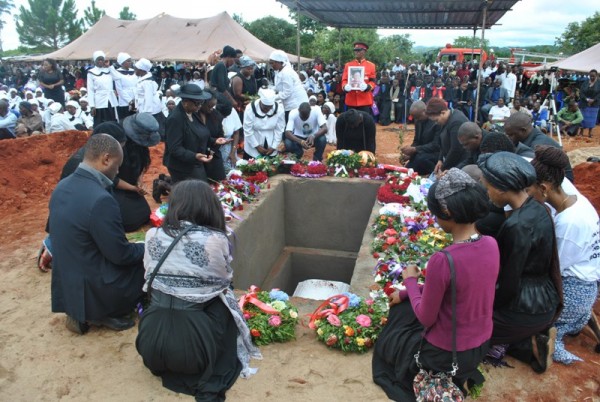
For decades, the country has been talking about establishing a national heroes’ acre and it was reported that founding President Kamuzu Banda’s mausoleum will be a site to be named Heroes’ Acre.
During President Bakili Muluzi’s reign, who ruled Malawi from 1994 to 2004, he actually appointed Hanna Ndilowe, the then principal secretary in the Ministry of Defence, to chair a committee to look into the establishment of the Heroes’ Acre.
She was leading a team of cultural experts to look into the possibility of turning the Heroes’ Acre into a museum.
Kamuzu, who died in 1997 aged 101 following pneumonia complications, ruled Malawi with an iron fist uninterruptedly from independence from Britain in 1964, until he was deposed in the first multi-party elections in 1994.
But during late Bingu wa Mutharika’s era, the Heroes’ Acre idea was shelved.
And when Joyce Banda came to power, she promised the establishment of the heroes’ acre and highlighted for possible exhumation, the remains of Dunduzu Chisiza and John Chilembwe, and building of tombstones at some of the heroes’ graves.
The incumbent President Peter Mutharika has been recognising some high profile Malawians by directing their deaths to be accorded a State funeral status, the recent on being that of former United Democratic Front (UDF) secretary general who served as Speaker of Parliament, Sam Mpasu.
Commenting on the development, social and political commentator Humphrey Mvula called it a “tragedy” for the country not to have a heroes’ acre and established the rules that would govern how to declare somebody a hero.
“We don’t have criteria to use. Not even an independent body or commission to declare somebody a hero. Now this is done courtesy of the goodwill or prerogative of the sitting president who says: ‘I’m going to declare Gwanda Chakuamba, Sam Mpasu or Chief X a hero deserving of a State funeral with full military honours or not.
“ We don’t have a policy that tells us who is going to be a hero and is entitled to such kind of military honours, a 21-gun salute or a three-gun salute. We have heroes in all fields but other people have achieved greater things either in academics or politics, or other activities noble to this country. In the absence of clear criteria, it becomes a discretionary activity,” Mvula said in local press.
In the northern region, Mzuzu City Council (MCC) allocated a piece of land close to the Northern Region Agricultural Development and Marketing Corporation (Admarc) for a heroes’ acre the site where the first female member of Cabinet, Rose Chibambo, was buried a.
Chibambo is considered a hero for contributing to the fight for independence, and her face is used on a K200 note and a road in Mzuzu was named after her.
But in the same Mzuzu City, Heroes Acre is the name given to the site where Malawi’s famous pro-democracy campaigner Chakufwa Chihana was buried near Zolozolo cemetery.
However, government said Chihana, who served as the country’s second vice president during Muluzi’s tenure, is likely to be exhumed from where he is buried and be reburied close to Rose Chibambo’s grave.
Chicane’s tiny grave in the city of Mzuzu behind Reserve Bank of Malawi remains a desolate, abandoned site despite earlier government promises to erect a mausoleum befitting the fallen trade union, human rights activist and served as the country’s second vice-president.
The grave has a faded Chihana portrait hanging under a falling roof, marked with untrimmed flowers, overgrown grass, and heavy dust settling on the unguarded grave, conjuring an eerie image, especially at night.
The late Chihana, is also among 37 individuals and organisations from 24 countries that were awarded the Robert F. Kennedy Human Rights Award since 1984. He got his award in 1992.
On 6 April 1992, Chakufwa Tom Chihana walked into the den of lions when he landed at Kamuzu International Airport (KIA) and openly did the unthinkable. He challenged the entrenched Kamuzu Banda’s 31-year-old autocratic rule under the Malawi Congress Party (MCP).
Effectively, he put into motion, with others, a movement that saw the feared MCP regime crumble; hence entered into the annals of history as one of the founding fathers of Malawi’s multipartyism.
Chihana died in June 2006.
Follow and Subscribe Nyasa TV :