

Malawi Law Commission backs 50-plus-one electoral system: PAC supports electing a president by majority, with degree but Ntaba says its unrealistic
Malawi’s interfaith organization, Public Affairs Committee (PAC) has welcomed the proposal by the Special Law Commission on the Review of Electoral Laws scrapping off the current first-past-the-post simple majority and adopts a 50 per cent plus one law to ensure that the winner of presidential elections enjoyed majority support.


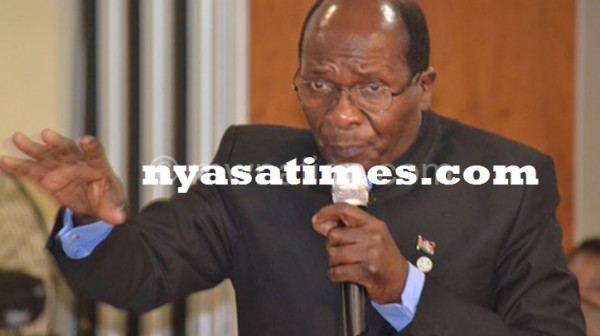
The commission, which started a two-day multi-stakeholder conference in Lilongwe, noted that neighbouring Zambia’s successfully adopted and implemented of 50-plus-one electoral system which means a candidate needs to secure 50 percent threshold needed to avoid a rerun.
PAC have recognised that 50 per cent plus one rule guarantees the leader acceptable, popular, majoritarian mandate.
“The present system has failed to give us leaders with national legitimacy and the consequences are there for us to see. We need to try something else,” he said.
But President Peter Mutharika’s special adviser on domestic policy Hetherwick Ntaba described the proposal as unrealistic and wasteful.
“There is no way we can attain the legitimacy people are talking about. Let us talk about the costs. In reality, we are already struggling to conduct by-elections,” he said.
Malawi follows the British electoral system which is based on the First-Past-The-Post (FPTP) system. With FPTP, the one who gets the highest number of votes wins the election.
Democratic Progressive Party (DPP) leader Peter Mutharika was declared the winner of Malawi’s May 20, 2014 presidential election after defeating Joyce Banda when he took 36.4 percent of the votes cast, Lazarus Chakwera of MCP garnered 27.8 percent of the vote and Banda’s 20.2 percent
President Mutharika got votes mainly from the Lomwe belt of southern Malawi while Chakwera polled more votes from the Chewa belt of central region.
Associate professor of political studies at Catholic University Nandini Patel who is in the commission said an electoral system reform agenda for Malawi should be based on indicators of democracy, and an assessment of the goals that can be achieved and the dangers that can be avoided.
She said simple majority voting currently being used will only apply to parliamentary elections but for a president “ the recommendation is that there should be a run-off or double ballot where the top two candidates contest in the second round and the one who secures more votes is declared winner” if there is no threshold of 50 percent votes in first round.
Patel noted that the need to review the electoral system was first raised in the aftermath of 1999 elections with the opposition claiming that the president-elect did not get a majority of votes cast, as it was less than 50 percent. This was one of the reasons for challenging the results in the court.
She said 50 percent plus one electoral law demand was in line with the Law Commission’s technical review of the Constitution which requires an amendment to Section 80 (2) of the Republican Constitution “because the section states that the president be elected by a majority of the electorate through universal equal suffrage.
“A majority in this sense is one who gets more votes. Simple and easy as it may sound, there is an inherent weakness in this system and that is; a candidate may get elected only with a small proportion of popular vote, which would mean winning the seat, but losing the vote.”
Chairperson of the commission Justice Anthony Kamanga, said they also settled the minimum academic qualification for future presidents to be a degree from an accredited university.
“As a special law commission, we attached great importance to the issue of consultation to ensure public participation,” said Justice Kamanga.
Minister of Justice and Constitutional Affairs Samuel Tembenu said “we are assured that even though absolute perfection is difficult to achieve, we shall, nevertheless, come up with a product that represents the collective and national consensus on how we want our elections to be conducted.”
Some of the recommendations include migrating to electronic methods of conducting voter registration.
Follow and Subscribe Nyasa TV :