

Malawi: Poor country and failed state
According to Wikipedia, common characteristics of a failing state include a central government so weak or ineffective that it has little practical control over much of the issues to do to with operations of government; non-provision of public services; widespread corruption and criminality and sharp economic decline.
As a country, Malawi is dangerously exhibiting these traits, or fast drifting towards attaining a failed state status. To say our public delivery system is in a shambolic state would be an understatement. Just a month ago, Blantyre Water Board avoided with a whisker a fiasco where consumers threatened to smear its offices or anything BWB with human excreta for poor service delivery.
Only about 10 percent of the country’s population has access to electricity, but even those enjoy the services only just half the time. Electricity supply is intermittent like disco lights that no serious investor would risk their fundsinvesting in practical darkness. Instead of improving its services, ESCOM concentrates on serenading political parties and politicians with donations.
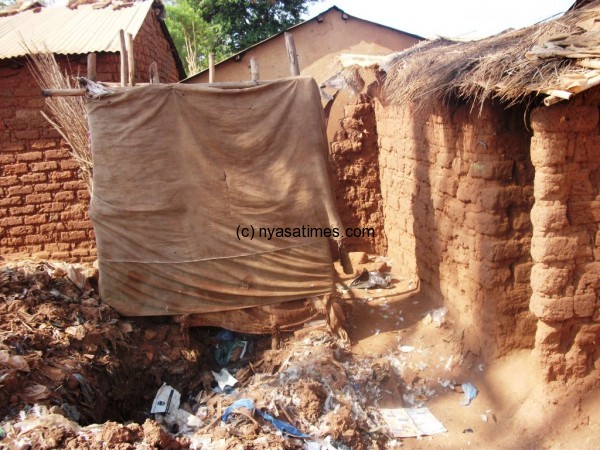
Massive slums are just a street away from the Central Business District (CBD) of Blantyre, our much touted commercial hub, and a majority of urban dwellers use pit latrines, not flush toilets. The road network – including the main road linking Blantyre and Lilongwe -is littered with Crater Lake type potholes that have caused some terrible accidents to road users. This is not to mention the more than two thirds of our countrymen who are illiterate.
This is just Malawi at glance. Are we surprised therefore when others are using these pathetic indicators to rank us as the poorest nation in the world? As human beings, it is natural to be defensive when we are portrayed in negative light. It is thus normal to see some “patriotic Malawians” coming with guns blazing criticizingsuch ‘negative portrayals’ as just a concoction of a bunch of lazy technocrats who have just read many books. It is perfectly okay.
Whichever way people choose to look at this, the buck still stops at Malawi and its leadership. What are we going to do as a people and what is the leadership prepared to do, or rather what is it capable of doing? When announcing his arrival on the presidential scene, the President of the now poorest country in the world, Peter Mutharika came with pomp, promising a business unusual approach. He said his is not vindictive politics like we have seen in the past.
He promised a breath of fresh air embodied in unity of purpose, economic development, social inclusiveness and national reconciliation. He promised rule of law and security of life and property for Malawians. He said his country would put delivery of social services on top of its agenda; accountability and a two-way street flow of information whereby Malawians would be appraised on the workings of his government at every turn to loop in their feedback.
Much as it should be appreciated that he has only been in office for less than a year, at least he should have demonstrates capability to deliver within the first months of assuming office.A Chichewa proverb ‘chonona chifumilakudzila’ comes into sharp perspective here. In fact, what happens in the first 100 days of office is an accurate indicator of what people will experience under your government in the next five years. And what did we see?
The first presidential duties for President Peter Mutharika just after assuming office included the firing of top government officials (without following procedures), and replacing them with homeboys, some of whom unqualified and incompetent. The country has run into some serious security breakdown, which has resulted into loss of life and property.
In many instances, armed robbers are targeting and have killed foreign nationals prompting the Chinese investors to threaten to pull out if Capital Hill does not wake up from its slumber and do something.
Donor support that was withheld due to cashgate doesn’t appear to be coming back anytime soon. Donors are not satisfied with how the Mutharika government is handling the issues to do with the infamous looting of public money. This includes selective justice, or using cashgate to victimize political opponents. The German government has actually provided funds for government to investigate the MK92 billionscandal, which took place from 2005, but there is still no real direction and progress from the DPP government.
This and many other episodes have only underlined the fact that President Peter Mutharika and his DPP were catapulted to power least prepared. They are obviously clueless about Malawi and it is evidently showing. Unless something is quickly done, Malawi will continue to slide into a cesspool of nepotism and tribalism as that is a default trajectory of a DPP government. You only have to take it down to history.
The Democratic Progressive Party will continue to find trouble to find its rhythm. It will perpetually be jinxed by legitimacy issues because it came to power not through the ballot but through the courts and at the instigation of MEC (The MEC Chairperson Maxon Mbendera is cousin to President Mutharika). It was simply not ready to deal with the pressures that come with governing and political power.
It is the trouble of gaining power through, not campaigning, but palm greasing election officials. Now you know why the DPP vehemently refused to have a ballot recount; why up to know nobody has been arrested for causing those MEC warehouses fires. It’s just a simple case of we-told-you-so…
- Hastings Kandoje is a political, social and economic commentator. He writes for Nyasa Times in his personal capacity