

Malawi saving K2bn yearly on JC exams abolishment – Minister
Government says it can employ 850 secondary school teachers or install 30 laboratory classes out of the K2 billion which the Ministry of Education will save through the abolishment of junior certificate examination.
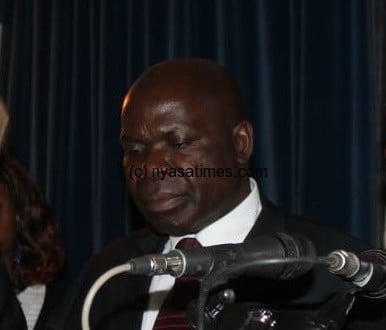
Minister of Education Emmanuel Fabiano said in Parliament when he was making a ministerial statement to explain to opposition parliamentarians the government decision to hike secondary school fees and abolish JC exams.
Fabiano said the JC exam as useless and a just a drain in government coffers as most if not all employers, including the government no longer recognises the certificate as minimum academic qualification for employment.
“In both eastern and southern Africa, it is only Malawi and Zambia that continues to administer the examination. The rest of the countries require national examinations at the end of the cycle of secondary school education,” he said.
He therefore said the K2 billion that the government used to spend in administering the examination will help improve learning and teaching process in secondary school.
Fabiano said the JC examination was also set at the time when form three and form four places were limited so it as used as way of getting brighter students to form three.
He said things have now changed as all secondary schools, including day and community secondary schools have places up to form four so it makes no sense to deny somebody a place.
After all, the minister said, the government wants Malawians to have complete secondary school education.
Fabiano also warned head teachers against sending back home students who fail to pay school fees within two weeks and replace their places during second selection, saying this system was discontinued.
He said students who pay 50 per cent of the fees can remain in school and if the student fails to pay school fees, the student can apply to have a place in the next academic season, saying access to education should not just be for the rich only.
Fabiano said this is why the government has increased bursary money from K430 million to K480 million a year to allow the poor access education.
The minister said the new bursary rules now allow traditional leaders and councillors to sit in council meetings to identify the needy for the bursary.
In addition to government, he said, Unicef and other organisations have their own bursary programmes with own criteria.
Follow and Subscribe Nyasa TV :