

Malawi should adopt rotational presidency system — Church
Fed up with playing second fiddle in the Malawi political leadership space, the CCAP Synod of Livingstonia has says it is putting forward a proposal for the adoption of a rotational presidency in the country.
In the 56-years since Malawi’s independence in 1964, no person from the Northern Region has led the country compared to the Centre (Kamuzu Banda, 1964-1994) and South shared between Yao-land and Lhomwe belt (Bakili Muluzi, 1994-2004 – Yao land; Bingu wa Mutharika, 2004-2012 – Lhomwe belt; Joyce Banda, 20012-2014 (Yao land) and Peter Mutharika, 2014-present – Lhomwe belt).
Resultantly, this has led the Northern Region to believe that the region has been denied development because they have not had one of their own leading government development which has prompted the Livingstonia Synod to demand that Malawi adopts a rotational presidency system to ensure equitable distribution of political powers across the three regions.
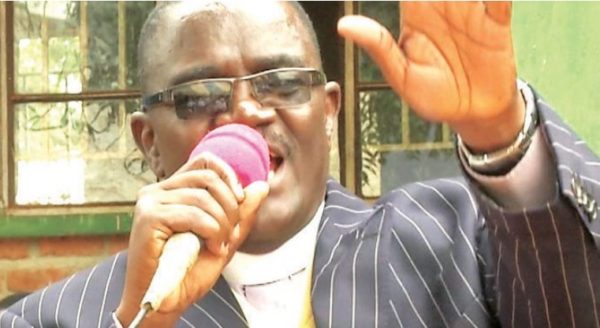
Synod general secretary Reverend Levi Nyondo said the church joined other proponents such as Inkosi ya Makhosi M’mbelwa V and governing Democratic Progressive Party (DPP) vice-president (North) Goodall Gondwe, who believe the system would ensure geo-political balance and end allegations of nepotism.
During a Constitution Review Conference from in March 2006, President Peter Mutharika, then minister of justice, weighed in on the proposal and said it was doable.
“We discussed this during the Loudon meeting and agreed as a synod to champion this system. We will soon be issuing a document on this position demanding that we adopt the rotational system,” said Nyondo in quotes reported by Nation on Sunday newspaper.
He added: “You see, everyone in the country must have an opportunity to rule, but since 1994, it has been people from just one region. Does that mean other regions don’t have capable people who can rule? So, we are saying, we need equal sharing of power, and rotational [presidency] is the only way to go.”
In his 2006 presentation titled ‘Towards a More Manageable Constitution’, Mutharika said the idea is not necessarily outlandish, but also wondered whether the system would exacerbate regionalism.
He noted: “Both Switzerland and Malaysia have rotating presidencies. In the case of Malaysia, though, the presidency is a ceremonial position. A constitutional formula could be found under which an executive presidency would rotate.
“Our three regions are certainly not a geographical imperative. They were drawn for the convenience of the colonial administrators and to some extent the missionaries.”
Assuming the idea of a rotational presidency does not garner sufficient support, Mutharika suggested proportional representation and abolition of regions as ways of addressing concerns about regional marginalisation.
He explained: “Another, and perhaps, more radical response is to simply abolish the three regions and create the district as the basic administrative unit. Nigeria successfully resolved the problems that were created by the existence of the three regions at the time of independence in 1960 into what are now 36 states and one federal territory.
“While the initial decision to abolish the regions led to war, Nigeria is now a much more unified and stable country. Similarly, South Africa’s decision to break the original four provinces into nine has created a very stable political environment.”
M’mbelwa, in an earlier interview, said rotational presidency can promote peace and stability while harmonising the political divide.
He said: “When you look at Nigeria, people there stopped fighting after adopting the when you look at the population of the North and Centre, you will find that it is small, and so you find that a northerner or someone from the Central Region cannot be President.”rotational system. In Malawi,
The Ngoni king thinks people in the North feel marginalised, saying: “If you look at Malawi’s political history, Kamuzu [Banda] was from the Central Region and he was in power for 31 years.
“Then came Bakili Muluzi, in 1994, who has been succeeded by people from the South. By 2024, this country will have been ruled by colleagues in the Southern Region for 30 years; hence, the feeling of marginalisation by northerners. Everybody needs to feel as a part of this country.”
Gondwe, who is also President Peter Mutharika’s adviser on economic issues, said the matter warrants a discussion having been at the centre of discussion in the early 1990s, during a Constitutional Review.
Follow and Subscribe Nyasa TV :