

Malawi signs US$221.9m social protection and export deals with World Bank
Malawi has signed agreements worth US$221.9 million, about MK414 billion, for social protection and economic resilience, the government says.
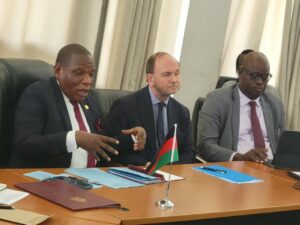
Finance Minister Joseph Mwanamvekha signed the agreements on behalf of the government and the people of Malawi.
They cover the Integrated Social Protection for Resilience and Opportunity (INSPIRE-O) project and the Transforming High-Potential Resilient Value Chains (M-THRIVE) project, along with associated grants under the Malawi Social Protection Multi Donor Trust Fund and the Global Shield Facility.
The World Bank Group and other development partners are involved.
Mwanamvekha said the money would be a direct lifeline for millions of Malawians.
It will protect poor and vulnerable households from droughts, floods and economic shocks that have repeatedly wiped out crops, livestock, businesses and livelihoods, he said.
Cash will reach families through an expanded Social Cash Transfer Programme, and climate-smart public works will create jobs while rebuilding communities, he added.
INSPIRE-O will reach vulnerable households in all 25 districts and four cities. Additional drought-responsive financing will target the 10 most drought-prone districts.
The project will also modernise the Malawi Social Registry and the Core Management Information System, so support reaches the right people faster and more transparently.
M-THRIVE is aimed at helping Malawian firms grow, export more and access finance. It will support direct exporters, suppliers to exporters and youth- and women-led enterprises, with export readiness support, bank financing, reimbursable grants and reforms to lower the cost of doing business.
“For a country where too many families live one failed harvest away from hunger, this financing is hope,” Mwanamvekha said, adding that it would keep children in school and small businesses alive.
Firas Raad, World Bank division director for Malawi, Tanzania, Zambia and Zimbabwe, described the day as important as Malawi moves from stabilisation towards recovery and growth.
He said the government’s National Economic Recovery Plan aims to restore macroeconomic stability, bring inflation to single digits, resolve the debt problem and reach 6.5 per cent growth by 2030.
“The target is 6.5 percent growth by 2030. That reform agenda is essential. Malawi continues to face severe constraints from foreign-exchange shortages, fiscal pressures, debt vulnerabilities and a narrow export base,” he said.
Raad warned that stabilisation was not an end in itself.
“The real test of reform is whether stabilization translates into investment, exports, jobs and greater economic security for Malawian families,” he said.
Follow and Subscribe Nyasa TV :