

Malawi warned of more blackouts after Nkula plant failures
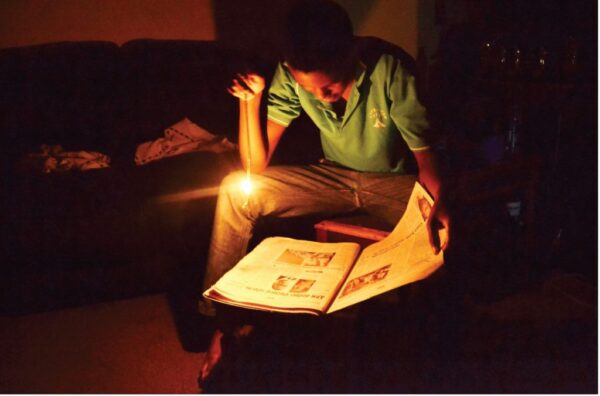
Malawians have been warned to brace themselves for further power outages after a fresh 42-megawatt (MW) generation shortfall hit the national grid – a deficit that balloons to a crippling 83MW during evening peak hours.
The Electricity Supply Corporation of Malawi (Escom) revealed in a statement that available generation capacity currently stands at just 347MW, against a peak demand of 430MW – leaving households and businesses across the country facing yet more disruption.
Escom warned that the situation is likely to remain unstable until key generation units are brought back online, with Nkula A not expected to return to full operation until mid-September, and Nkula B Unit 6 – which suffered a major failure on 7 August – not due back until early October.
Adding to the misery, the Electricity Generation Company (Egenco), which had earlier this week said it was producing 370MW, admitted it is under pressure to keep its ageing machines running.
According to Escom’s statement, Egenco’s Nkula B Unit 6 (20MW) suffered a major failure on 7 August 2026, losing 20MW from the grid.
The damage is so severe that critical components must be dismantled and shipped to South Africa for specialised reconditioning, with restoration not expected until early October 2026.
The loss of Nkula B has also indirectly disrupted the stable integration of the recently commissioned 10MW Egenco Solar PV facility, worsening the deficit felt by consumers, the statement added.
Meanwhile, at Egenco’s Nkula A, output remains restricted due to worn-out shaft seals, creating a further shortfall of 11.1MW. Replacement spares are expected by late August, with repairs targeted for completion by mid-September 2026.
Egenco spokesperson Moses Gwaza earlier in the week admitted Egenco is struggling to meet growing demand for electricity amid a lack of expanded access to the grid.
Gwaza said Malawi needs a deliberate and accelerated approach to expanding electricity generation if it is to effectively meet current and future demand.
‘Just as significant resources have been mobilised over the years for grid extension and electrification programmes mainly at distribution level, there is a need for dedicated financing mechanisms that support the development of new generation projects,’ he said.
The power crisis comes against a backdrop of alarmingly low electricity access across the country, with just 25.9 percent of the population currently connected to grid or off-grid electricity supplies – far below the government’s target of 70 percent access by 2030.
Malawi’s total installed generation capacity stands at 564.2MW, made up of 401.8MW from hydro, 51.4MW from diesel and 111MW from solar sources, produced by Egenco and other players, according to Escom data.
Follow and Subscribe Nyasa TV :