

Malawi’s fuel shortage is a forex crisis wearing a different face
There is a particular kind of queue that tells you more about the state of a nation than any government press release. It forms outside a filling station, it does not move for hours, and everyone in it already knows what the attendant is going to say before he says it. Those queues are back in Malawi, and they are getting longer.
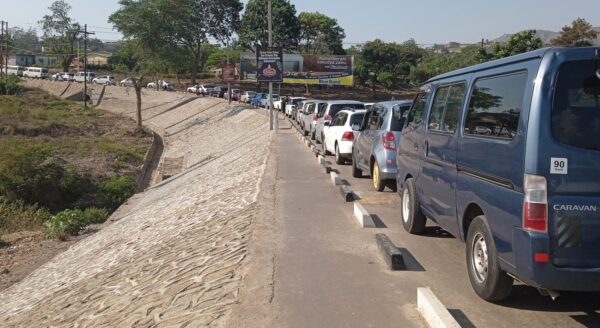
What began weeks ago as scattered stockouts has hardened, with grim predictability, into something closer to a national condition.
Diesel has been genuinely scarce for about three weeks; petrol joined it last week. In the cities — Blantyre, Lilongwe, Mzuzu, Zomba — some fuel is at least trickling through, if you have the patience to wait for it. Beyond them, the picture is starker still.
Happy Jere, who chairs the Fuel Retailers Association, put a number on what that actually means: urban filling stations running at roughly 30 per cent of normal diesel supply, and remote stations at zero. Not low. Zero.
Into that vacuum has rushed the market that always rushes into vacuums. Diesel that costs K5,863 a litre at the official pump is changing hands on the roadside for K10,000 to K15,000 — nearly three times the legal price, sold by vendors with no pretence that this is anything other than scarcity turned into profit.
It is worth sitting with that spread for a moment, because it is not really a story about petrol stations. It is a story about what happens to a price when a government cannot guarantee the supply behind it.
And the supply problem, everyone closest to it agrees, does not start at the pump. It starts at the Reserve Bank of Malawi.
Jere’s diagnosis was blunt: Malawi is short of the dollars needed to pay for the fuel it has to import, and until that changes, the queues will not meaningfully shorten. His prescription — take cash-crop farming seriously, take mining seriously, and have the Reserve Bank actually enforce its own forex controls rather than watch the black market grow around them — is not a new argument in Malawi.
It is close to the oldest argument in Malawi. What is new is how visibly, and how quickly, its absence is now being felt.
The human cost of that absence is arriving in the form of stranded trucks. Francis Mkandawire of the Truck Drivers Union described vehicles spending up to a week sitting in fuel queues — a week in which nothing they are carrying moves, nothing they earn accumulates, and the only fuel reliably available is the smuggled diesel crossing in from neighbouring countries at around K12,000 a litre.
Transporters Association of Malawi spokesperson Frank Banda, meanwhile, pointed to a more distant cause: the war in Ukraine, now well into its fourth year, and the continuing strain it has placed on regional fuel supply chains.
His members have sent trucks to Beira in Mozambique and to Dar es Salaam in Tanzania to load cargo, with no firm word yet on when, or with how much, they will return.
The same currency squeeze now strangling the forecourts is, by government’s own admission, strangling the power grid too.
Speaking at the Fifth Malawi National Energy Conference in Salima, Minister of Energy Jean Mathanga told government representatives, development partners and energy sector stakeholders that the forex crisis is compounding an already dire situation, forcing Malawians to endure increasingly prolonged power outages on top of the fuel queues.
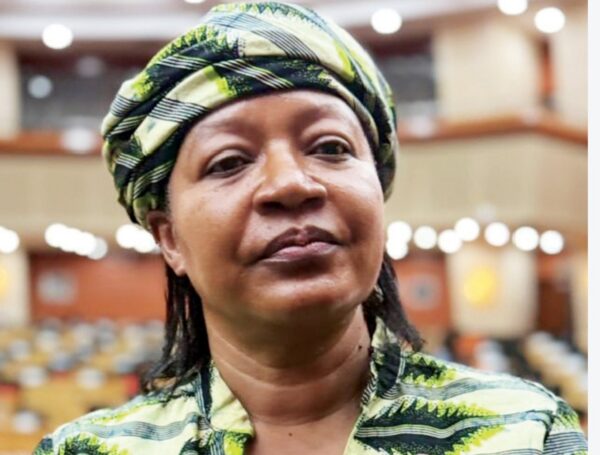
“Our people continue to experience frequent and, in some cases, prolonged electricity interruptions,” Mathanga said, revealing that forex shortages are hammering the ability of utilities and energy companies to import essential inputs and meet their own foreign-currency obligations, even as the country’s generation, transmission and distribution infrastructure cries out for investment and maintenance it is not receiving.
Demand, she added, continues to dramatically outstrip Malawi’s available generation capacity.
European Union head of cooperation George Dura, addressing the same conference, warned that the sector needs innovative financing models and conditions capable of attracting investment, given the limits of public resources, but cautioned against treating money as a cure-all.
“Innovative financing alone cannot solve this challenge either. What matters equally, and perhaps even more, is creating the conditions that make projects bankable,” he said.
Former Escom chief executive Kandi Padambo went further, warning that Malawi’s generation capacity remains “insufficient” and calling for liberalised budgets to revamp it.
He also proposed a dedicated fuel pipeline and greater use of railway transport, arguing both would cut the cost of moving fuel into the country and ease the very pressure on foreign exchange reserves now visible in the queues outside filling stations.
Mathanga confirmed government is pressing ahead regardless, pointing to the $100 million Malawi Electricity Access Project already under way.
It is tempting to treat a fuel shortage, or a power crisis, as a logistics story: ships, ports, trucks, queues, transformers.
But in an economy Malawi’s size — one million litres of petrol and one million of diesel consumed every single day, 720 million litres of both combined over a year — fuel, and the power that depends on much of the same imported infrastructure, is not a sector. It is the bloodstream. It moves the maize to market and the patient to hospital and the exporter’s goods to the port that might, eventually, earn the foreign currency that was the problem in the first place.
That is the uncomfortable circularity at the heart of this crisis: the shortage of dollars causes the fuel shortage and starves the power sector of the inputs and investment it needs, and both of those shortages, by stalling the trucks and the farms and the mines that would earn those dollars, make the underlying currency shortage harder to solve, not easier.
None of which is a reason for fatalism. Currency crises are not, in the end, acts of God; they are the accumulated result of choices about exports, borrowing, enforcement and priority. But they are also not solved at the pump, or at a podium in Salima, however many hours the queue stretches, however sharply the black-market price climbs, and however many conferences call for innovative financing while officials work out what to do next.
What is playing out on Malawi’s forecourts and power grids this month is downstream of a decision still waiting to be made somewhere upstream, and until it is, the queues, and the blackouts, remain the most honest indicator the country has of how urgent that decision has become.
Follow and Subscribe Nyasa TV :